Joseph Smith’s Animal Sacrifices – LDS Discusssions
Listen on Apple Podcasts Spotify YouTube Download MP3
About this episode
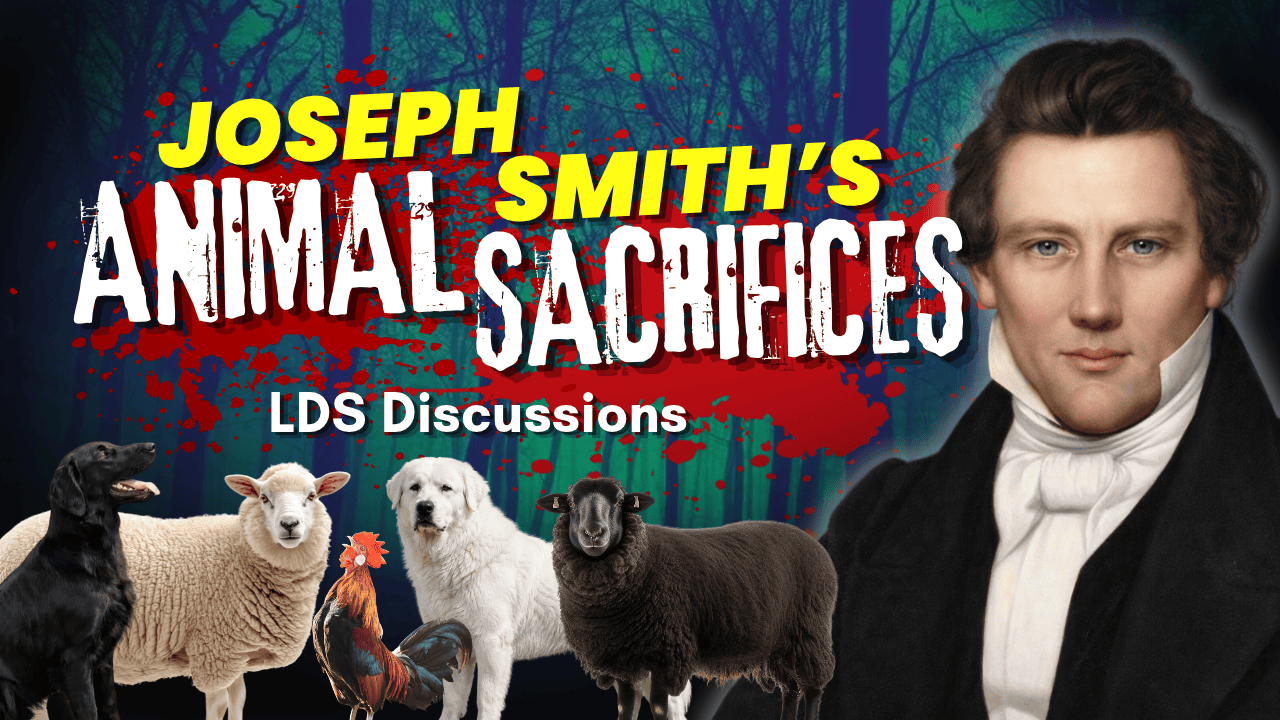
In Episode 86 of LDS Discussions on Mormon Stories, we examine historical accounts of Joseph Smith’s treasure-digging activities and the reported use of animal sacrifice in attempts to locate buried treasure. From roosters and black sheep to black dogs and white sheep, these accounts raise questions about the folk magic practices associated with Joseph Smith and the people who participated in treasure seeking in the early 19th century.
We begin with the account of Abner Cole and explore reported connections to Luman Walters, a magician and conjurer who was said to have influenced Joseph Smith’s treasure-seeking activities. We then examine accounts from William Stafford, Hiel Lewis, and others, including reports of animal sacrifices intended to appease supernatural beings and keep treasure from disappearing. We also discuss the historical context of peepers, treasure digging, and the idea that certain words, circles, and ceremonies were necessary to locate hidden treasure.
The discussion also explores interviews collected by Frederick Mather, reports involving the earth of Oliver Harper, and additional accounts attributed to Alfred Trumble, Emily Austin, Ellen Dickinson, and Nan Hill Stratton. We consider whether Joseph Smith sincerely believed in his ability to find treasure and how these stories fit into the broader history of early Mormonism.
We also discuss parallels between animal sacrifice in folk magic and sacrificial imagery in Christianity, along with the importance of examining historical figures within the full context of their lives.
A note on historical claims: This episode brings together accounts of animal sacrifice associated with Joseph Smith and early treasure digging. Our goal is to collect and discuss these claims in one place, not to independently establish the accuracy of every account.
Originally published on mormonstories.org.
Transcript
Machine-generated and lightly edited. Click any timestamp to jump the audio to that moment. The audio is authoritative; please check it before quoting.
Introduction and Episode Overview
Kolby Reddish Hello there and welcome to another episode of Mormon Stories podcast, LDS Discussions Edition. I'm your host for today, Kolby Reddish, and a few quick reminders about the LDS Discussion series as we begin today's episode where we'll be covering Joseph Smith's alleged animal sacrifices. It's our spooky themed Halloween episode for today. The first reminder is that the LDS Discussions series is an effort to examine the Mormon Church's truth claims based upon the best available evidence and to approach those claims as objectively and fairly as we can. Although I will tell you that in today's episode we're really collecting a lot of quotes about Joseph Smith's purported animal sacrifices, really in the line of examining them for our spooky themed Halloween episode.
Kolby Reddish And so we'll talk about the reliability of those different accounts as we move throughout them. This series began with the work of a man named Mike of LDSDiscussions.com and his website where he did a lot of the preliminary work for the first several dozen episodes in the LDS Discussion series. And he has since retired from this project and we are grateful for the work he did to build the foundation for the series and allow us to continue working on it. There are dozens of LDS Discussions episodes that build upon each other sequentially, so you can find the full series on the LDS discussions playlist on YouTube.com or listen to it as a standalone podcast on Spotify and Apple Podcast.
Kolby Reddish As I said, these episodes build upon one each other, so if you're new to the series, we strongly recommend starting at the beginning and working through them in an order. John feels that the LDS Discussion series is one of the most important things that Open Stories foundation and the Mormon Stories Podcast have ever done, and I agree with him. Without further ado, I will welcome to the stage my two other co hosts. For today we are joined by Julia Sanders and Nemo the Mormon. Julia Nemo. How are you two today?
Julia Good. Yeah.
Nemo Well, feeling spooky.
Kolby Reddish Have you laid out your spider themed sugar cookies? Are you all ready for the glorious, glorious holiday?
Julia I'm getting there.
Nemo I. I have not. No, it's not that big a thing here. I will say it is somewhat celebrated.
Julia Oh in all of the uk.
Nemo Like yeah. Like there'll be people that'll put like some fake webs up on their house or like the occas little thing in the garden. Carving pumpkins is kind of a thing. But yeah, it's. I've been in the US during Halloween and you guys dial that thing up to 11.
Kolby Reddish One of the things we do better than Britain, I guess.
Nemo Yeah. Enjoy that accolade.
Joseph Smith and Animal Sacrifice Background
Kolby Reddish Well, Julia, tell us what we're in store for today.
Julia Yeah, so just as an honor, I guess, of the holiday of Halloween, we are going to talk about Joseph Smith and animal sacrifice. And what we're not going to be doing is we're not going to be assessing how accurate or how, how like historically. I don't know how to say that, like, we're not assessing like the accuracy of these claims. These are. We're just looking at all the claims that I, that I could find. And if you guys find more that we don't discuss here today, please share that. That'd be interesting. But all the times where Joseph Smith, during his treasure digging years, sacrificed animals and the first one we're going to talk about is like, I guess it's not him doing it, but it's a man named Lumen Walters and he's the one that starts it.
Julia And then, then we're going to share all the rest about Joseph Smith doing it. So it's just an interesting thing. I didn't know about this as a member. And then like learning about it after the leaving the church was really interesting. So this is just a place where everyone can come and just. It's all in one place. So. Yeah.
Kolby Reddish Great. So we're kind of bracketing whether we think these accounts actually happened. For purposes of discussion, this is just a collection of all of them, correct?
Julia Yeah, I mean, we can discuss that, but it's not. That's not the main focus of this episode.
Nemo It's a collection of tales of this kind of thing happening.
Julia Yeah.
Kolby Reddish A little bit like scary stories to tell in the dark. Excellent. This is perfect. Halloween episode LDS discussions after Dark. That's right. So let's move to our first one.
Introducing the Historical Sources and Witnesses
Julia Okay, so how I've set this up is I'm kind of trying to introduce these people who are giving these tales, like how they connected to Joseph Smith or whatever. And then, and then I'm talking about the source themselves. So this first one is Abner Cole, and this is published in the Reflector. This, this what we're about to read was published in the Reflector and it's the Gold Bible series. He publishes a number of those. This one is specifically number five, and it was published in effect of 1831. So Abner Cole was one of the earliest critics of Joseph Smith who published a series of the Gold Bible articles. And he is also known as by his pen name, which is Obadiah Dogberry. And also he.
Nemo Obadiah Dogberry, Esquire.
Julia Esquire. Oh, sorry.
Nemo Esquire.
Julia Can't forget that.
Kolby Reddish Attorneys get very touchy if you forget that. Esquire. I have it on good authority.
Julia That's good to know. He also publishes. I think he was the one that was publishing the Book of Mormon as it was coming out under the Book of Pukey, or however you say that. So Joseph Smith was concerned about the copyright because he was kind of just repurposing them to share. So that's another part about Abner Cole. So he was among. So Abner was, along with several others, connected Joseph Smith to a man named Lumen Walters. And Walters possessed a magical book, a seer stone with which he could find buried treasure. And so he was just known in the area for being this conjurer or magician or however you want to word that. But so. So not only Abner Cole, but several others connected Joseph Smith with his. With this Lumen Walters character.
Kolby Reddish And.
Julia And also Mark Elwood. Do you want to talk about that for a second? Because he's done these really great illustrated books.
Nemo Yeah, I can grab one. So Mark Elwood, for those who are watching, will see the book I'm holding up in front of me, the series of books called the Glass Looker. There we go. Kolby Scott, Volume two. I've got volume one. They're collected tales of Joseph Smith. He illustrated them. They're really beautifully illustrated. He's very talented. And he kind of focuses more on the occult side of Joseph Smith's upbringing and early days as he kind of became the prophet of the church as he made his way towards that end. And he's working on volume three at the moment, but you should check out volumes one and two for sure.
Julia And he's also been on Mormon stories, so I can. Those in the show notes. So great.
Kolby Reddish I think he's told me he has enough material that he's actually splitting volume three into volumes three and four, so that there will be two.
Julia Nice. That's exciting. That's so.
Nemo Yeah.
Kolby Reddish The thing I really like about those works I have both volumes, is that they kind of take the accounts literally and at face value, and then he illustrates them as if they happened. I just think it's really interesting, the work that he's done, and he knows a ton about that early period in Joseph Smith's life.
Julia Yes. And he's done. I know. He told me a story about how he would go through and reuse Michael Quinn's research for his. And he talked to D. Michael Quinn, and he said that he had the book. Michael Quinn's books are so big that he kind of just tore in half for his. He left his footnotes off. And then Quinn did not like that because historians are very specific about their footnotes, which I really admire about Quinn.
Nemo But anyway, yeah, I actually spoke to Mark yesterday and, and said, you know, we should have had him on to be on this episode, really. But he was very self effacing about his contributions. But do not listen to him. He is highly knowledgeable about this part of Joseph Smith's life.
Julia Yeah. And I'm pretty sure this first one that we're going to talk about, he has in his books. This Sacrificing of a rooster is what this first one is. But before we go into that, I still want to connect Lyman Walters to Joseph Smith.
Julia So several people connect them in their different works. You have Lorenzo Saunders, he said that Willard Chase and the company of Treasure Diggers, which Joseph Smith was part of, they were duped by one Walters who pretended to be a conjurer. Lucy Mack Smith doesn't call Lumen Walters by his name, but she calls him the conjurer throughout or in her book. And then Brigham Young also spoke of Walters not by name, but instead called him a fortune teller, a necromancer, an astrologer, a soothsayer, and said that Walters wished to get the plates from Joseph because I guess they're part of the same treasure digging venture. And then you have Pomeroy Tucker in his book.
Julia He knew the Smiths because he lived in Palmyra with them. And he listed Lehman Walters among the Mormon disciples. So I thought that was interesting. So these are just some other people who are connecting him with Lehman Walters.
Nemo So influential, in fact, is Lehman Walters, that Mark Elwood decided to name the sort of publishing house that he's publishing these books through. Lumen Books.
Julia Oh, yeah, I forgot.
Nemo And the symbol is a little toad.
Julia Yeah, because he. Yeah, there's a connection with the toad with Lumen Walters. Will one of you guys read this account from the Reflector Europe?
Nemo Toby.
▶ Video Clip 1Video Clip 1 There remains but little doubt in the minds of those at all acquainted with these transactions that Walters, who was sometimes called the conjurer, was paid $3 per day for his services by the money diggers in this first neighborhood, or, I'm sorry, in this neighborhood, first suggested to Smith the idea of finding a book. Walters, the better to carry on his own deception with those ignorant and deluded people who employed him, had procured an old copy of Cicero's Orations in the Latin language out of which he read long and long to his credulous hearers, uttering at the same time an unintelligible jargon which he would afterwards pretend to interpret and explain as a record of the former inhabitants, inhabitants of America, and a particular account of the numerous situations which they had deposited their treasures previous to their final extirpation.
Video Clip 1 And then there it goes on, if you want to keep going so far
Video Clip 1 did this imposter carry this diabolical farce that not long previous to the pretended discover of the Book of Mormon, Walters assembled his nightly band of money diggers in the town of Manchester. At a point designated in his magical book. And drawing a circle around the laborers with the point of an old rusty sword, and using sundry other incantations for the purposes of propitiating the spirit, absolutely sacrificed a foul rooster in the presence of his awe stricken companies to the foul spirit whom ignorance had created, the guardian of hidden wealth. And after digging until daylight, his deluded employers retired to their several habitations, fatigued and disappointed.
Julia Okay, so again, this one's not Joseph specifically, but it's Lumen Walters, who Joseph Smith could have taken things from, taken ideas from, or just was under. So this is. He's sacrificing a rooster. Do you guys have any other comments on this one?
Nemo Well, Joseph may or may not have been part of the band of diggers, or his father may or may not have been part of the band of diggers. Given we have other, we have other accounts that he worked alongside that company of diggers.
Kolby Reddish Mm. Yeah. The only other comment I have is the interesting part about, you know, like the magical circle using the sword, the different incantations. We're seeing all of this money digging, folk magic worldview, I think coming home to roost pun very much
Julia as I'm, as I'm listening to these, like they're the incantations. And I'm pretty sure Joseph later says they have to be exact. That's, that's something that happens in Mormonism too. Like if these certain prayers or blessings aren't spoken exactly, they have to be done again. And then the circle itself, there's. I feel like circles are a thing in Mormonism. Like if you're blessing a baby, if you're giving somebody the, the Holy Ghost after they're baptized, or the circle, the prayer circle in the temple, like there's just a lot of. This just reminds me of Mormonism.
Nemo I think the point, particularly about things needing to be exactly right is a theme that will come up through this episode and I think it's worth highlighting a bit further and saying things in Mormonism, certain prayers. What we're talking about is the sacrament prayer, which is said every week. Similarly, things at the temple have to be exactly right, from how the baptismal prayer is done to the confirmation wordings, to things within the endowment ceremony, even baptism of people into the church at the age of 8 or converts later, they have to go all the way under the water. It has to be complete immersion. There are very strict ways in which if these things aren't done, it is not believed that they are efficacious.
Julia Yeah. And like this reminds me later, he talks about pure white animals or pure black animals. And so in Mormonism, you have to wear only white in the temple. I'm pretty sure. I don't know if they've now made some allowances for like gold watches or things like that. I'm not sure.
Nemo But I'll still never forget that I'm mission president's wife put her hand through the veil and there was an apple watch on her wrist.
Julia Oh. And I was like, oh, was it like, was it a white band or what?
Nemo No, just this, like, I think it was one of the rose gold ones with a pink band.
Julia Oh, yeah.
Nemo Anyway, that's, you know, just a fun little anecdote. And I remember, I remember thinking at the time, oh, well, it's a good job she's the mission president's wife, otherwise she could have recorded this whole thing.
Julia Oh yeah.
Nemo Little did I know at the time that people had recorded the whole thing.
Julia Oh yeah. Can you do that on your watch? Can you just record like audio or. That's so interesting.
Nemo Oh, yeah.
Julia Huh. I don't know. I can do that from watch.
Nemo Just leave a voice memo running. So whatever people want to do with that information is up to them. I'm not endorsing anything, to be very, very clear. And I think the mission president's wife should have taken her technological device off to attend the endowment ceremony. But here we are.
Julia Yeah. Okay, so this next one is William Stafford and this one was published in 1833. So he was a resident of Palmyra and one of the first settlers of the town. His farm was about a mile south of the Smith's land. He was described by Palmyra Tucker as a respectable farmer and in comfortable circumstances. Despite his negative feelings in the below account or the account that we're just about to read, William eventually shared an interest in treasure seeking. According to William's son John, he even owned his own peep stone. Nima Will you talk about this black sheep?
Nemo Yeah. So at another time they devised a scheme by which they might satiate their hunger with the mutton of one of my sheep. They had seen in my flock of sheep a large fat, black. Wether old Joseph and one of his boys came to me one day and said that Joseph Jr. Had discovered some very remarkable and valuable treasures which could be procured only in one way. That way was as follows. That a black sheep should be taken on the ground where the treasures were concealed. That after cutting its throat, it should be led around a circle while bleeding.
Nemo Okay. This being done, the wrath of the evil spirit would be appeased. The treasures could then be obtained and my share of them was to be fourfold. To gratify my curiosity, I let them have a large fat sheep. They afterwards informed me that the sheep was killed pursuant to commandment.
Nemo But as there was some mistake in the process, it did not have desired effect. This, I believe, is the only time they ever made money digging a profitable business. They, however, had around them constantly a worthless gang whose employment it was to dig money nights and who day times had more to do with mutton than money.
Julia I like that. He's like, this is the only time I feel like they've made money is
Nemo by stealing a sheep and killing it and be like, oh, whoops, guess we'll have to eat it now.
Julia Free dinner.
Nemo Yeah, free dinner. There's something horrific about cutting an animal's throat and then walking it in a circle as it bleeds to death.
Julia Yeah.
Nemo Just allowing animals to bleed to death generally is pretty horrific stuff.
Julia You know when we were talking about the temple just now, and this bleeding, this cutting the sheep's throat reminded me of actually one of the penalties in the temple, which I wasn't around. Like, I. I didn't go through the temples till 2012. So that was. That wasn't part of it. But back in the day, you would, you would make the sign of cutting your throat. And so that just made me think of that too, where it's.
Nemo And the, and the, the signs. The signs that are used to this day are the ending positions of the mimes of disemboweling one's hold one's own throat, et cetera. Right, so.
Julia Yeah, exactly.
Nemo Um, but yeah, I think I. I think John. If John were here, he'd be able to tell us he's old enough. Um, but I think the rest of us are too young to have done that ourselves.
Julia Yeah. I don't remember when it start stopped.
Nemo Yeah.
Julia Was it 90?
Kolby Reddish I think in 90 is when they made that change was 1990.
Julia Yeah, but then you repeated it too, where we. The words have to be exact and that's why it didn't work.
Kolby Reddish It is one of the most. It is one of the most interesting things to me where you can see the roots of like the ceremonial folk magic stretching into Mormonism today. That. Yeah, like even in a baptism, I think is one of the examples. You used Nemo. If someone's toe pops out of the water, it's not good enough. It needs to be done again. Right. That's why we have witnesses. It is odd to see such like formalism and such requirement that the ceremonial boxes be checked to have these ordinances inside of Mormonism work. And I think it does trace back to Joseph Smith's fascination with the ceremonial folk magic.
Nemo And I was. It's just a fascinating sort of dissonance almost to be so specific in the face of the unspecific, to be so fastidious with the physical ways in which you act towards a non physical being. You're being very exact about a being whose influence in your life or whose involvement in your life or whose presence is so unexact is so mystical, is so odd. These spirits, whatever they might be, are so intangible and yet the very tangible things that they have to do have to be done. So. Exactly. Yeah, it's just an odd sort of dissonance to me. I can't think of the right word.
Kolby Reddish Yeah, that's a great point.
Julia Yeah, that is. Yeah. Okay, so this next one is Joseph and Hyall Lewis, who are the cousins of Emma smith. So on April 30th of 1879, the Amboy Journal published a statement by Joseph and Hyall Lewis, sons of Nathan Lewis and cousins of Emma Smith who had lived at China in Amboy, Lee County, Illinois since about 1843. Two other publications of their affidavits were also printed. The Salt Lake City Daily Tribune on October 17th of 1879 and in Wilhelm Von. I can never say his name. I think he abbreviates it in his own book. But Wilhelm von Ritter WI medal in his 1866 book Mormon Portraits. These are the publications include details not printed in the Amway Journal that that
Kolby Reddish name is perfect for Halloween themed Gothic horror. Wilhelm von Ritter WI Metel.
Julia Yeah, yeah, yeah.
Nemo He's a count in a vampire book for sure.
Kolby Reddish For sure. Can I read this one?
Julia Yeah, yeah.
Kolby Reddish We are unable at this time to give precise dates, but Sometime previous to 1825, a man by the Name of William Hale, a distant relative of our uncle Isaac Hale came to Isaac Hail and said that he had been informed by a woman named Odel who claimed to possess the power of seeing underground. Such persons were then commonly called peepers that there was great treasures concealed in the hill northeast from his Isaac Hale's house. By her directions, William Hale commenced digging. But being too lazy to work and too poor to hire, he obtained a partner by the name of Oliver Harper of New York state who had the means to hire help.
Kolby Reddish But after a short time, operations were suspended for a time. During this suspension, William Hale heard of peeper. Joseph Smith Jr. Wrote to him and soon visited him. He found Smith's representations were so flattering that Smith was either hired or became partner with William Hale, Oliver Harper and a man by the name of Stoll who had some property.
Julia And it keeps going. But I wanted to see if you guys had any thoughts on this specific one, because I'm having thoughts. As you're reading this, I just want
Kolby Reddish to point out that the Stol is Josiah Stowell, who we've talked about in our How Mormonism Leaves people Susceptible to Frauds episode. We talked about his Testimony in the 1826 glass looking trial where even though he specifically testifies that Joseph Smith had never found any money in this treasure digging companies or in these treasure digging projects, multiple of which stole was linked with the Smiths in, you know, doing these money digging, treasure digging activities, stole, even though he testifies that Joseph had never found any treasure, still testifies that he knows as surely as he knows anything that Joseph had the ability to find those treasures and to look deep into the ground. Very similar to what's being described about this woman known as Odel here.
Nemo I would point out that this woman named Odel, what she is doing is so common as to have a commonly known name, Peeper.
Julia Yeah.
Nemo Therefore, what Joseph Smith was doing was not unique to him. So we often hear apologetic arguments that go along the lines of, oh, well, even if Joseph Smith was putting a stone in the hat and peeping, then that was him being prepared to gain the power of God to translate the gold plates or something like that. They try and make noble Joseph Smith's peeping and try and make unique Joseph Smith's peeping by saying this is him exploring the sort of skills he would need later to bring forth the Book of Mormon. When actually what we understand from the time is that this was a common practice.
Nemo He wasn't the only one doing it by any means so common as to be Illegal, in fact. Hence he ends up on trial for it. The state have gone, no, you can't pretend that there's treasure somewhere and get money off people to tell them you can find it and then it magically isn't there. Like you're not allowed to do that, guys. That's not okay. And if, you know, I think that speaks to how common that was and how problematic it was as a behavior.
Julia Yeah. The other thing I wanted to point out too is that this, he hears of Joseph Smith being he heard of Joseph Smith, of people, Joseph Smith, and then he writes to him. So Joseph is well known even outside his close knitted, you know, community. So my thoughts are, and I after our episode on the dating the first vision to somewhere in 1825 or 1824. So I've had historians come and reach out to me and said how great we. Without covering that, that information. But also they said some of them speculate that Joseph Smith was trying to cover up his 1820 Treasures stuff. Because like if Joseph's.
Julia I think if he's trying to get rid of that because Dan Vogel dates Joseph Smith's first starting treasure digging in 1820, which is whenever he's trying to push the first vision. So like I think Joseph's sort of trying to. He could also be forgetting, but I genuinely think he's trying to cover up his.
Nemo He could be trying to rewrite the narrative of those years.
Julia Right.
Nemo Yeah.
Julia So like, I just think that's interesting that Joseph was well known enough that he was heard of and then people reached out to him. Yeah, I just thought that was interesting.
Affidavits, Legal Troubles, and Credibility
Nemo Just one more point before we continue here. It struck me on the last slide when you spoke about affidavits and we've talked a lot. I've done enough LDS discussions episodes now to have heard of people giving affidavits being printed in various newspapers or in books. At this point we've relied on dozens, if not hundreds of them probably at this point across the number of episodes we've done.
Nemo And it's just sitting in my brain now that Mormonism was a big thing in the US in these early days and everyone had questions about it. And so there was probably lots of people asking people who were around at the time, what do you think of this? What do you think of that? And so with that comes a lot of first hand information. But and this is a fair point to raise, I think with it could come a lot of people with some personal access to grind who may see their chance at a bit of spotlight and have something to say about what was going on.
Nemo So, again, just to be fair here, we don't know all of why people are saying what they're saying about Joseph's treasure digging and about the practices he was involved with. They weren't well looked upon by everyone. And because he was involved with them, that much we can establish, that could have coloured certain people's sort of reporting towards him.
Julia I feel like that's one of the reasons why I like the Josiah Stoll stuff, like you were saying, Kolby, is because he believed and so he. It wasn't a negative view of Joseph.
Kolby Reddish So, yeah, to that point about the sourcing, I guess I'd also point out, while we're talking about it, that these affidavits, even though they are firsthand, aren't recorded until the late 1870s.
Julia Right.
Kolby Reddish And so anytime we're. And this goes evenly for critics and for believers, anytime we're looking back, you know, that far, like four to five decades, it's impossible, even if people aren't attempting to. It's impossible to just plainly recall something the way it happened four to five decades before. We can't even really do that a year or two before. Anytime we're accessing a memory, we are. When we understand the way that our human brains and human psychology work, we are inherently reinterpreting that memory through the lens that we have today. There's nothing we can really do about that. So it's important for us to know that anytime we're looking at these sources, to know that, like, the best information we're going to have are things that come firsthand and that come as close to the event in question that we're looking at, because decades after the fact, of course, people's memory can change.
Kolby Reddish They can be reinterpreting it, like Nemo said, because they've developed or had an ax to grind against Joseph, or on the believing side, because they are continuing to build and mythologize the earlier narrative that they believe in.
Julia Yeah, yeah, all good points. Yeah. So this one keeps going. Kobe, do you want to keep going with this one?
Kolby Reddish They hired men and dug in several places, as described in the Sister in the History of Susquehanna county, page 579. The account given in the said history at page 580 of a pure white dog to be used as a sacrifice to restrain the enchantment and end of the anger of the Almighty at the attempt to palm off on him a white sheep in place of a white dog is a fairly sample, is a fair sample of Smith's revelations and of the God that inspired him.
Julia And we'll read some of the. We'll read the other one from the history into a little bit more details on. Because they talk about the pure white. They couldn't find a pure white dog, so they found they palmed off a pure white sheep. Wait, is that how it's saying?
Nemo They used a sheep instead?
Julia Right.
Nemo But they talk about the anger of the Almighty, you know, the anger of God at the attempt to palm off on him a white sheep in the face of a white dog. It's like God going, that's not a white dog. Yeah, Come back. Come back when you can listen to instructions.
Julia Yeah, yeah.
Kolby Reddish Maybe they put floppy ears on the sheep to make it seem like. It seem like a dog. I love the idea that you can. I just love the. Regardless if this account is actually true or not. I love the idea of a God that you can fool that expects an animal sacrifice of one type of animal and that you can fool him by sacrificing a different type of animal. Like, that's just inherently kind of a hilarious idea, like we'll fool the Almighty by sacrificing a different type of animal.
Julia I guess my thought was, like, maybe it's the pure whiteness of it. It doesn't really matter with the animal. So maybe Joseph thought he could get away with it.
Nemo Again, this kind of goes back to my point earlier of being so incredibly exacting about an exact being. They don't know what part of this actually matters to God. They don't matter whether it's. Does it have to be a canine? Is that what matters? Is it that it's white? Is that what matters? Is it that any other number of things. Is it that it needs to be a carnivorous animal rather than a ruminant herbivore? Who knows what it is that actually matters to this God that they're painting an image of here.
Julia Yeah. And so there's one. There's one more slide of this one, if you don't mind continuing.
Kolby Reddish I will continue. Their digging in several places was in compliance with Pieper Smith's revelations, who would attend with his peep stone in his hat and his hat drawn over his face and would tell them how deep they would have to go. But when they would find no trace of the chest of money, he would peep again and weep like a child and tell them the enchantment had removed him on account of some sin or thoughtless word. Finally, the enchantment became so strong that he could not see and so the business was abandoned. Smith would weep and shed tears in abundance at any time if he chose.
Julia Yeah, the. The weeping one kind of made me think of. I'm pretty sure it was Isaac Hale, Emma's dad. He confesses to him that he never had this power of peeping. And then he's crying, and I thought that was really interesting. And then there's another time where he's talking to one of his wives, Leitner, Mary Elizabeth Leitner, and she's telling him that they're moving her and her husband, Adam. And Joseph cries, and he's like, no, you guys can't move. Anyway, just. Joseph had this ability to, like, be really close to his emotions. Not that this is a bad thing, but, like, I also wonder if he was able to manipulate. I don't know. I. I just have questions about this. His ability to kind of cry on command.
Nemo On the point of crying, I would be asking the question about why did he never suffer the fate of the boy who cried wolf
Julia in these accounts.
Nemo Well, yeah, it seems as though no one ever went, okay, you've done this, like, three times now, where the spirit's taken it away. Maybe you aren't as trustworthy as we thought. I don't know if we have any accounts of his failures ever leading to exacting consequences of people really trying to hold him accountable for it. It seems like, for the most part, people are like, all right.
Julia I feel like that happens a lot in the church, though, because I'm thinking of also, like, blessings of healing where. Or blessings that missionaries give or whatever. Like, here he's saying, because this was. Somebody had sinned or something, and that's why it didn't work. And I feel like that's how sometimes. And I'm not a priesthood holder, but like. Or never was, so. But isn't that a thing where if you. If the blessing doesn't work, you could blame yourself or blame the person who
Nemo Mormons are experts at blaming themselves for, but they still believe received blessings from obedience.
Julia But even if something doesn't work, they still believe that the power is there.
Nemo Yeah.
Julia So, like, I've had numerous blessings of healing and they didn't work. Like, maybe they gave me comfort, which isn't the same as being healed, but I still believe. Like, I. Like, I just. I don't know. I'm just trying to.
Nemo The psychology of people's ability to, in the face of disconfirming evidence, still believe something I think would be the subject of an entire episode and is fascinating.
Julia Yeah. So even though he didn't have success in these. And like, oh, Joseph, you told us three times or whatever, and we still haven't found it. I still think people have this strong ability to keep believing anyway, particularly when
Kolby Reddish we're talking about the population of people that were drawn to Joseph Smith in the first place. So to your question earlier, Nemo, about why were there never any consequences, I think there were some people who recognized what he was doing. Right. We're looking at some of the critics of Joseph Smith that thought this entire endeavor of the treasure digging, peeping magic was ridiculous. We know that there are quotes from Benjamin Franklin talking about how ridiculous that all of this is. And in fact, to your point, that's why the law, you know, criminalized this conduct. One of the things that's interesting is in Joseph's 1826 South Bainbridge trial for glass looking, his attempted defense is basically, I'm a real peeper.
Kolby Reddish Like, I really do have a gift. That was his attempt at defense. And the records are mixed on exactly how that trial ended. Right. Like whether it ended in a conviction or leg bail. I think one of the accounts talks about the bottom line is that the people Joseph Smith surrounded himself with. I don't know a way to say this, that won't sound very pejorative and critical, but they were.
Kolby Reddish They were more prone to believing in things without evidence than I am. That's the nicest way I could say it. They were doing. They were. They were credulous, they were gullible, and they believed in these magics themselves. Right. Oliver Cowdery was skilled with using a dowsing rod. So even if it wasn't the exact same type of magic, all of the people that Joseph surrounded himself with seem to be the type that believed in this type of magic themselves. So I think one of the reasons that we don't see as many criticisms or consequences for Joseph Smith from people on the inside is they were already so in the tank for believing in this magical worldview.
Kolby Reddish And that's one of the reasons they probably found Joseph's message and what Joseph was doing not that ridiculous. While other people in his day and age. We read an account when we were dealing with the Book of Abraham issues. We read an account from Joseph Smith's journal where he criticized this young woman for just outright calling it out, that the papers didn't seem to have the marks of antiquity that he was claiming, which, by the way, they didn't.
Kolby Reddish So there were people that I think recognized Joseph for what he was, what he was doing. But I think the reason he didn't face more consequences is the population he was dealing with.
Nemo Yeah, I think I was getting more at the people around him, the people on these digs. But then I think, to Julia's point about blame, I suppose it's about where you apportion blame in these circumstances. And if they're all part of the same shared delusion about these spirits and about this, they all have this same belief system, then they can blame those spirits because they will believe those spirits are real. So they're not going to blame Joseph Smith. So I suppose, yeah. From that perspective, it's important for us, from our outsider perspective, to acknowledge what the perspective of those involved would have been.
Kolby Reddish Right. One quote, I think that lends itself to that and it doesn't have to do with the treasure digging stuff. But later in his life, Joseph Smith says this phrase, like, if you don't accuse me, then I won't accuse you and we'll both go into heaven together. I think there's a lot. There's a lot there in that quote with the way that Joseph Smith and the way that Joseph Smith worked with his followers and kind of this shared symbiotic relationship between a dynamic, charismatic leader and the movement that they spawn works. That's one of the things I think I pulled out of Dan Vogel's second biography, Charisma Under Pressure, more than any other lesson, is the weird way that, like, yes, the leader themselves has to have the charisma, but in part, the people put that charisma onto the leader also.
Julia Yeah, yeah, yeah.
Nemo It's a good point.
Julia Yeah, that's great. Okay, so this next one is. Is the same. So this is also. Hi, Lewis. They referenced the Susquehanna history of Susquehanna. So this is from that. And this history was written by Emily c. Blackman in 1873. So this is a little bit earlier. The other one was. So this is just the earlier rendition. So this is just a little bit more detail that wasn't given. Nemo, would you read this one? Sure.
Treasure Digging Stories and Enchanted Removals
Nemo Yeah. They commenced digging on what is now the farm of Jacob J. Skinner in Oakland Township. After digging a great hole that is still to be seen, Harper got discouraged and was about abandoning the enterprise. Joseph now declared to Harper that there was an enchantment about the place that was removing the treasure. Further off that Harper must get on a perfectly white dog and sprinkle his blood over the ground. And that would prevent the enchantment from removing the treasure search was made all over the county, but no perfectly white dog could be found. Joseph Said he thought a white sheep would do as well. A sheep was killed and his blood sprinkled as directed.
Nemo The digging was then resumed by Harper. After spending $2,000, he utterly refused to go any further. Joseph now said that the enchantment had removed all the treasure, that the Almighty was displeased with them for attempting to palm him off, to palm off on him a white sheep for a white dog, and had allowed the enchantment to remove the treasure. He would sit for hours looking into his hat at a round colored stone and tell of seeing things far away and supernatural. At times he was melancholy and sedate, as often hilarious and mirthful. An imaginative enthusiast, constitutionally opposed to work and a general favorite with the ladies. Constitutionally opposed to work. That. What a line. I can think of a few people I know like that.
Kolby Reddish It is interesting to note, like since we already talked about kind of the blame reversal element, right? The wind price prophecy or some type of purported blessing fails, people often blame themselves. It's. It's interesting to see that the idea, at least according to this count, this account, that they can swap the perfectly white dog for the perfectly white sheep comes from Joseph, right? Joseph said he thought a white sheep would do as well. Then it's Joseph that communicates on behalf of the Almighty the displeasure at them attempting to swap the white sheep for the white dog, which then is like. Wait, what? You're the one who said.
Julia I'm also. It's also interesting because I'm just noticing because I. I think the lore was that the. The person who buried the treasure, their body was the one that would guard the treasure. Because you have like. Are there spirits? So you have like, oh, the pirate kid, you have Captain kid or whatever, or one of his soldiers. And then the first accounts of Moroni, he was like a spirit Spaniard or bleeding or whatever, but he was essentially the one who was guarding the treasure that he had buried. But it's interesting that. So instead of appeasing the spirit for the treasure guardian spirit, he's talking about the Almighty here, which I just thought was interesting.
Julia So he's. I don't know. I just thought that was interesting that he's talking to God now. Like God's helping him find this treasure. But also that reminds me of the Salem treasure, because Joseph got a revelation later, after the church was founded, that they would find. Isn't. Isn't. That wasn't in Salem. That they would find treasure in Salem in someone's basement. Yeah, yeah, yeah. And that was directed by God. So Like, I just thought that was interesting that the different.
Nemo That the one that's recorded in Doctrine and Covenants.
Julia Yeah, I'm pretty sure that's in Doctrine Covenants. Yeah.
Nemo Which again, fascinating that people try and deny that Joseph Smith had the treasure dig in past when within Doctrine and Covenants there is an account of him going off on a treasure dig.
Julia Yeah, yeah.
Nemo That's how unproblematic it was to him at the time that it's included within.
Julia Well, and then most of us. So many of his followers believe the same things like. Yeah, I. Yeah, yeah. Okay. This one keeps going. There's a little bit more if you wanted to keep reading this one.
Nemo Smith early put on the heirs of a prophet and was in the habit of blessing his neighbor's crops for a small consideration. On one occasion, a neighbor had a piece of corn planted rather late and on a moist piece of ground and feeling a little doubtful about its ripening, was got Smith to bless it. It happened that that was the only piece of corn killed by the frost in the neighborhood. When the prophet's attention was called to the matter, he got out of the difficulty by saying that he made a mistake, put a curse on the corn instead of a blessing, rather an unneighborly act. And paid for too.
Julia So this is.
Kolby Reddish I'm just picturing this. I'm just picturing this. It's a lomor. Ah, not a lomor. We got.
Julia Yeah. So this one doesn't have anything to do with treasure digging, but they kept going with this history and I thought this was really funny. And he got. Joseph gets paid, I guess, to do this blessing. And we know that Joseph was getting paid for treasure digging, although he says, oh, it was never very profitable.
Nemo But then we know that his father took money to give patriarchal blessings.
Julia Yeah, that's true.
Nemo Joseph Smith Sr. Took. Was it a dollar he charged to give a patriarchal blessing?
Julia I can't remember, but yeah, like that.
Nemo So again, these habits don't change just because he becomes the prophet of the Mormon Church. These ways of being seem constitutional to him. They seem to form part of his constitution. Constituent, I think, would actually be a better word there. Anyway.
Julia Yeah, I just thought that story was really fun. Okay, so there's more with the Hialewis. I'll keep going. This was. Hang on, that was June. So the first one was April 30th of 1879. And this next one is June 4th of 1879. And I'm pretty sure it's Hya. Lewis is responding to people who are. Who are messaging this, this Amboy journal. So he's. So it's kind of a back and forth between them and so I can read this one.
Julia So this is a review of Mormonism. Rejoinder to Elder Cadwall Cadwell. So this is Hyl Lewis. So friend Cadwell, you say Messrs Lewis, you say Messrs. Lewis would have us believe that Joseph Smith, Josiah stole and others were such idiots as to offer and sacrifice a white dog, etc. Whether fools or idiots or not, we would have you believe that they did just such absurd things. And it is no greater stretch of credulity than it is to believe that you and others do of Joseph Smith. The facts are that the sacrifice of white dogs, black sluts, black cats and such like was an indispensable part or appendage of the art which Smith, the embryo prophet, was then practicing.
Julia So I don't know exactly what he means here because this story is specifically about this white sheep and palming it off. Or white dog, white sheep. No, white dog was killed, but he's listing off other animals that. I don't have any records of Joseph Smith killing. And I don't. So it's Nemo. I know you guys. You and I have talked about this. The black. I don't. Was that, Is that, Is that sheep? Is that.
Nemo All I can find is. It seems to be a 19th century term, perhaps for a female dog.
Julia Okay, so perhaps.
Nemo I hope that that is the case. I hope it's not a derogatory term for a woman, specifically a black woman here, because that if that was taken at plain reading, that would mean that there is, there is intended, if not actioned, the sacrifice of dogs and people and cats and such like, which seems to not have been the case for everything else we've read. I hope is not the case, but I can't find a definitive alternate meaning for the word slut there.
Kolby Reddish Yeah, it's interesting too that in response to this pushback, they use the term embryo prophet because that is basically Richard Bushman's entire theory about what this treasure digging stuff is about. That it's Joseph Smith developing his skills and through like an incorrect methodology, but that it's really building his ability as a prophet. So it's interesting to see that phrase. I've never seen this account before. It's interesting.
Julia Yeah, that is. That is interesting. It does keep going. So I can keep going with this one. The history of Susquehanna county has a plot of these diggings, the principal excavation, and four smaller ones on the farm now owned by Jacob I. Skinner. Some of them not wholly obliterated to this day. Now, as Smith could see the enchantment remove the deposits and gave directions where next to dig and how to proceed, he must of necessity give direction which sacrifice was necessary to propitiate the enchantment. So we have no reason to doubt the truth of the statement about the white dog and the black slut and that something of the kind took place each time the enchantment removed the treasure.
Julia So again, we have those same words. So one thing I was thinking of, I'm pretty sure in his episode on Mormon Stories, Mark Elwood has talked about how he's gone back and he's visited some of these treasure sites. Some of them are. You can't. There's nothing left. But some of them. You can see the dents in the earth or things like that where they had been treasure digging. So I thought that was really interesting.
Nemo Digging deep holes.
Julia Yeah.
Kolby Reddish The other thing I wanted to mention while we're looking at the enchantment, removing the treasure. So since one of the things we try and do in this series is relate back to other episodes in the series that relate to each other.
Kolby Reddish In our episode about the stone box and what happened to the stone box, we talked about how the worldview in the Book of Mormon involves sinking treasures that sink down into the earth. This weird enchantment that's put upon all of the land that if you hide a tool in one area, you'll lose that tool in another area. And I guess I'd just be remiss if I didn't mention.
Kolby Reddish Regardless of what people think about these individual accounts, it's interesting to me that there's a clear link to the worldview that these accounts are putting on Joseph Smith and the worldview of the Book of Mormon. That the. The Book of Mormon itself has a very similar type of enchantment or magical worldview going on according to its author. Funny that, isn't it?
Julia Yeah. Well, I was also thinking of the. Moses is the book of Moses in the Bible where they take the. I think it's the firstlings of their flocks or however they say it, but they. They take the blood of the land for Passover. So which is a very like. That kind of feels similar to this because it's a. It's a. This entity is coming to take the firstborn of all those in Egypt. And then. So if you put the blood on your door posts, it'll pass by you. And so that just kind of makes me Think of the same thing where this animal will help. I don't know, supernatural thing.
Nemo Yeah, I suppose it's important to mention that. How do I say this? It's not just the occult, right. That involves the use of animal blood or animal sacrifice to appease a non physical being. It seems like a broader human story than just strictly Abrahamic even in a religious sense. And it does raise the question, I hope with some people, Joseph Smith being involved in this sort of thing outside of any religious context versus this sort of thing being done in a religious context. The only difference is the context, the acts are the same. And so if you find Joseph Smith doing this ridiculous when it's in this context, but some of his other behavior is not ridiculous when he's the prophet of the church. That is just a difference of context. And that's worth thinking about.
Kolby Reddish Yeah. To that point, Nemo, even the word that's being used repeatedly throughout several of these accounts that the blood is being used to propitiate the enchantment or to propitiate, you know, the spirit that's guarding this treasure. Paul himself uses that word as applied to Jesus Christ. Sacrifice for our sins. That, that. So I guess what I'm saying is you're right that it's the context and maybe the perspective that changes, not even necessarily the logic of the. That involves a blood sacrifice as a form of propitiation. Paul uses that word as well.
Nemo Indeed.
Julia Yeah. Okay, so this one keeps going a little bit, which I can continue. This one.
Kolby Reddish Great.
Julia This part I just thought was interesting. It's kind of some of the same. But he says we know the nine tenths of Smith's inspired utterance while in Harmony, Pennsylvania proved false and his miraculous power is shaming. Yet there were some besides the money diggers who believed that Smith was what he claimed to be nearly equal to Jesus Christ.
Julia That he had power to raise the dead. And if they were to throw either the old Bible or the Book of Mormon, it would should be the Bible. Friend Cadwell, you look upon the reports of Smith's money, peeping dog sacrifice, etc. As so foolish and wicked that you cannot believe that he or any other person could be thus employed. And yet you believe that he, Smith was the prophet of God and by inspiration translated the Book of Mormon and that he inspired qualities. That his inspired qualities should be measured by the number of his followers. Now apply the same measurement to Muhammad and his millions of followers.
Julia Yet you will not allow Muhammad was anything but a false prophet. Smith translated the Book of Mormon by means of the same peep stone and under the same inspiration that directed his enchantments and dog sacrifices. It was all by the same spirit. So I just thought that was.
Nemo That is that ending part is, I guess, to my point and the point that Kolby and I have just. Just made there, about how when you apply this to other people that you don't happen to follow religiously, you would paint them as false or wrong in some way, and there isn't always necessarily a logical reason why they're wrong and the person you choose to believe is right here. I would like to push back on the source as hyperbolic and perhaps slightly antagonistic just by the phrase. We know that 9/10 of Smith's inspired utterances while in Harmony, Pennsylvania, proved false. Do you actually know that? Do you know that it was 90% of the things that he said while claiming inspiration were false? Is that exact or is that hyperbole? Is that making a point? Right. And I think that is just worth with speaking to.
Julia Yeah, that's good. Yeah.
Kolby Reddish The other thing I'm struck by is the way that they are basically explaining we knew Joseph back then through Isaac Hale and through this William Hale. And we're telling you that these stories, even though you don't believe them, I don't know anything about this Cadwell missionary that they're responding to. But one of the things that it reminds me of is so often some of these younger crop of apologists don't know the way that the church taught certain things, let alone in the 18th or, I'm sorry, in the 19th century, but even in the 20th century, they don't know the way that the church has adapted and changed.
Kolby Reddish And so they only know their experience. And sometimes you'll talk to them about. I mean, earlier in this episode, Julia, you were referencing the temple penalties. There are people who are believers today who would never believe that the church ever did that, that people ever did that inside the temple. And how do I know that? Because I was one of those believers. When a, you know, a friend's father who had been endowed but then had since left the church, was talking to me about the temple penalties, I just simply didn't believe him because I wouldn't believe that our church would ever do that. And that's something I think we see reflected here really well, that they're explaining we were actually there.
Kolby Reddish Yes, you don't believe it, but those are the roots of this religion, because now we're in the 18, late 1870s. Right. And so things have completely changed. And the Narrative is molded and the history has been edited accordingly. And I think that part is very interesting. All of this has happened before and all of that happens again. We see the same type of pattern where people who are critics on the outside are having to explain to people the way the church or the way that Joseph functioned in reality.
Julia Yeah. Even something as recent as I think that the women stopped veiling their faces in the temple in 2019. I don't know exactly know when that change took place.
Nemo It was February 2019.
Julia Okay. Yeah. Because like people will say, oh, I had to veil my face. And then commenters now or these young apologists will say, no, you don't have to do that. You never had to do that. Like, well, that my experience was that you had to veil your faces. So like even just something as recent as that, people are, people are saying it's not.
Nemo Or even women covenanting to obey their husbands as their husbands obey God. And now everyone just covenants to obey God. No, but women never covenanted to listen to their husbands. What are you talking about? Right. Yeah, they did. Same with garments. There will be at some point a bare faced denial that women were. That it was ever seen as problematic for women to show their shoulders. Oh my gosh, it is. I am almost certain I would put money on it because, you know, hashtag not my profit when it comes to Detot Christofferson. They kicked me out so I don't have to listen to him. I would put money on, on the fact that someone will say at some point in the future that women showing their shoulders was never problematic.
Julia Yeah.
Nemo When it absolutely was.
Julia Yeah.
Kolby Reddish Yeah. The last thing I'm just struck by on that account is also to your point, Nemo, about special pleading, how the specific, the specific piece of evidence that the missionary is relying on is the number of followers. And one of the things that's interesting is they say like use the same metric and apply it to Muhammad is the example they're using here. But I really feel like that's the truth. Like any single thing that missionaries are going to point to and say, look at this specific data point and how it is favorable for Mormonism. Like Mormonism, you can't use any single measurement that way because then you have to apply it to other groups.
Evaluating the Claims and Connecting More Witnesses
Kolby Reddish And I don't think there's a single criterion you could use that's consistent that would validate Mormonism's claims while ruling out another system's claims. Unless you just lean into like it sounds like the missionaries doing here and saying, well, I Believe Joseph Smith.
Nemo I don't think there is a single metric by which Mormonism is superlative. I can't think of one like where it has the most of something or. Yeah. Otherwise I mean, they would say it has the most truth, the most priesthood authority. I'm like, but those are unfalsifiable because they are things that you believe and are therefore telling me that that is true. But. Right, yeah.
Julia Well, even like we talked about this before, but even Moroni's promise where you pray and you feel this feeling that it's true, other religions have that. And for us to say that the Book of Mormon is the keystone of the religion. So if you pray and you know the Book of Mormon. The Book of Mormon is not the keystone of this religion. It is also believed in many other denominations or factions of the Mormon Church. So. And even in conference, this one of the brethren stood up and he said that he was part. He didn't say specifically which branch, but that he was part of a different faction of Mormonism and he grew up believing the Book of Mormon was true. So like that was really interesting to me that they, that they even said that over the pulpit. I don't know. That's just really curious to me that people can still think.
Nemo There's a great video that we should put in the show notes and I'll send it to you, which is just a compilation of people from various different religious groups sharing their religious belief and their testimony in various other ways. It's quite a well known video, but I think it illustrates the point very well.
Julia Perfect. Yes. Yeah, I was thinking about that too. Okay, so there's another one here. This was, this one is. So In July of 1880, newspaperman Frederick G. Mather visited Susquehanna County, Pennsylvania and interviewed five individuals. Sally McCune. And I'm not gonna, I don't, I don't know how to say this person's name. Mahetable Doolittle, Elizabeth Squires, Jacob I. Skinner, whom we've already talked about, and Samuel Brush. Later that month, Mather published these interviews in the, in the Binghamton Republican. And so that's what, that's this next source. But I kind of wanted to break down these five individuals and kind of say who they were and then say there may be their connection to Joseph Smith.
Julia So here I'll make this big. So, okay, so you have Sally McCune. She was the wife of Joseph. Joseph McCune Jr. Lived on a farm in Harmony which adjoined the Smith property on the north, the same land on which Josiah stole Doug for treasure. In 1883, the McCunes even bought the Smith property and moved into Joseph and Emma's former house. Mehetabel Doolittle was the granddaughter of Joseph McCune Sr. She occasionally visited her family in Harmony and was acquainted with Emma Hale. Elizabeth Winter Squires was a friend of Emma Smith and was off the Smith home. She and Emma were on very intimate terms and there's also stories of her and polygamy with Joseph, but we're not going to go into that today.
Julia Jacob Eiskinner and some of his family purchased acres of land from Joseph McKeon Jr. In 1830, including including several pits dug by Josiah Stowell's Money Digging company. Their barn was sometimes used for Methodist meetings. And when this interview occurred, he was still living on the farm within sight of the Stowell diggings. And then the final one is. Samuel Brush moved to Harmony with his parents in 1820. So this is just. This is just to help connect who these people were and maybe what they knew or didn't know about Joseph Smith.
Nemo I love the name. Anyone who's got like a sort of medical sounding adjective as a first name, that's an incredible thing. I'm sorry. The issue with your bowels is mehettable. It's become mahetable. I'm truly sorry. Yeah, that's not a name I've ever heard before.
Julia They have unique names back then. Kolby, will you read this, this article?
Kolby Reddish I sure will. But just mark the valuable services of the Saints peak stone every time it got track of the treasure and enabled the faithful to dig toward it. The third hole was sunk about 15ft when the treasure waltzed around on the other side of the big hole. Now the saint had a vision. Blood must be shed. It must be the blood of the black sheep sprinkled all around the diggings. The faithful were mighty glad to hear of this, for they were tired of trying to catch a ton of silver which went about like a nimble sixpence and had so much the advantage of them in dodging about. There was a charm about it, for the prophets said so. But 10 prophets could not make them believe there was a charm about the work that wasn't the kind of men they were. And the Mormons had never been that kind of men.
Julia Any thoughts on that one, Kolby?
Nemo Yours?
Kolby Reddish I just don't. I mean, these types of accounts are difficult for me because I don't believe that treasure moves around about the earth. But it seems like everyone involved did.
Nemo Yeah, it's this idea. Yeah, like that wasn't the kind of men they were. And the Mormons had never been that kind of men.
Julia Wait, so what is it saying there? Because it's saying there what, the treasures waltzing around them, it's moving like a nimble sixpence. But it says the ten prophets.
Nemo Yeah. What it's saying is there was a charm about it. Right. There was a curse on it or there was something up with it. Right. Because the prophet said so. But 10 prophets couldn't make them believe that there was a charm about the work, as in that there was an issue with the work or there was something missing, mystical or magical about what they were doing in itself, they felt it very credible. They felt it very certain. I think if I'm reading that right, that's what I've understood.
Julia Oh, so the certainty. So the treasure digging group is saying, oh, we know for certain this is going to work.
Nemo Yeah. Even if. Because the prophet says the treasure's slippery, but the act itself that we're engaged in, not slippery at all.
Kolby Reddish Right.
Julia So they were just confident in their. In their. Okay. Yeah, that makes sense.
Kolby Reddish It also sounds like maybe, because I'm reading it all together, sounds like maybe they were tired of having to keep digging around the different parts of the hole. So they were glad that Joseph, you know, had this vision about the blood needing to be shed that would stop the treasure from moving around. Yeah, that's the way I'm understanding it, is that the. The ten prophets couldn't make them believe that the treasure kept moving, the people were getting tired, is the way I'm understanding it.
Julia Yeah, that makes sense, right? Yeah. So this one's a black sheep. So I thought that was an interesting. So this is like a different animal than we've been discussing. So it keeps going.
Kolby Reddish In all the country around Susquehanna, there was not a black sheep. The nearest thing to a black sheep was a black dog. And the prophet thought that might answer. The dog was killed and its blood sprinkled about the ground where the silver was. The silver never went away any great distance after that, but it waltzed around the big hole in a manner to defy the dexterity of pick and shovel. Frequent, frequent drifts were struck out from the big hole. But the silver couldn't be coaxed with the blood of a black dog, nor cornered by tunneling. The prophet decided that some man must be killed, that some of their number must be slaughtered and become a sacrifice to appease the charm that had the silver under its arms and was playing hide and seek with them until that was done, the prize would escape them.
Kolby Reddish And there was no use of digging against fate. He called for a volunteer, but none of the faithful could spare themselves for that purpose. That was probably a really awkward conversation. For the simple reason that no Marcus Curtius could be found to throw his manhood into the breach, to step forward and have his head cut off. For the great benefit of those who were left, this magnificent enterprise was abandoned. And all the silver there ever was in the mountain lies there. Until this day, when we reflect upon the great number of people who sacrifice themselves for wealth, it seems strange that the founder of Mormonism could find no sacrifice except a black dog, which was little better than nothing in its operations. And it is not likely that he obtained the consent of the dog.
Julia Wait, so is. Are these people. So These are the five individuals later, in July of 1880. 1880, and they're saying that silver's still there. Are they still believers? Am I reading that right or are they not?
Kolby Reddish And I think you can see that they are believers in the way that they continually believe what Joseph is saying, even though it can't be verified. So near the top, the dog was killed and it's blood sprinkled about the ground where the silver was. No, it's about the ground where Joseph said the silver was. You see what I mean? They seem to be believers, based upon the way the account reads.
Nemo Yeah, just the Marcus Curtius reference, for those that don't know, is the story of the myth of a young Roman soldier. A chasm opens up in the Roman Senate and it's believed it's going to keep opening and swallow up the whole of Rome. And so this young soldier on his horse basically throws himself into the pit to appease Hades, and sure enough, then the pit closes itself and disaster is averted. So very much there. The idea of someone who would be willing to kind of kill themselves in order to have the enterprise go, well,
Kolby Reddish yeah, and that's a story that definitely happened, 100%.
Nemo It's, hey, there's paintings of it, you know, probably in the British Museum.
Julia I don't know if this story is true with this whole asking a man to sacrifice himself. If it is. That's a lot of confidence that Joseph Smith had in this. So part of me always wonders if Joseph believed his. These treasure digs, if he. It was just a scam to him or if he really did believe. So that just makes me question, like, was he that confident that he was going to find something or was. I don't know. I just found that I just think that's interesting.
Kolby Reddish Yeah. On the human sacrifice itself, I would tend to probably not believe that particular claim. But as far as your other question about Joseph, Joseph's confidence, I did some research on this a while ago when we had a panel on my channel about viewing Joseph Smith as a pious fraud or viewing him not as a pious fraud. And one of the things that I found I was kind of surprised to find is that several of these money digging companies, Joseph Smith and Joseph Sr. Only received money if they found something. So sometimes he was employed as a digger where he was being paid, or as a peeper where he was being paid for his labor.
Kolby Reddish But there were at least several of the money digging companies where he would only be paid if they found something. He was basically paid in shares of whatever profit the dig produced. That to me would seem to suggest that if Joseph was a knowing fraud from the beginning, why would you go to all that effort if you're only going to get paid if you find something and you know that there's nothing to be found?
Nemo I would also. Oh, sorry, go on, Julia.
Julia I was just gonna say really quick, there's that on the justice of papers. There's the agreement with Isaac Hale, I think, where they're giving different portions. Yeah. Just as an example. Like they say, oh, if we, if we find this treasure, you get X amount of profits or we get X amount percentage. And. And I hadn't thought about that because like, now that you're saying that that makes sense because that would imply that Joseph Smith and his dad were actual believers. Because they weren't. They weren't. There was no money until that it was found. But what were you going to say, Nemo?
Nemo I was going to say that actually I would be inclined to believe the idea that Joseph did say someone needs to die. And I think that's a really clever way psychologically of him getting himself out of this situation if he knows he won't find any treasure or if he knows that that can't happen because if he says, hey guys, the only solution is for one of us to kill ourselves. Can I have a volunteer? He knows no one's going to go, yep, me. So then he goes, well, then we can't fight against fate, so I guess we all just have to go home.
Nemo And so they're then going to blame themselves for not being willing to sacrifice themselves, but they're going to accept that, well, that was the price that needs to be paid. And because none of us were willing to pay it, we're not Going to get any treasure. So that gets him out of that situation.
Kolby Reddish That's a really good. That's a really good way to look at it. That basically he needed to up the ante so far that everybody was going to fold.
Nemo Yes.
Julia Yeah, that's true. And so that part actually continues. Kolby, do you want to just finish off this?
Kolby Reddish I'll keep going. Oliver Harper, one of the number employed in the digging and who furnished some of the sinews of war, was soon afterward shot by Jason Treadwell near Joe Smith's house while returning from a rafting expedition down the Susquehanna. The saint thought this would answer for a sacrifice and rallied the faithful to dig some more. But the charm remained stubborn and would not come within sight of anybody with the silver except the prophet with his peak stone. And the peak stone business was pretty nearly played out in this neighborhood. There was too much hard work and perspiration about it to be clear. Connected with a day of miracles.
Julia Okay, so that's. Yeah. So this individual gets shot, and Joseph's like, maybe that would work. It doesn't seem like that the. The body or was anything to do with his treasure circle or whatever, but I just thought that was interesting.
Nemo Well, I don't know whether Joseph Smith said this might work. I think the guy who did it was like, oh, well, you know, maybe if I just shoot this guy, we can get the treasure after all. I think that Joseph upping the ante, as we just discussed, if that is what he did, then he is in part culpable for the fact that this. That Oliver Harper was shot.
Julia But we don't know. We don't. We don't know who Jason Treadwell and why he shot Oliver. Right. Because if he was. If Jason was also part of the treasure digging company.
Nemo No, no, no, no. He's saying that Jason Treadwell thought this would answer for a sacrifice.
Julia But it says the saint and Joseph.
Nemo I think reference to Joseph.
Julia I'm pretty sure that's definitely a reference to Joseph because they call him. Because. I'm pretty sure they call that.
Nemo Because members of the church are generally called saints. Right.
Kolby Reddish I wouldn't think it was Joseph because later in that same sentence, they say, except the prophet. So it'd be weird to have two terms, but not the same term.
Julia So you think it's the same person. So you think the saint of Treadwell, you think it's.
Nemo I think they're talking about Jason Treadwell as the saint and he's the one that shot Oliver Harper.
Julia That's how.
Nemo That's Interesting being like, hey, Joseph said if a guy died. So. And I mean, the obvious way out of this is if anyone's seen the film Four Lions about the. It's a comedy about men who are trying to.
Nemo Trying to be terrorists and are very bad at it, but essentially they're carrying explosives, and one of them trips and falls and blows himself up. And all his friends are trying to justify his death by saying, he's a martyr. He's a martyr. And they're like, no, he's not a martyr because he didn't die willingly in the right way. So the way out of this for Joseph would be to say, well, no, you killed him. He didn't offer himself as a sacrifice, and that's what was needed. So my point, there is. There's always a way out. There's always a way in which it doesn't quite correctly comport to the requirements.
Nemo Just like, oh, well, it wasn't a black sheep, it was a black dog. Or, oh, it wasn't this, it wasn't that. So that's just a needless death there. Julia, what have you found for us?
Julia Well, because I think throughout this. And I. I need to just check what page it is. 3:6. 3:45, I think. So I'm just trying to see if it really is connecting to the saint, because, like, throughout here, I'm pretty sure they are talking about Joseph when they refer to the saints.
Kolby Reddish Yeah. I mean, the saint's father in law. So that does make sense. Yep.
Nemo Okay.
Julia Because I just. I just don't want to, like, lead people to think
Nemo so. So what we're then saying is that perhaps inspired by Joseph, perhaps not, this guy shot Harper and Joseph went, oh, that might work as a sacrifice, actually, seeing as someone did die.
Julia Yeah.
Nemo Okay. But that. Actually, the whole Peepstone business in that neighborhood was. It was kind of starting to lose its.
Julia Is that what that means? Played out?
Nemo Yeah.
Julia It sounds like it's dying. Like it's. Yeah, it's losing its appeal.
Nemo There was too much hard work for it to be seen as miraculous anymore, and people were actually having to put too much into this for it to be really like anything miraculous.
Julia Yeah. But anyway, yeah, I think. I think that's. That was it on that one.
Nemo I'm still sad that Oliver Harper was killed by Jason Treadwell.
Julia Yeah.
Kolby Reddish I hope it was a good rafting trip. At least a good final rafting trip.
Later Sources on Smith's Treasure Seeking
Julia Okay, so this next one is Alfred Trumbull, and he was an American journalist, author, and publisher who authored the Mysteries of Mormonism. A full exposure of its secret practices and hidden crimes published in 1882. And exposes were really big in early Mormonism.
Nemo That was. Ed Howe's book was also an expose, right?
Julia Yeah, yeah, yeah.
Kolby Reddish John Bennett writes one. Everybody wrote one.
Julia Yeah, yeah, yeah. You're. That's the peak ex Mormonism or whatever.
Nemo Mormonism has had many moments over its life. You know, people have always been fascinated by it.
Julia Yeah. And I feel like even in the media now in 2026.
Nemo What is John C. Bennett's book pointing out? Joseph Smith's polygamy. Other than essentially an early of the Secret Lives of Mormon plural wives.
Julia Except he makes stuff up too, that you can't trust. But the.
Kolby Reddish Yes, that's the Lives of Secret Mormon Wives. The Secret Lives of Mormon Wives.
Julia The Lives of Secret Mormon Wives. There you go.
Nemo Thank you, Kolby.
Julia Nemo, do you want to read this one from Alf?
Kolby Reddish My contributions to this series are pun based. I think that's
Nemo for a bit longer.
Julia Yeah, that was great.
Nemo Sorry. Anyway, yeah, I will read Alfred Trumbull. That's fine. There was only one business the Smiths indulged in with any show of industry when they were sober enough for they were lusty topers. They were perpetually digging for buried treasure. Next to this pursuit, they starred in the nefarious one of sheep stealing. In 1853, upwards of 60 leading citizens of Wade county who were called upon to depose as to the character of the Smiths testified under oath that they were immoral, false and fraudulent and that the hopeful Joseph was the worst of the lot.
Julia Yeah.
Nemo Strong words from Trumbull there. I did have a thought that there's always this idea that Joseph Smith was incredibly strong. Right. And the church loves to paint it as he was strong because he was a farm boy. You know, that's what they did. Maybe he was strong because he was digging a lot. Digging is hard work.
Julia But according to some of these accounts, he didn't do any digging. He was looking into the hat.
Nemo Well, we know that he was employed as a digger at times as a peepstone as others. Right. So I just want to point out that I think part of his strength must surely come from a lot of digging work as well.
Julia Yeah.
Kolby Reddish It's interesting to me that the tail end of that account. If you'll pull that back up, Julia.
Julia Sorry, yeah.
Kolby Reddish That Alfred Trumbull says, and that the hopeful Joseph was the worst of the lot. It's interesting that word hopeful, which to me again suggests, like we were talking about that Joseph Smith had some type of sincere belief in his ability to find these treasures.
Julia Yeah, yeah, that's a good point. I was gonna say in the. I grew up watching the. I think it's. Is it just called Joe? There's a. The Mormon Church came out with a video. Is it Joseph Smith restoration? So the scene where he's. He's. It's talking about Emma. It kind of introduces her, shows her on screen, and then it shows Joseph jumping off of a. A cart. And he's like, well, same time again tomorrow, boys. And he's got a shovel on his back. And it. You know, he's just come from treasure digging.
Kolby Reddish So, like, you look closely, there's some sheep blood on his boots, probably.
Julia But, like, growing up, I always thought, like, oh, he's working on the farm or something like that. But no, Joseph was employed treasure digging. And, like, this is one of the. I think that's the reason why he met Emma Hale. Like, I just think that's really interesting that.
Nemo But I love that as a. I love the idea that that's an Easter egg for those who know.
Julia Yeah, it feels like an Easter egg
Nemo to know this, but actually, if you know, then there's a. There's an Easter egg there for you.
Kolby Reddish Cammie and I, a few years ago, actually watched that entire movie, and it was interesting to me how, like, one of the things I've.
Julia As non believers.
Kolby Reddish Yeah, as non believers. One of the things that's interesting to me, I've communicated to other ex Mormons who, like, can't see any good in Joseph Smith Smith is all the things we learned about Joseph Smith either from, like, Legacy or in that movie. For the most part, they also happened. It's just that there's a lot of context and parts of the story that are completely omitted. That being one of the examples. The other fun little connection I guess I have to that movie, because we watched that movie so many times on my mission. But the. The brother who's a member of the church that played Joseph Smith in those films actually lived in.
Kolby Reddish In my mission. And so there was one day that I was, like, walking around a ward building, and naturally he doesn't have blonde hair or the blue eyes. So those are like, you know, Hollywood movie magic. But as I was walking, like, I think I was probably walking to the restroom, I like, past this guy who looks exactly like Joseph Smith, just with darker hair and darker eyes. And it was. It was such a trip because I'd spent so much time watching those movies. So just a fun little fact, I guess.
Julia And I Think he plays in the. I don't know if we're okay to say this, but I think he plays in some of the temple.
Nemo Oh, absolutely. He's in the temple in Peter.
Julia Because I was like, his hair is darker and his eyes are darker. I just never thought that, like. Oh, those were fake.
Nemo No, I recognize that brow and nose anywhere. You know, he's got a distinctive face shape.
Julia Yeah, he does.
Nemo So, yeah. And I think he plays as one of the apostles in some of the new Jesus.
Julia You're right. You're right. I forgot about that. Yeah, yeah.
Nemo At some point. Yeah. We should talk to someone who's been in Churchlands, because I know that a lot of these actors will swap roles and move around and there's like church faithful actors that end up in various roles. I knew someone growing up who played John the Baptist, for example.
Julia Oh, that's cool.
Kolby Reddish I believe he's Joseph Senior. Joseph Senior in those movies is also in the testaments. He's the father in the Testaments.
Nemo Yeah, yeah, yeah, yeah, yeah.
Julia Okay, so this next one is Emily Austin. And so her name is Emily Cole Cockburn, or Coburn is kind of varies. Austin. And she is the youngest sister of Sally Knight, who was the wife of Newell Knight. She joined the church in 1830. She moved to Curlin, Ohio in 31. She later moved to Nauvoo when she became disillusioned and left the church. Concerning her autobiography, Larry C. Porter, who is professor emeritus at byu of church history, he said, despite a number of inaccuracies, she gives the reader some valuable historical insights which are not found elsewhere. And so that's just kind of a little backing of. Of that. What we're about to. The source we're about to look at. I can't remember whose turn it is. Would one of you guys read this?
Kolby Reddish I think it's Nemo.
Julia Yeah. Okay. Nemo.
Nemo And just to say on that Colburn. Cockburn thing. Oh, yeah, it wouldn't surprise me if that's an English surname which is pronounced Cockburn. And so sometimes it's been written phonetically, but it would be spelt Colburn.
Julia That makes sense.
Nemo Wouldn't be surprised at that at all. Okay. Old Uncle Joe Knight, as we called him, was a wool carder and a farmer, yet he abandoned all business and joined with a number of others to dig for money on his premises. While I was visiting my sister. We have walked out to see the places where they had dug for money and laughed to think of the absurdity of any people having common intellect to indulge in such a thought or action. However, all of those things had long since become oblivious.
Nemo For in the time of their digging for money and not finding it attainable, Joe Smith told them there was a charm on the pots of money and if some animal was killed and the blood sprinkled around the place, then they could get it. So they killed a dog and tried this method of obtaining the precious metal. But again, money was scarce in those diggings. Still they dug and dug, but never came to the precious treasure. Alas, how vivid was the expectation when the blood of poor Trey was used to take off the charm and after all to find their mistake, that it did not speak better things than of Abel.
Nemo And now they were obliged to give up in despair. And Joseph went home again to his father's in Palmyra. That reference to Abel there, I think being the fact that killing Abel didn't fix anything either, right?
Julia Yeah. Also, I think she's giving the dog's name as Trey. Is that how you guys read that? Because I thought that was interesting.
Nemo Not that it should take knowing the name of the dog to be absolutely appalled at the fact that these animals are being killed in the pursuit of. These poor animals are being killed in the pursuit of the. This non existent treasure.
Julia Yeah. Also it stood out to me that Joe Knight, he was a wool carter, a farmer. He like, he. I don't know how successful he was, but he seemed to be so certain of treasure digging that he was willing to give that up and then go do treasure digging.
Nemo I'm going to say something really facetious here and I want to say that up front that I'm being facetious just so no one can say, ah, your tone in this episode. I am going to own right now that I'm being facetious. I am glad that a man was sacrificed by the way of Jesus so that animals had to stop being killed. That seems like a fair trade. Oh, there you are. There's the pithiness. No amount of sacrifice to please a God seems acceptable to me. Just saying. Yeah, it seems problematic. And the idea, like we've said before, that it's a common theme. If you at all find it problematic in any non religious setting, I'd invite you to maybe think about the fact that it could also be problematic within a religious setting too.
Julia I think that's what I'm thinking about a lot this episode is that, you know, the sacrifice of in the Old Testament where they would perform animal sacrifices or the sacrifice of Christ, those are sacred. But a Joseph Smith killing a Dog sprinkling his blood in the circle to get a treasure is not sacred. But like, it's the same, it's the same thing.
Nemo It's exactly.
Julia Yeah, yeah, I'm just processing. Yeah, it's, it's magic. And I feel like you could say that a lot about Mormonism. Like it's just magic. Like the church praying, everyone praying for the same thing. And, and you know, I think studies have shown that that does help, but it you. I think it helps in the sense that the person is aware that this whole congregation is thinking of them and so that some hope or helps them, I don't know, overcome.
Kolby Reddish So we'll cover this in the. That this is your brain on God episode that we do soon. But the Templeton foundation actually did a two and a half million dollar study, which Cammie and I recently talked about on an episode responding to Travis Anderson, an apologist on my channel. But that two and a half million dollar study proved or established that there was no positive benefit associated with even group intercessory prayer. In fact, there was negative benefits associated with intercessory prayer. If the individual knew that the community was praying for them, they suffered, I think 16% higher rate of complications, like post surgery complications that aligned with like performance expectation and performance anxiety.
Kolby Reddish So my working theory on that would be you're nervous if you know that people are praying for you because you know that the community's faith is conditioned on your, you know, surviving or not surviving whatever medical procedure you're having done. So if anything interesting. Yeah, if anything. When we've done studies on intercessory prayer, we found that it has negative health benefits, not positive.
Julia That's so fascinating. Wow. And did, did they do a study of group where the people didn't know, they were just unaware if they were being paid for. Okay. And I'm assuming there was no change. This is so interesting to me.
Kolby Reddish Like, it was, it was attributable the same, like positive or negative benefits were attributable to random chance. No better chance than random chance.
Julia Interesting.
Nemo And lest people think I'm being, you know, mocking or talking down on any one particular group, I just want to speak to how this, these sorts of things, believing these things that people around Joseph Smith believed is common to the human experience, and even those talking down about it at the time will have had their own beliefs that others may have looked at and gone, well, that's unfounded. So again, it's all about what perspective you come from and how you choose to view these things that are actually very common across religious or occult or any other number of sort of social practices.
Julia Yeah, that's going to be an exciting episode to cover all that. Yeah. Okay, so this next one, we just have a couple more. This is Ellen Dickinson and she wrote a book titled New Light on Mormonism that was published in 1885. I feel like the 80s were really big in this expose, part of Mormon history. Ellen was raised in New York and never joined Mormonism. She believed that the church grew out of the romance written by her mother's uncle, Reverend Solomon Spalding. In her book, she touched on the life of Joe Smith as well as his animal sacrifice and Kolby, will you just read this short one?
Accounts of Ritual Animal Sacrifice
Kolby Reddish I sure will. When Joe wanted fresh meat for his family, he gave out that it would be necessary to ensure the success of the diggers, as these worthies were called, by having a black sheep killed as a sacrificial offering before going to work.
Julia Yeah. So she attributes the. Like the same one earlier with mutton. And so I guess what else do you do with the sheep if it doesn't work? And maybe I don't. I. Wait. So I'm trying to remember all the ones we went through because it's like some of them were swapped out. There was a white dog, but they used a white sheep. And you eat. People eat sheep. Was there other was a black dog killed? I can't remember. It seems like it's mostly sheep and it just makes me wonder if they. If that was. If there's any truth to this. If the Smiths are just trying to find like do this, do this thing, but also get dinner. Um, and I don't know how far a sheep will go to feed a family of however many with the Smith's head. But anyway, I just thought it was
Nemo certainly not the environment in which a perfect good sheep should go to waste.
Julia Right. Yeah. Don't waste. Don't waste the sheep.
Nemo That's. Yeah. This is frontier America.
Julia Yeah.
Nemo As we're often reminded. But yeah, I think again, just to point to like source bias, you know, she's very much assuming his motive there. It could be entirely sincere that he thought the sacrifice would work. And then a happy byproduct could be that he gets meat.
Julia Right.
Nemo That it's possible.
Julia Yeah. Okay, this is our last one. This is Nan Hill. Nan Hill Stratton. And this is 1882. 18 or 1972. She was a resident of Oxford, Chenango County, New York. She wrote an undated seven page typescript titled Beginnings of Mormonism. In that Typescript she wrote on Joseph Smith's animal sacrifice. Nemo, do you want to read this one?
Kolby Reddish Yeah.
Nemo This one was from fake Oxford, right. A Mr. Wakeman told of one night coming upon Joe Smith and a band of followers back of Scott's tavern in Nineveh. Mr. Wakeman was motioned away by the men, but concealed himself in the bushes, watched Joe withdraw from the others, then return, saying God had revealed to him that this was enchanted ground. Then, to the horror of Mr. Wakeman, Smith burned a black dog belonging to Deacon Stoll. This was for a sacrifice to appease the wrath of the Avenging Angel. Mrs. Davenport of Doraville said she repeatedly heard her grandmother tell of Joe Smith coming into her home one day long after she was married, and saying that it had been revealed to him that she was to be his spiritual wife.
Nemo She replied with the broomstick, and he unceremoniously left the house. It is creepy, Mr. Wakeman, for you to get in the bushes and watch Joseph Smith. But, yeah, you know, that aside, and this is a late account, 1939.
Julia This is. Yeah.
Kolby Reddish The deacon stole mentioned here would be Josiah stole. Yeah, that's the way he's described in the 1826 classic retriever as well.
Julia Yeah. And this is the only one that she talked the. The word burned. It's. I think. I think part of the magic, I think, is the blood being spilled. And if you burn, I don't think it's quite the same. But.
Nemo But burnt offerings are a biblical thing, and so that could be where she's perhaps getting confused.
Julia Yeah, that's true.
Nemo Inflated.
Julia Yeah, that's the only one. Yeah. And then. And then, of course, this is late, and so, like, this polygamy edition is interesting or curious of. Of whether or not that actually happened, but.
Nemo Oh, it's. It's perfectly plausible. But.
Julia Yeah, yeah, yeah. So black.
Nemo I love the phrase she replied with the broomstick.
Julia Yeah, that's. That's a great line. Okay, so I shout out a final count at the end because. To see how many in these accounts actually were killed and actually were not. But I don't have that number, so. But that's. That's what I've got today is just these accounts of this treasure digging or this animal sacrifice along with treasure digging or in the treasure.
Kolby Reddish Great. Let's do some closing thoughts. Nemo, your closing thoughts, sir.
Reflections on Magic, Religion, and Wrap-Up
Nemo Well, happy Halloween, everyone. Spooky as ever. I think this offers up as we've kind of taken advantage of conversational opportunities to discuss the magical worldview of Joseph Smith and the ways in which people will believe things in certain circumstances and night and others. And ultimately, whether these instances are true or not, or whether they're partly true or whatever it might be, I think they do point to a broader theme in Joseph's life of a magical worldview that is well established and well evidenced. And his treasure digging involvement is well evidenced at this point also. And so that is still something for everyone to be thinking about.
Julia Yeah.
Kolby Reddish Great. Julia, your closing thoughts for today's episode.
Julia Yeah, I just learning about this stuff since leaving the church. I can still see this magic worldview, like in. Reflected in the Mormon Church now. Like how there's a group prayers, there's group activities, there's these circles, there's these exact words, there's these clothing that you have to wear. You have to be very specific in it. And your deliverance of things, like, it's. It just still reminds me of that. And like, again, if you see it and that people can see, you know, these things are. These things are not. But they're just off by a few degrees or the same. Um, I just think that's. I think people should look at that, explore that a little bit more to see.
Julia Like, why do I. Why is this okay and this isn't okay when it's the same thing? I just think that's interesting. And yeah, for Halloween. I thought that says this would be a fun topic to cover. And I don't think this has been covered on Mormon stories yet. So.
Kolby Reddish Yeah, no, I don't think so. No. So thank you both for being part of today's episode. Julia, thanks for primarily doing the research for today's episode. And I agree with you, it's appropriately spooky themed. All hail to the Pumpkin King. Jack Skellington, of course, for Halloween. Not a Nightmare Before Christmas fan.
Julia I hate that. Sorry, have you not seen that?
Kolby Reddish No.
Julia Oh, it's the worst movie ever created.
Nemo I see. Let us know what you think in the comments. Is what. What was it called?
Kolby Reddish Halloween is canceled for Julia this year. Nemo, you can get Halloween bags. If you watch Nightmare Before Christmas.
Nemo Nightmare Before Christmas, a ostensibly Christmas film, then it's about Halloween.
Julia How would you describe that movie?
Kolby Reddish I have Christmas in the title. Rave mistake. Much like Joseph Smith and early treasure digging with animal sacrifices. I've made a serious mistake here by bringing up Jack Skellington as an outro for today's episode.
Nemo Is that his name? Skellington? Like, not skeleton?
Julia Yeah, Skelling.
Kolby Reddish He's a skeleton. That bothers me as Jack Skellington.
Nemo Skellington that bothers me.
Kolby Reddish Have you never been to a hospital
Nemo using a deliberate mispronunciation of the word skeleton as someone's surname? It's bothersome to me in ways that only a psychiatrist could probably deal with.
Kolby Reddish Well, I think we've had a lot of fun on today's episode, and notwithstanding this terrible summation on my part, before we wrap up, I have two quick requests. The first is that if you value the LDS discussion series and you want to see it continue, please consider supporting Mormon Stories. These episodes do require substantial research and preparation, and John pays each of the three of us for our time and work on this series. So your donations literally make it possible for us to continue producing this series and doing such a good job of wrapping up the episodes at the end of each entry. Second, we want your feedback.
Kolby Reddish You can email us@mormonstoriesmail.com or leave a comment on YouTube. Those always will find a way back to each of the panelists. In particular, John would like to hear what you think about these episodes continuing on in his absence because one of our goals is to build a broader group of people who can research, hosts and produce great content here on Mormon Stories. So let John know what you think works, what doesn't, and what you'd like to see more of. As always, thank you for listening and supporting the LDS discussion series and Mormon Stories. Be good to each other, be kind to each other, and we'll see you again soon on another entry in the LDS discussion series here on Mormon Stories.
Transcript © 2026 John P. Dehlin. All rights reserved. Brief quotations are welcome with attribution and a link to mormonstories.org; all other use requires written permission.