Patriarchal Blessings w/ LDS Discussions Ep 40
Listen on Apple Podcasts Spotify YouTube Download MP3
About this episode
Discover the truth behind Mormon Patriarchal Blessings in this eye-opening interview with hosts Mike, Nemo, and John. From reflections on their own blessings to the harmful effects of this mechanism of control over members, the hosts delve into the nuanced nature of these individualized messages from God. With insights on how even past prophets have framed patriarchal blessings, and the agelessness of their messages, you won’t want to miss this deep dive into revelation in the Church of Jesus Christ of Latter-day Saints.
LDS Discussions essay on personal revelation
LDS Discussions is made possible by generous donors!
Help us continue to deliver quality content by becoming a donor today:
- One-time or recurring donation through Donorbox
- Support us on Patreon
LDS Discussions Platforms:
- LDS Discussions Website
- LDS Discussions on Anchor
- LDS Discussions on Spotify
- LDS Discussions Playlist on YouTube
Contact LDS Discussions:
- Twitter: @ldsdicussions
- Facebook: @ldsdiscussion
- Insta: @ldsdiscussions
- Email: ldsdiscussions@gmail.com
Contact us:
MormonStories@gmail.com
PO Box 171085, Salt Lake City, UT 84117
Social Media:
Show Notes:
- A New(ish) Mormon Hero – Dr. Lowry Nelson
- LDS Discussions Personal Revelation
- Patriarchal Blessing Revelator
- Fuller Consideration Website
- Mormonism Live! “The Patriarchal Blessing Connection”
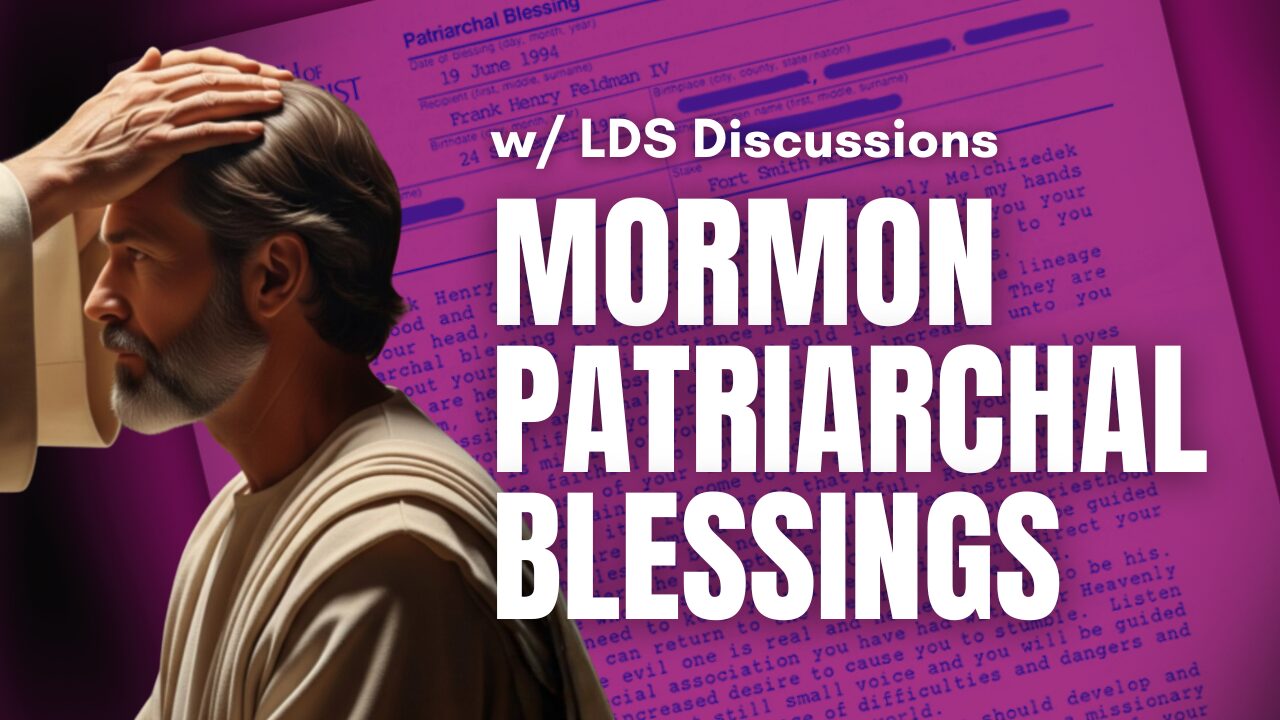
Thumbnail Credits: Main image created by AI; Background image taken from thankgodimatheist.com, blessing shared publicly.
Originally published on mormonstories.org.
Transcript
Machine-generated and lightly edited. Click any timestamp to jump the audio to that moment. The audio is authoritative; please check it before quoting.
Introduction and Episode Overview
John Dehlin Hello everyone, and welcome to another edition of Mormon Stories podcast, LDS Discussions Edition. I am one of your hosts for today, John Dehlin. It's April 20, 2023. That's when we're recording. And we are here today to talk about patriarchal blessings as part of the LDS Discussion Series. Those of you who are listening are probably well aware by now that the LDS Discussion series is all about our attempt to create a, you know, 50, 60 episode series where we try to discuss evidence for Mormon Church truth claims from an as objective as a lens and as a discussion as we possibly can. We're trying to just target this for people trying to learn the truth and discover the truth about the Mormon Church and its truth claims so that they can make informed decisions under the principles of informed consent. So that's the spirit of LDS discussions. Some weeks we probably do better job than others at neutrality, but today we're at part six in a miniseries within the series on revelation and personal revelation, etc, and that's what we're going to be covering today. And with us for the LDS discussion series is Mike from the ldsdiscussions.com website. Hey, Mike.
Mike (LDS Discussions) Hey everybody. How's it going?
John Dehlin It's good to see you, Mike.
Mike (LDS Discussions) Good to be back tackling the final part.
John Dehlin Absolutely. And we have Nemo from Nemo, the Mormon YouTube channel. Hey, Nemo.
Nemo Hey.
Mike (LDS Discussions) Hey.
Nemo Got a bit spicy last week.
Guest 2 I'll.
Nemo I'll rein it in this week.
John Dehlin Well, I'm honored to have you both. And for those who are just brand new, we'll just remind you that this is part 40 in the series and we really do believe that you'll be best served to go back to part one of the LDS Discussion series and watch them in order because these episodes build on each other. You can access the LDS Discussions feed in in numerous ways. There is a playlist on the Mormon Stories Podcast YouTube channel where we've got them all listed sequentially. You can also go to Spotify. There's an LDS Discussions podcast that's dedicated there in both video and audio. And of course your Apple Podcasts app. And wherever else you get your podcasts, you should be able to find an LDS Discussions Dedicated podcast episode. And these episodes are woven into the Mormon Stories podcast feed as well. And of course I've already mentioned that Mike has written 50 plus 60100 essays on Mormon Church truth claims and they can be found@ LDSDiscussions.com all right, Mike, how should we begin today?
Mike (LDS Discussions) We can just jump right into this one. We've done five earlier episodes on Revelations. And we've kind of covered how Joseph Smith backdated revelations and prophecies into the Book of Mormon, into some of his own revelations. We talked about in the first episode, Then we talked about Joseph Smith's problematic revelations, his failed revelations, what motivations he might have had for using Revelations as a vehicle to get the early members to do the things he needed them to do. We talked about revelations in the church since Joseph Smith all the way up till today, and then we talked about personal revelation. So now we're on patriarchal blessings, which in a lot of ways, kind of encompasses a few of those, because this is a thing that most members of the church get, where it's a considered revelation from God that is personal to you. So it kind of has a little feel of personal revelation, and it also has a feel of revelation within the Church itself. So it's a really important topic that I know is talked about sometimes. But to dedicate an episode, I think is important because patriarchal Blessings still in 2023, have some degree of impact on every life of the member who gets it, based on how seriously they take it. And the church wants you to. To take it very seriously, which we'll cover, because just this year, just this past, you know, few weeks ago, at General Conference, they were emphasizing how important patriarchal blessings are. So we want to go over what they are, how accurate they've been, and the implications that come with getting one from the church.
John Dehlin All right, well, let's just jump into the first slide then. And then Nemo and I, and maybe you, Mike, will talk about briefly our own experiences with patriarchal blessings, but give us the introduction.
What Are Patriarchal Blessings?
Mike (LDS Discussions) Yeah. And so for those who are not aware, patriarchal blessings are given to members of the church by church patriarchs. And each one of them is going to include revelation from God that is given to the patriarchs that gets given to you. So they're kind of like the patriarchs are almost like a middleman here, and they give you what lineage you're from, what tribe of Israel you're from, along with revelations about the life ahead of you. And so this is from the church's own Gospel Topics Manual on Patriarchal Blessings. And it says every worthy baptized member is entitled to and should receive a patriarchal blessing which provides inspired direction from the Lord. Patriarchal blessings include a declaration of a person's lineage in the House of Israel and contain personal counsel from the Lord. As a person studies his or her patriarchal blessing and follows the counsel it contains, it will provide guidance, comfort, and protection. And, you know, just for me, the key phrase in there is that you will receive personal counsel from the Lord because the church is not mincing words. They're not trying to pull their punches. These blessings are considered direct revelation to you from God through the men that the Church has called as patriarchs. And so this is an area that's going to become incredibly problematic because throughout the Church's history, these blessings have been riddled with a lot of failed prophecies and a lot of problematic language. And this is a very good indication that these personal revelations that are given through these patriarchs do not actually exist within the Church with regard to being able to say they come directly from God because of these issues. Just as we've talked about with the problems with, with Joseph Smith's revelations as well, when you can look at historical backgrounds as well as to see if the earlier revelations are being fulfilled, we are again seeing that, no, they're, they're not being fulfilled and they're failing in, in a lot of key ways.
Personal Experiences with Patriarchal Blessings
John Dehlin Yeah. And since people are going to find this just through SEO, not even tied to the LDS discussion series, I'll just give a little bit of background on how I remember my patriarchal blessing. And Nemo, you can share as well. And Mike, Mike, did you get a patriarchal blessing even though you were a convert?
Mike (LDS Discussions) I didn't, actually. What's funny? Well, my, so my wife got hers before, before I joined. And so after I joined, no one ever mentioned it. And so it was one of those things where I just kind of, I, I, I just, it never came up. Everyone had already gotten there.
John Dehlin That's why you fell away, Mike. You didn't have the iron rod to help.
Mike (LDS Discussions) Well, I wish, I wish I had gotten it because I would love to look at it now through the lens of, you know, having that experience and seeing how did it compare, how did it hold up? But yeah, I never got one.
John Dehlin No worries. Yeah. So for me, this is the way I experienced it. You know, you learn about page hugger blessings growing up, and then when you're around 12 or 13, they start talking about it and saying, hey, when you feel ready, it's kind of a rite of passage in Mormonism, kind of like first communion or quinceanera in the Catholic Church. You basically, it's usually in your teen years, you want to be kind of worthy, you want to kind of be ready for it. But the way it works is you go to your bishop and you say, hey, I think I'm ready for my patriarchal blessing. He gives you an interview, make sure you're worthy, and then what you do is, you know, like you mentioned, Mike, there's a, you know, usually a 60, 70, 80 year old man in your stake, which is like a diocese, where his dedicated calling, you know, is to be what's called a stake patriarch. And literally his job is to give these patriarchal blessings to all the members of his stake during the time he is a stake patriarch. And and so that just means that a lot of 14, 15, 16, 17, 18 year olds end up, you know, coming over to his house. They're usually encouraged to have a very spiritual home, a home that feels sacred. And you show up at a dedicated time, he may interview you a little bit first. Before you get your patriarchal blessing. I think you're supposed to kind of go into your patriarchal blessing, having fasted, having prayed, wanting to make sure the spirit's there. And you know, when you get your blessing, like you said, Mike, you're told what lineage you're from, which people are like, what does that mean? Basically, Mormons believe that everyone's either in one of the tribes, the 12 tribes of Israel, blood wise, or they're spiritually adopted into one of the 12 tribes of Israel. So it's most common within Mormonism, for whatever reason. I'm sure there's a scriptural historical basis for this for white Mormons to be declared of the lineage of Ephraim. And then oftentimes people of color have been historically assigned to the tribe of Manasseh. And then occasionally a Jewish person, if they have a Jewish heritage, they might be declared the tribe of Judah. I don't know that I've ever heard of, of anyone being declared of any other lineage than, than Ephraim, Manasseh or, or Judah. You guys can correct me on that.
Nemo I knew some people who were in Dan, for example.
John Dehlin Okay, were they people maybe whose dads were bishops or something like that or.
Nemo No, they just like. And, and these people thinking about them, people in their family had different lineages and I guess siblings had different houses.
John Dehlin Right, right. And I guess, I guess the idea, what is that there were 10 tribes of Israel carried off to the north. Those are the lost 10 tribes. So we don't know where those are. But the two tribes that remained behind in southern Judea or southern Israel were Ephraim and Manasseh. Does that sound right, Nemo?
Nemo Yeah, that's, that sounds about right to me.
John Dehlin Okay. Yeah. But, but really what it is is you, you get your blessing. The patriarch puts his hands on your head, and he records the blessing on a tape recorder or on a digital recorder. And he basically says, your name says, heavenly Father, I declare this is your patriarchal blessing. I declare your lineage. And then he goes on to talk to you as if he is speaking in the voice of Heavenly Father. And he'll tell you things like, you'll serve a mission for the church, you will baptize thousands of people, or you'll be married in the temple, and you'll serve in big callings in the church, and you'll have lots of children and a righteous posterity. And, you know, obviously there are. There are frequently, coincidentally or not coincidentally, lots of prophecies in the patriarchal blessing that, that the church would. Would want you to have if you were to sort of separate this whole discussion from just what the church would want. What does the church want? They want everyone to be faithful growing up. They want everyone to serve a mission. They want everyone to get married in the temple, they want everyone to have lots of kids. They want everyone to serve in the church, and they want everyone to stay faithful until the end. And lo and behold, almost everyone's patriarchal blessing pretty much mentions all those things, along with potentially other creative things as well. And some of the more creative things that I've heard, I've heard people promise that they would be one of the two prophets to die in the streets of Jerusalem in the last days. I've heard people, you know, told that they will serve in the highest levels of leadership with the church, in the church, making people think that they'll be an apostle or a member of the, you know, church auxiliaries someday, the. The top levels of leadership. Sometimes people are told they'll get married, but you know that sometimes people don't get married, or sometimes they're told they'll have kids, but sometimes they don't have kids, or they're infertile or they experience infertility, or they're told they'll serve remission, but then they don't, for whatever reason. And so this is when kind of the rubber ends up meeting the road. The last thing I'll say, just really quickly is usually at the end, they declare your status for, you know, what. You know, what your. Your station in the afterlife will be if you're faithful. And, you know, for mine, it basically said, you will. You will arise in the morning of the first resurrection, you know, to meet our Lord and Savior. And basically what it's saying there is, you will. You will be exalted to the highest degree of the celestial kingdom, which means you'll become a God someday. At least that's what it meant for me. And so if you're told that you'll be rising in the morning of the first resurrection, that's supposed to be a really good sign. Mine also told me that I should obey the law of chastity and, you know, obey the word of wisdom, and that I'll be strengthened and fortified if I do those types of things. And then you usually keep a copy of your patriarchal blessing in your scriptures. In the mtc, when I was serving my mission, we would laminate our patriarchal blessings and then take them with us on our missions, keep them with our scriptures and then read them as if they're scripture for us. And you're not supposed to share your patriarchal blessing with other people. And I think we're going to get to why that is. Now, Nemo, that's kind of my reflections on my patriarchal blessing. Anything you want to add? Is it different in the uk?
Nemo Well, not particularly. I've got my laminated copy here from my scriptures that I. That I went through. I've just been reading through some of it while you've been talking, John. It's quite interesting. I'll pull some tidbits out later during. But yeah, I was promised some special callings and ordinations and other things like that. I was told what my status would be at the second coming of the Lord. I was told I'd get married, told I'd serve a mission, told what sort of career to choose. But what I do remember is that on that day, I was 16 and the patriarch forgot to declare my lineage.
John Dehlin Oh.
Nemo So I had to go back to his house. So we were driving home and I get a call, oh, I forgot to declare your lineage. None of us noticed, so we had to go back. And then the problem is, because everyone's from Ephraim, you think, oh, he's forgot to declare my lineage. So it's really underwhelming when he just pops his quick hands on your head and goes, yep, Ephraim. And then off you go again. Kind of ruins some of the. The magic and the mystery for me personally, having him sort of forget that. But, you know, you just kind of go along with it because the bit before was a spiritual experience. And, you know, there's parts of my blessing that refer to what the weather was like that day. Maybe that's a specific British thing. We love talking about the weather.
John Dehlin Yeah. Yeah. And that's a really. That's a really good point, Nemo. And if I've. If I've noticed patriarchal blessings being problematic, because what's not to love about everything we just said, other than the fact that for me, just the idea of blood lineages is kind of racist, and it may not be racist in the sense that we think of, but what's implied is a chosen blood lineage that God has selected. What about Asians? What about Africans? Like, that's a problem. But other than that, where I've seen to be a problem is if. If instead of your lineage, the patriarch forgets to mention that you're going to get married or in the temple or forgets to mention you're going to have kids, it literally would make a Mormon think, oh, my gosh, I'm not going to get married. Or, oh my gosh, I'm not going to have kids.
Mike (LDS Discussions) And.
John Dehlin And it would, it would. A simple error in judgment or an omission would. Could cause a lot of disruption in someone's life. We're going to say something, Nemo.
Nemo Yeah. I've just looked at where he's declared my lineage, and he declared me to be a literal member of the House of Israel. So I was literally an Ephraim. So, like, not.
John Dehlin Not adopted. Okay.
Nemo Birth. But then ancestry DNA disagrees, so.
John Dehlin Oh, what is that? What does ancestry say?
Nemo It says I'm 2% Norwegian and then English through and through.
John Dehlin Oh, so not Jewish. Not Jewish, no. The other thing I've noticed, and, and I. I hope I'm not stealing your thunder mic, is that it turns out that patriarchs tend to have their own fingerprint for the blessings they give. And obviously they. They probably come up with some template of the things that they normally say so that they're not having to come up with new original things every single time. And also so they don't forget stuff. I'm sure. So oftentimes you'll read your patriarchal blessing, thinking it's really amazing. But then you'll read the blessings. If you break the rules and you read the blessings of other people who receive blessings from the same patriarch, you'll notice that they're very, very, very uncannily similar. And then you read from patriarchal blessings from other patriarchs, and they're very different. And you realize that a lot of those similarities are possibly due to them coming from the same patriarch. Okay, so that's my. That's my best attempt at kind of summarizing it. Mike, let's. Let's go back to you.
Mike (LDS Discussions) Okay. Yeah, we can go to the next slide.
John Dehlin Okay, here we go.
Mike (LDS Discussions) And so this is one of the,
John Dehlin this is where to do this slide.
Mike (LDS Discussions) Yeah, we just did this.
John Dehlin Okay, here we go. Yeah.
Mike (LDS Discussions) So this is one of the key things we've been talking about throughout these, these overviews, which is if patriarchal blessings are truly from God, as we are told they are through the the Mormon Church, then they shouldn't be wrong. And one of the easiest ways to do this is to look at the patriarchal blessings that we have recorded in Joseph Smith's day. They told member after member that they would live to see Jesus Christ return before they died. And that, of course, just never came to pass. And so they have 57 known and recorded patriarchal blessings in the 1800s that specifically said that church member would live to see the second coming. And 51 of them were told that they would see this the last days. And so here are a few examples. We'll read of some of the key early members in what was in their patriarchal blessings. So there's going to be two prophets in here. Edward Partridge, who was one of the, I think the first bishop in 1835, his patriarchal blessing said, the Lord will preserve thy life till a good old age, and thou shalt also live to see the heavens opened, for thou hast desired this thing and shalt see the Son of man in the flesh. Didn't happen. Lorenzo Snow, who would be a prophet, December 15, 1836. Thou shalt have power to stand in the flesh and see Jesus come in the clouds. Didn't happen. Wilford Woodruff, April 13, 1837. Thou shalt stand in the flesh and see the winding up scene of this generation. And that didn't happen. And so these are all from Joseph Smith Sr's Patriarchal Blessings book, and I think I'm going to cover it in some slides. But in the early days, Joseph Smith, senior Joseph Smith's father, was deemed the church patriarch. And so he's giving these revelations in charging people a dollar to get them. And so in a lot of ways, this is kind of a little bit of a money making part for his father, who, as we've talked about in previous episodes, was not a very good businessman and also had a lot of failed businesses and a lot of other issues. And yet he were being told this guy can, can receive, you know, these visions, these revelations from God for the low, low price of a dollar. And as we can see now that what he's giving is completely incorrect.
Nemo Can I throw you an apologetic, though? Yeah, please do can you pull that slide back up on screen for a second? So if you look at the specifics of what was said. So you've got, for Wilford Woodruff, for example, thou shalt stand in the flesh and see the winding up scene of this generation, you could argue that he has been resurrected in the morning of the first resurrection. And then he's seeing it all kick off the same with Lorenzo Snow. He has the power to stand in the flesh because of his resurrection and see Jesus Christ coming in the clouds, perhaps. Do you think there's any wiggle room in there in that language?
Mike (LDS Discussions) Well, we'll get to it in a little bit, but the wiggle room is going to be that the church today is going to go, if it doesn't happen in this life, it could happen in the next life.
Nemo Which is kind of what I'm saying, I guess.
Guest 2 Oh, yeah.
Nemo Oh yeah.
Mike (LDS Discussions) I totally get it. I think it's, it's an apologetic. They're going to. I just feel like at some point you got to look at that and go, really? Is that really what you're going to say? Because everything from the church at that point was pointing to the end of the world happening in that generation in that time. We talked about that. And so, I mean, you could do it. I just don't think you could do it and remain kind of intellectually consistent with other issues.
Nemo Cool.
John Dehlin And I'll just say, yeah, Mike. And, and I forgot that this was a really big deal as I was a teen growing up asking a lot of questions because not only did, you know, 57 known people or 51 or whatever, were they told in their patriarchal blessings back in the early 1800s that they would, would see Jesus like, I think multiple patriarchal blessings from every generation between the beginning of the church to my generation that was a teen in the 80s, people receiving that in their patriarchal blessings all the time. It was just super common to be told in your patriarchal blessing that you would live to see the second coming of Jesus. In fact, that was probably the biggest thing that I wanted to hear in my patriarchal blessing as a teen was that I, you know, I was so enraptured by the signs of the times and the second coming of Jesus because after all, it is the church of Jesus Christ of Latter Day Saints, that that's the one thing I hoped most, other than, you know, being resurrected in the morning of the first resurrection, to be exalted. I wanted to think that the second coming would happen during my lifetime. And the problem is that. That hasn't happened now. I remember asking my seminary teacher about that yet. Yeah. And. But I remember asking my seminary teacher about that, and he would say things like, well, how do you know that Edward Partridge, Lorenzo Snow, when they died, didn't have kind of an end of life experience where they met Jesus as they were dying, as they were being, you know, as they were shuffling off the mortal coil or whatever it's called, and joining the choir, invisible. How do we know that they didn't see Jesus at that moment? So for them, they did see Jesus. It was that sort of apologetic that I heard, in addition to, you know, like you said, Nemo, maybe they were immediately resurrected and we just don't know it. So those are the types of ways the church has to kind of explain failed prophecies. Right?
Mike (LDS Discussions) Yeah. I mean, and again, we could look at Edward Partridge and his patriarchal blessing. It says, you're going to live to a good old age. He lived to 47. I don't know. Think you could call that a good old age even in that time.
Nemo So, I mean, that's presentism, Mike. Yeah, yeah.
Mike (LDS Discussions) That's just it.
Nemo It's like, sorry, I'm being facetious.
Mike (LDS Discussions) No, I know you are. And. But that's the thing. Like, you could keep playing these games, like, well, maybe it didn't happen yet, maybe it's gonna happen the next life. But at the same time, these patriarchal blessings are pretty clear it's gonna happen before you die. Not, it's not saying. You know, it would be amazing if the patriarchal blessing said to Lorenzo Snow, you are going to die, and then in the second life, you're gonna see Jesus, because you can't prove that one way or the other. But they're not. They're not even trying to parse those words. We are now trying to do that for them because we're trying to find a way to make it plausible because of the fact that these patriarchal blessings are very clear. And they're getting it wrong.
John Dehlin Right.
Nemo I was told I wouldn't live to see it. So there we go. I was told that I would. Yeah.
John Dehlin Yeah. What happens when a patriarch says, you're gonna die earlier? A patriarch says, more severe. Right.
Nemo You know, he said, the time will surely come when you'll be caught up to join the hosts of heaven as they come down with the Savior when he returns to the earth. So it's like, right, okay, so I'm already going to be up there when it all kicks off. So. And then when you consider that one of my parents, I won't say which one of my parents, was told in their patriarchal blessing that they would see the Second Coming. I was like, oh, okay, great. So I'm going to die before one of my parents then.
John Dehlin Yeah.
Nemo Because, you know, I'm going to be up there when it all happens, but they're going to live to see it. So I had a lot of anxiety about dying, about dying early. Yeah.
Guest 2 All right.
Nemo Yeah.
Blessings as a Mechanism of Control
Mike (LDS Discussions) So we could go to the next slide. We could kind of look at how we talked about this in our episode about revelation in the church, especially after Joseph Smith. But you could see how the Mormon Church has watered down patriarchal blessings as well. And this is what happens when you have people being told really crazy stuff like they're going to live to see Jesus, or, you know, like you had mentioned earlier, you've got these different promises, maybe to be high up in the church or whatever the case might be. And so the church is going to come out and basically tell these patriarchs that you got to calm down. And so they even have these directions in their different handbooks for the patriarchs. And in 2016, they're telling these, these old men, you got to stop making these, these grand promises. And the handbook literally says, he, the patriarch should avoid sensational or extravagant promises. For example, he should not make references to the timing of the Second Coming. And it just is one of those things where you look at that and you go, if the patriarchs of the church are truly receiving revelation from God for these blessings, as we're all led to believe, why in the world do they need guidelines from a handbook at all? Why does the church feel the need to tell the patriarchs how they have to filter personal counsel from God that they proclaim patriarchal blessings contain? And it's just as we've talked about with revelation before, the only reason the church needs to tell someone not to make references to anything specific is because they know that every time these people have done this in the voice of God before it fails, and when it fails, it tells that the tells us very clearly this is not coming from God, but it's coming from these old men. And as John had mentioned earlier, this is particularly true when you look at how these patriarchal blessings are almost like a boilerplate, boilerplate template by these patriarchs, which is why they all read very similar, with almost like the details swapped out, almost like a mad lib. If you're familiar with those, where you've got like a template and you're just throwing in nouns and verbs. And so now they're. You have the church trying to water down patriarchal blessings by telling the patriarchs what they can and cannot say, which should not be an issue if they're truly coming from God.
John Dehlin Yeah, that's almost in and of itself a smoking gun. Challenging the validity of patriarchal blessings. If there has to be something in the handbook saying stop making these promises, why were they making the promises to begin with? And I just have to say this was a thing when I was growing up trying to make sense of all this. So I guess it was advantageous for the church to implement this policy. But it calls into question the veracity or the validity of a couple centuries worth of LDS or Mormon patriarchal blessings.
Mike (LDS Discussions) Yeah, yeah.
Nemo Because the, the over scrupulous teenager can start trying to rip this thing apart word by word and try really hard to work out what exactly it means and what does it mean for my life. And you're told to study it and some people can study it to quite extreme lengths.
John Dehlin Yeah, yeah, absolutely. Okay. All right, so what, what comes next?
Mike (LDS Discussions) Mike, let's go to the next slide. And you know, we've talked about this before with other aspects of the church, but patriarchal blessings are a mechanism of control over members. I talked about this when we talk about the word of wisdom, when you have to wear church required underwear when you go through the temple, you know you're going to hear and you're going to hear it later in this episode. Church leaders are going to tell their members to read the page their patriarchal blessings when they're having times of doubt or times of trouble, and that if they follow the guidelines in the blessing, it will help them get closer to God. And in turn, the leaders of the church. And I mentioned this at the start of the episode, but to some degree, every member that gets a patriarchal blessing will have it impact their life to some degree. And we all know people who have made life decisions based on their patriarchal blessing, Whether it's about what job to take, you know, when to have kids, whether to go on a mission, when to get married. And as we pointed out in the episodes about Joseph Smith's revelations, patriarchal blessings ultimately always lead members back to more obedience and loyalty to the church. And, and then the church uses the promises in those blessings to keep the members afraid of leaving. And it really is, in my opinion, an area where the church is giving you something that they can then use to hold over your head for the rest of your life, because it is basically you're going to get all of these things if you stay with us.
Nemo And it's really interesting. I don't think anyone's patriarchal blessing has ever said you will spend some time away from the church for a season or you know, you will leave God's flock but ultimately return or any of these things like, like which happens to a lot of people or you'll, you
John Dehlin know, you'll marry, you'll marry a non member and they'll never join the church. You know, it doesn't provide any prophecies that, that would actually, that be useful and, or that would actually come true aside from, I guess, like what we're saying. Whatever the church would, whatever type of behavior the church would want to encourage.
Mike (LDS Discussions) Yeah.
John Dehlin And then, and then if it does make some sort of dark, problematic prediction, that's fine if it were somehow divinely inspired, but more likely it's like a bad pastrami sandwich on the part of the patriarch and then they're just like saying whatever off the cuff. And it can wreak real havoc in the life of the person who's received the blessing.
Mike (LDS Discussions) Yeah, and it does. I mean, it does. And that's the thing. Like we'll go into it the next few slides, but these things impact people's lives in ways that is intentional. These are blessings that are meant to give you a roadmap to stay on for your life, which is ultimately again going to keep you with the church. And so it is going to impact your life if you are a member. Obviously if you leave, you're going to leave the patriarchal blessing behind with it. But I'm just saying, like, it will always hover over your head. If you do this, then you get this. And I do feel like that has led to people to make bad decisions. It's led to people to make decisions they might not otherwise want to make. And it's the exact same thing we saw in the episodes of Joseph Smith and Revelation, which is when you want people to do things they don't want to do, you give them commandments and you give them promises in the name of God because it gets people to do things they otherwise would say no to. And I just, it, it bothers me because of the fact that I've seen in my life and I've seen friends and family who've told me, yeah, I held on because I was promised this, or as we'll get to, I was promised this and it didn't happen. So I looked at, said, what did I do wrong? What do I need to double down on in order to get back on track to get those things I'm being promised. And when reality, it's just old men who are giving, it's almost like a presidential stump speech. You're just giving the same thing over and over and you're just changing the details a little bit based on the little bit of info you might have on a member in your pre blessing interview. Or maybe you know the family already and you can find a lot of people who have gotten their blessing and, and they'll say, oh yeah my, the patriarch was a friend of the family. And then their blessing will talk about your righteous family. And oh my goodness, I think you're going to be a teacher of kids. And it's like, well yeah, because he knew you were going to school to be a teacher. It's all of those things where they're not going to tell you in 30 years you're going to want to change jobs and move to a new state. But if you do that, ultimately it's going to cause you to run into problems. With xyz, you don't get specificity outside of what they already know. Just like we talked about with Joseph Smith in his Revelations where he cannot give you any information that he doesn't have access to. There's nothing specific he can or Russell Nelson today, they can't give you a single specific thing they don't already know. And you see it in patriarchal blessings over and over again.
Nemo Can I just add that pulling a patriarchal blessing into the broader Mormon context, I think it actually points to the underlying sort of transactional nature of Mormonism in that people will say, oh well, I've been promised this. So if I, then I will receive, you know, if I X, then I'll receive Y. And that is fundamental to Mormonism in a way that's slightly unique, I would argue because again, you have people, when they argue about the church's money, for example, they say, well, I don't care what happens to my money because I pay tithing so that I get those promised blessings. Tithing is about receiving those blessings. Well, actually no, tithing is really about giving a sacrifice. That's what it's about. It's not about, well, if you give that, then God will give you. The windows of the windows of heaven will be opened and the blessing will be poured out that you shall not have room enough to receive it. Whatever, you know, it's not actually about that. But in Mormonism there is that transactional underlay to basically everything is if Then if I do this, then I will receive this.
John Dehlin Yeah. And there's a. There's an element of blame reversal that happens when a person, prophecy in the patriarchal blessing doesn't come true. If it comes true, then the church is going to claim the credit. Like, see, the patriarch got it right and predicted it. If it doesn't come true, if you're told that you'll marry in the temple and you don't, or you're told that you'll serve a mission and you don't, or you're told that you'll have kids and you don't, then we're conditioned to think that maybe it's because we weren't righteous enough and that it's our own moral or spiritual failing that that led to the prophecy not coming true. And in that way, the house, the Mormon House, always wins. And that's a problem. The only other thing I'll say is something that we've kind of referred to, which is it almost seems like, just like it's said in, in modern times, that the Mormon missionary program is more for the missionaries to train and condition them to, to be lifelong devout members. It's more for the missionaries than for the potential converts. I think patriarchal blessings, you could argue, seem to be more for the strengthening of the church, for the conditioning and the influence over the members, than maybe it really is about necessarily the genuine welfare of the members. Although, you know, maybe on the flip side, there's some value to telling people, you're going to be strong, you're going to be good, you're going to be righteous. Maybe there's some placebo effect there. Maybe there's some, you know, maybe there's a positive effect to telling people that they're awesome and there's going to be good things that are going to come from their life. Is that fair to say? Nemo. What?
Nemo Yeah. There's a sense of purpose that comes with it.
John Dehlin Yeah.
Nemo You know, some people. A lot of things that some people will report when they have a faith crisis or a trust crisis or they leave the church, they'll report that they feel a bit aimless, that they're not quite sure what's in. Because they had the roadmap, they had their life planned out for them until they die and then even into the next life. And now they're like, oh, okay, I'm not sure what to do now. So. So there is some security. Those things aren't always healthy that they're going to have you doing until the end of your life. But there is some security in knowing that this is the path my life should take.
John Dehlin Yeah. In my case, I was literally promised that if I obeyed the word of wisdom, I would have energy and strength and vitality and live a long time. I'm paraphrasing. It's been a while since I've read it, so. I'm 53, and to this day, I've never tried alcohol or cigarettes or marijuana, partly because I just wanted to fulfill my patriarchal blessing and maximize my health and well being. Now, it's pretty much a fact that alcohol only has a negative impact on your health. So the fact that I've avoided alcohol for 53 years, some would argue is probably a good thing. And then in that sense, or I'm glad that I married Margi. I'm glad that I've had the kids that I've had. I guess we're kind of already picking apart patriarchal blessings, but we haven't given. Given enough credit to the fact that maybe these blessings, like you say, Nemo, give a lot of people a sense of meaning and purpose. Now, Mike, I know you've got a slide to talk about that, so.
Mike (LDS Discussions) Yeah, yeah, we'll. We'll get to that, too. I mean, it's true, you know, there we do have that balance. And at the early parts of these, the series was, is the Church good or is the church. I'm so sorry, Is the Church true or is it not true? Are the claims true or false? And now we're getting into that less from a historical standpoint and getting into that gray area of is the Church good or not? And that is something we have to measure because it's not all good, it's not all bad. And where you view that is going to come based on how you view how the church handles the areas that are of interest to you. Like if you are, if you have an LGBT family member, you might look at the church, say it's bad because it's marginalizing a family member. But on the flip side, like you said, if you have someone who reads their patriarchal blessing and says you're going to marry, marry a worthy priesthood holder, you're going to have children, you are going to hold big callings in the church, you're going to pay your tithing, you're going to obey the word of wisdom, you're going to go on a mission and, and you do all those things and your kids turn out to be pretty good, and you get a good job or your stay at home, whatever it is, and Things are good. You're going to look at that and go, because I stayed on this, my life is good. Now, I would argue the patriarchal blessing isn't what made your life good. But at the same time, that is an arguable defense, as you said, to say that there is good that can come from it. But at the same time, as we've talked about, there's a lot of harm that comes from it, too. And so I guess that's where you have to weigh it and say, if you're speaking in the voice of God, is it really good to tell people things that aren't really for coming from God? And. And that. That's definitely something people have argued about with every religion for a long time.
John Dehlin Right. All right, let's go to the next slide.
Harmful Promises Around Fertility and Women
Mike (LDS Discussions) Okay, so. And this is what we're talking about, because in many modern patriarchal blessings, you're going to read that these young women, you know, because you. A lot of times you get it when you're in your, you know, late, late teens, they're told they're gonna have children, and then all of a sudden they find out that they have trouble conceiving children. Whether it's from them or their spouse, they never get married, or they get married and get divorced before they have kids, or they have tragic miscarriages to where it just doesn't happen. And I can tell you from people I've known, the amount of pain that this causes women and men in the church to not be able to have children after getting patriarchal blessings, telling us that they're going to have kids. It causes a lot of problems. And it really is. It just is one of those things where, you know, you think of Mother's Day and you have people in the stands on Mother's Day, and you hear all these talkings about the importance of mothers, and all of a sudden you're sitting there going, my patriarchal blessing said I was gonna have a bunch of kids, and I don't have them. And I just. I feel like that is a lot of pain that is caused on them because these patriarchal blessings are making promises that they have no ability to fulfill. And, um, it's one of the things I talked about early on that in the Mormon Church, revelation and prophecy only really can be fulfilled when they have complete control over the situation. And in patriarchal blessings, they're giving you a roadmap, except they have no ability to control what they're telling you. And so it just really feels like it can lead to a lot of pain, a lot of confusion, a lot of harm. And as I said earlier, it really feels like we're in a bit of a Mad Lib style format where they just kind of throw out little different customizations based on the, you know, the little bit they know of the person. And that can cause harm because not every person is going to be in that same boat. And, and as I said, it's dishonest, it's unethical, it's immoral to tell these members of the church that you can see their future, that they, that you can know what their life is going to be like when you get it wrong. Time and time again, ever since Joseph Smith Senior was charging people a dollar for what is effectively, you know, a psychic reading rebranded as Revelation.
John Dehlin Yeah, Nemo, anything you want to add?
Nemo I was just looking at my patriarchal blessings, seeing if it mentioned whether I'd have children, and it does. So, you know, you've got, you've got that where I now, I was determined then to have children. I don't have any children currently. But, you know, there's that promise in there. And then that can put stress onto a marriage, particularly, like you said, if someone would be infertile or have fertility issues.
John Dehlin Yeah.
Guest 2 Yeah.
Mike (LDS Discussions) Okay. Yeah. So now if we go into this next slide, it's going to kind of illustrate what I'm trying to point out about how this can cause pain. And so this is a patriarchal blessing that was given recently, and it was. Someone had posted it and I saw it and I thought this quote was. Was actually one that kind of illustrates this point. And so this is from a woman's blessing, and it says, your Father in heaven will send you choice children that have been reserved to come in this time to your home for you and your eternal companion to raise them in a home, a family home, evening family prayer, studying the Scriptures and attendance to church. Wherever you are in life, always attend church, partake of the sacrament, and remember the Savior and all that he did for us. And you know, just to point out, again, this is given to someone before they're married. So imagine that you either never get married or that you get married and you're unable to have kids for whatever reason. And it happens all the time. And I've been around people who have dealt with this, and I cannot tell you how much pain it causes people to see that you're supposed to have choice children sent to you, and then all of a sudden you can't have them because all of a sudden, you know, you're Looking at yourself and going, what did I do wrong? Or you also have people who will say, what is my spouse doing wrong? I'm doing everything right, yet we can't have kids. So is it my spouse that's messing this up? And when you pair this idea of choice children, which I also think is a really arrogant way to say that in the church all of your kids are going to be awesome with this idea that it has to be paired up with family home evening and all this other stuff, you can no longer say that this might take place in the next life, unless you really want to pretend that in the eternities we're going to be doing family home evening and all this stuff, this is written to say that in your lifetime, in this lifetime, you are going to have choice children sent down. And so when it doesn't happen, when these blessings fail, and they fail all the time, as John said, it really does put almost a blame reversal where you're blaming yourself because you clearly have to be the reason that this is failing. It can't be the fault of a 70 year old man who's giving the same blessing over and over again. It has to be you. And I just, I feel like that is so painful and harmful and I think it's really immoral of the church to continue to do this under the premise that this is coming directly from God.
John Dehlin I just looked up infertility rates and it says in the United States, among married women aged 15 to 49 years with no prior births, about 1 in 5 or 20% are unable to get pregnant after one year of trying. Also, about 1 in 4, 26% women in this group have difficulty getting pregnant or carrying a pregnancy to term. It's called impaired fecundity. And there have been several Mormon stories, episodes that convey the pain and the suffering of many of these couples who experience infertility within a Mormon context. And we can't do it justice just by yapping about it. You just have to hear these mothers and fathers or husbands and wives sob over how difficult it was to, to have this expectation planted by a patriarchal blessing, to carry it for years and then to have a different outcome. Nemo, is there anything you want to add?
Nemo Just looking at my patriarchal blessing, I'm going to be doing a lot of that this episode. Sorry, but I think it adds a personal touch. It tells me that children will be a source of joy and your family will be strong and example to others. So what does that do when, say, one of these children? Even if you're able to have children, then leaves the church. Then you're like, oh, well, I failed then. So, yeah, what did I do wrong so that my family isn't strong and example to others. What if my children don't bring me joy? If I was a woman, I was reading this. What if I get postnatal or postpartum depression? And then it's like, okay, well, my children aren't bringing me joy, so what's wrong with me? At many turns, normal, ordinary human emotions and experiences can be turned into a rod with which we beat ourselves. Because when things aren't, the normal emotions and happenings of life aren't compatible with the sort of perfect image that's often portrayed. Hope. That makes sense. Yes.
Mike (LDS Discussions) No, it's true. And I. I don't want to hammer this point too much, but as Nemo is saying, he's got this blessing of saying your kids are gonna be a source of joy and say your kids get into some horrible stuff, and it's really stressing you. I mean, my goodness, I know people where their kids getting, you know, arrested, and, you know, you're. You're sitting there having to find ways to get them help, to get them out of. Of legal trouble, all this stuff. And then you might have some bishops say, why don't you go read your patriarchal blessing? It'll help you. And you read it and you're like, holy crap. It's making me worse. Because this blessing is telling me there's supposed to be a source of joy, and yet it's causing a lot of stress. And that happens. And I just. It's. It's. That's why I just. I feel like when you're. You're doing what is effectively a psychic reading and you're telling these members, this is a road map for your life, I just feel like it is so unethical. And when you look at how many times it's failed in the past for so many people in such big ways, to continue to portray in 2023 as if this is direct, personalized revelation from God. I just. I feel like there's no excuse for the leaders to continue to do this outside of wanting that element of control over members, because it does force you to constantly look at that blessing and say, what did I do wrong to make this not happen? What do I need to do? I. E. How do I need to double or triple down in the church to get back to where I need to be to get these blessings? And it's just. It's awful.
Problematic Themes and Failed Prophecies
John Dehlin All Right, let's go to the next slide.
Mike (LDS Discussions) Yeah, and so this next slide is from that same blessing that we just referenced. And I just want to point out. So this Blessing is from 2013, and this is in the early part, I believe, of the, of the blessing. It says, you had a marvelous premortal life. You were among the sons and daughters of God that shouted for joy when the earth was created. You were reserved for 6,000 years for this day, and your father in heaven was mindful of you, for you were to be born into the Church of Jesus Christ of Latter Day Saints. And to the parents that you have, that you have that love with you, that love you with all their hearts, you rejoice in your sisters and your brother and your family. So just want to. Again, this patriarchal blessing, which we're told is coming directly from God, says you were reserved for 6,000 years for this day, which is telling us once again that in the Mormon Church, we need to believe that humans have only existed for 6,000 years, which is just horribly incorrect and right off the bat is telling you that these patriarchal blessings are not from God, but from men who are these old men who are trying to cement these old long standing, incorrect doctrines of Mormonism into a claimed roadmap for your life. And it's. On one hand it's comical because, yeah, we all know that this is just. I mean, we have study after study showing the Americas first had people at 30,000 years ago, and there's new research showing that humans have been in some form for what, like a million and a half years now? And so to pedal this in 2013 is laughable, but it's not funny because it is also impacting our lives in a lot of big ways.
Guest 2 Go on.
Nemo The apologist hats come out now. I'm like, well, what if they were only given their assignment 6,000 years ago and they were waiting for all the time before then to get their assignment about where and when they would come to earth? You know, there's a lot of people to get into bodies. There's that big eternal queue waiting. But Occam's razor and everything tells us that the most likely thing, given the background of Mormon doctrine that we know would be that that patriarch believes he has 6,000 years old and he's pushing that on. Yeah, because that was a Mormon teaching. Well, it still can.
John Dehlin 6,000 years. You were preserved for 6,000 years.
Mike (LDS Discussions) We haven't really done much on, like, the premortal existence doctrine in the church, but it's like basically saying that you were created 6,000 years ago by your heavenly father and someone's heavenly mother, one of the heavenly mothers. And then you were just told, wait for 6,000 years until you get your turn. The, you know, the, the queue finally got there and you get to come out. It's just one of those things where, as Nemo said, the apologetic I've heard is that there were humans here before 6,000 years, but they didn't have a soul. And, and that is something that church leaders have kind of proposed to try to make sense of the fact that we now have way too much evidence to say that people have been here for a lot longer. But as, again, what does Adam and
Nemo Eve think of their parents then?
Mike (LDS Discussions) Yeah, exactly.
John Dehlin How come.
Nemo Fraser, here's a wood.
Mike (LDS Discussions) Yeah, exactly. It's just, it's.
Nemo It.
Mike (LDS Discussions) At some point you just got to look at this all together and go. And as we said at the beginning, John said, that's why you watch these in order, because if you watch our Adam and Eve episode, you can kind of look at how the church has bought into this literal Adam and Eve story. And every Bible scholar that's especially any secular one, and most non secular ones. Dan McClellan was on Mormonism Live this week with Radio Free Mormon and Bill Real, and even he, you know, he's a, an active member of the church who is a Bible scholar, and he will tell you without any hesitation, the Adam and Eve story are late editions. They were not created until I think like the 7th 8th century BCE. It's just, it's not a historical story. It's a myth. It's an ideological myth. And so to have this cemented into a patriarchal blessing as if this is coming from God, is laughable. It's just, it's so bad. And this is from, this is from not 10 years ago. It's not. This is not a patriarchal blessing from 20, you know, 200 years ago. This is a recent one. It's just. I don't know what else to say.
John Dehlin Okay, all right, let's go to the next slide.
Mike (LDS Discussions) Yep. And so this one, I think, might rub some people the wrong way if you're a believing member, but I, I think so. I was a teenager in the, in the early 90s, or late, I guess, late 90s. So I watched a lot of TV and MTV and all that, and back when they showed music videos and there was this commercial you would see all the time of this woman named Ms. Cleo, and she was, would give you a psychic reading and you'd Call her and she, you know, basically, they charge you per the minute. She got sued to oblivion because of all the fraud practices within it. But in every single one of her commercials, and you could see it on the screen, if you're watching on the bottom right, it says for entertainment only. So even though she's telling you she could tell you your future and all this other stuff, every time there's a disclaimer that this is for entertainment only, it's not meant to guide your life. And I honestly think that the Mormon Church needs to have, at the end of every patriarchal blessing, something to the effect of for entertainment purposes only, not from God. This is just a blessing to give you comfort in hard times. Because right now they are absolutely telling you this is from God. We know it's not from God because it keeps failing. They need to have something on there so that members don't have as much pain that comes from these things failing as they do. And until they do, I just, I feel like they're being knowingly dishonest about what these blessings really are.
Nemo Yeah. Because my patriarch tried to put a little caveat in. He said, you have shown great promise, and if you remain faithful, for this is vital, no blessing that the Lord has promised to bestow upon you will be denied you. So this idea that, well, if I remain faithful, then all this will happen. And so that is their get out of jail free card. It's like, well, you weren't faithful enough, therefore. But what you're suggesting, if I'm understanding you correctly, is that we need to go further than that and stop claiming that this is in the voice of God when the things that God is supposedly saying are inaccurate and problematic.
Mike (LDS Discussions) Yeah, I mean, that's just it. At some point, as we talked about with just being open and honest, the church needs to be like, look, these blessings are meant to give you comfort. They're meant to be there for you when you're in a hard time. But they're not coming directly from God. They're not a, you know, the patriarch's not receiving this direct line from God. This is just the patriarch giving you a blessing. As someone who's been in the church for, for a long time. And therefore, it's just for comfort. It's not meant to be taken as a literal revelation from God. And until they do that, I just, I feel like they, they, they, they have the same access and more to the early patriarchal blessings, and we do. And so if we can point out over and over again that they're falling. They're failing.
Nemo What? Go ahead. Sorry. What comfort does someone get from a patriarchal blessing if they don't believe it's from God? This is that the value sell of it is that it's from God. The thing that makes it comforting is that an omnipotent deity is telling you these things about yourself and your future. So where's the value proposition of that? If you take that away, it's like when you go to a psychic, the idea that they have access to some sort of spiritualistic element of their lives and their existence that can help them guide you. And, and they can pass this information on. That's what the person going to them believes in order to get out of it. So, so you have. You almost have to have God involved. Otherwise you can't say it's just for comfort. Because how does it comfort someone?
Mike (LDS Discussions) Oh yeah, I get it.
John Dehlin And, and this is one of the problems of modern Mormonism, because there's kind of the literalistic version of modern Mormonism, which is this is God's one true church on the earth with exclusive authority. Joseph Smith was God's prophet next to Jesus in righteousness. Prophets from Joseph all the way down to Russell M. Nelson speak for God. The priesthood heals people. Patriarchal blessings are real. We can speak to God and get our own revelation. The scriptures are, you know, literally the words of God. And that's all very compelling. And we're literally the chosen blood of Israel, saved for the last days to usher in the millennium of Jesus. Like, that entire story is super compelling. What we find, though, is with the rise of information, with the rise of science, with the rise of the valuing of evidence, and specifically with the rise of the Internet, you'll just find the church having a walk back some, if not all, of those distinctive absolutist truth claims, because, you know, pretty much few to none of those truth claims really bear the light of full scrutiny. And that what it does is it ends up watering down the church, which ends up causing a bunch of people to either not take it seriously or leave it. So that's the dilemma.
Nemo Yeah.
John Dehlin All right, so let's go to the next slide.
Mike (LDS Discussions) Yeah, and this is why we mentioned this earlier, but, you know, let's. We're going to watch some clips from a Talk of the April 2023 General Conference, and it's all about patriarchal blessings. And this is a good way to kind of see how the church frames them in 2023. And so you're going to see a little bit about how the church nuances what they are, but you're also going to see how they also continue to portray them as being from God. And so this is Elder Yamashita, and he gives a talk, and he gives you two reasons that you need to get your blessing. The first one is that you get a personalized roadmap from God in your life. But then, of course, it could be in this life or in the eternities if the promises don't come to pass, and to find out which tribe of Israel you belong to. And so when you watch this clip, I just want you to listen to how much kind of waffling Elder Yamashita does when trying to explain that this is a roadmap, while also trying to make sure that you need to not expect it to actually get where you're supposed to go.
John Dehlin What I'm anticipating is, and I haven't seen this talk yet, is for, you know, they're trying to lower your expectations so you never lose your faith or beat yourself up or get discouraged. If patriarchal blessing doesn't come true and it wants you to fully believe and embrace all the. All the prophecies or the utterances that, you know, have you doing the things the church wants you to do, that's what I'm guessing it's gonna say.
Guest 2 Yeah.
Church Leaders on the Limits of Blessings
John Dehlin All right, let's roll. Let's. Let's go and roll the tape.
Guest 2 Let's consider two purposes for a patriarchal One, a patriarchal blessing contains personal counsel from the Lord to you. Two, a patriarchal blessing declares your lineage in the house of Israel. Your patriarchal blessing is a message from your heavenly Father and will likely include promises and inspire the council to guide you throughout your life. A patriarchal blessing is not going to map out your life or answer all your questions if it doesn't mention an important life event. Do not take the that to me. You won't have that opportunity. Likewise, there is no guarantee everything. Your blessing will come to pass in this life. A patriarchal blessing is eternal, and if you live worthy promises that are not fulfilled in this life will be granted in the next.
John Dehlin Yeah, well, there it is. We could have just started with that. What were you gonna say, Nemo?
Nemo It's like saying, well, if it's not mentioned in there, doesn't mean it won't happen. If it is mentioned in there, but doesn't happen, don't worry. So what's the point? Other than saying, well, it'll happen in the next life, but honestly, what we need to stop doing is saying, oh, well, the next life will sort it out. We need to stop teaching people to live for after their death. We need to start teaching people to live for this life, to serve others here now, to do good here now. Stop being like, well, it'll be fine because when I die, it'll all get sorted out. Because otherwise you have people just essentially sleepwalking through life, waiting for death because they've been promised that things will be better after they die. It's not good for people.
John Dehlin The other, the other problem I have is I, I, some people who are kind of free speech absolutists don't like it when I say this. But, but I literally believe that it should be illegal for anyone to claim that they speak for God just because it involves too much power. If you can convince someone that you speak for God, you can have close to full control over them if they're gullible and, or just really believing or if you're too persuasive. And what he just said is, it's literally the words of God to you. And, and I'm just saying, really, really? Elder Yamashita, like, what if the patriarch is abusing children? Is God still using him as a voice, Mouth as a voice? What if he's just senile? What if he has dementia? What if he's, like I said, had a bad pastrami sandwich or he's in a bad mood? What if he wrote the template wrong? Like, are you really going to be teaching all your members that every word coming out of a patriarchal blessing is the direct word of God to you? With the caveat that if it doesn't come true, it's going to come true in the next life. Like, it's just problematic. On.
Nemo And if God. Yeah, sorry. And, and if God's words to you don't conform to the handbook for Church patriarchs, then you should change what God's words say to you so that you don't make certain promises. So, like, God's words in this are under the control of church bureaucracy. Go on, Mike. Sorry.
Mike (LDS Discussions) Yeah, no, it's just it, we've talked about this a lot in the last few episodes and it really is like, heads we win, tails you lose. Because it says if it doesn't happen and it wasn't mentioned in the blessing. Well, what are you gonna do if it does happen and it doesn't take place? Well, it might happen in the next life. It just feels like it's like this all get out of jail free card. It's like whatever it says, live by it, but, like, don't expect it to work. It'll be like giving something. Like, you hop on a plane that's going to say New York City, and all of a sudden it lands and like, welcome to Boston. And you're like, what the crap? I bought a ticket to New York. It's like, well, the next plane may get there, dude. Don't worry about it. It just feels like it's just this. This blank statement to tell you anything might happen. Just keep sticking with us as the leaders of the church. I just.
John Dehlin I.
Guest 2 It.
Mike (LDS Discussions) It just feels right off the bat, like it's a very. It's like an honest way of saying this is not going to work, but just stick with us.
John Dehlin Right? All right, let's go to the next slide.
Nemo Yeah.
Mike (LDS Discussions) And so this is. Now is we all. Anyone who's watched General Conference knows that a big part of it is basically just constantly quoting leaders. And so Elder Yamashita is going to quote former prophet Thomas Monson to reiterate that getting a patriarchal blessing will provide you with a very personalized roadmap from God, as we talked about, is problematic when you read all the blessings of all the people that had things promised that never happened or things that we know should have happened in their lifetime and didn't. And as you're going to notice here, Monson's quote, which is from a previous generation, you know, because he. He was prophet. What, like, well, it wasn't that long ago, but, you know, he was 2008. Yeah, I think so. Yeah. And I don't know. I don't know exactly when this quote is from. So this could be from a couple decades ago. But the point is, Monson is not going to use the same loopholes and the same exit ramps the Elder Yamashita was using in the first clip we showed.
John Dehlin All right, let's roll the tape.
Guest 2 President Thomas S. Monson explained the same Lord who provided the ahona for Lehib provides for you and for me today a rare and valuable gift to give direction to our lives, to mark the others, to our safety, and to chart the way, even safe passage, not to a promised land, but to a heavenly home.
John Dehlin All right, Mike.
Mike (LDS Discussions) Yeah, I mean, there's not a ton to say there. I'm just pointing out that they're trying to quote these early leaders, and you can kind of see a little bit of the change in the way it's framed from Monson to 2023. So the waffling that you often hear now about, especially when they say if it does, if you don't have a blessing fulfilled, it really just means a good example is kids. Of course they'll say, if you were promised to have kids and you didn't because of infertility issues, you'll get them later on once you die, all of that will be fixed, and they'll get that in the attorneys. And you're starting to see how the further back you go, the more concrete the promises are. And now they're already starting to water it down because they want members who are starting to realize that these are not working out so well to have something to look forward to in the afterlife.
John Dehlin Got it. All right. Should we go to the next slide?
Mike (LDS Discussions) Yeah, we can go to the next one.
John Dehlin All right.
Mike (LDS Discussions) And you know this. I'm kind of riffing off of another quote from this past General Conference, but, you know, patriarchal blessings age much better than past prophets. And so Elder Yamashita states that patriarchal blessings take on new meanings as you grow older, and that the meanings will evolve as you can look back on them and reread them through the lens of belief. And so now he's going to quote Dallin Oaks, who's the next. Who will be the next prophet of the Mormon Church, who is saying that the blessing should be read line upon line and will be revealed by the same spirit that inspired the original blessing. Which, again, is problematic when you realize just how cartoonishly bad these patriarchal blessings have been throughout the church's history. So to say that, for example, that it will be revealed by the same spirit that inspired the original. If you go back to the early days, it would be like saying, well, your blessing will be revealed to you in the same spirit that Joseph Smith's father did when he said, you know, Jesus would come back in the flesh. It just doesn't work. But it's obviously a good quote to understand how the church is framing it today.
John Dehlin So are we rolling this tape?
Mike (LDS Discussions) Yeah, let's go for it.
John Dehlin Okay.
Guest 2 Mine has a different meaning now that it did when I was 30 and when I was 50. It is not that the worlds change, but we see them in a different way. President Darrin H. Oaks declared that the patriarch blessing is given under the inspiration of the Holy Spirit and should be read and interpreted under the influence of that same spirit. The meaning and significance of a patriarchal blessing will be taught line upon line in the cause of time by the power of the same spirit that inspired it.
John Dehlin All right, Mike. Or Nemo.
Mike (LDS Discussions) Yeah, Nemo. You could definitely go. I already kind of said my point
Nemo on that, surely what he said is kind of just self evident that when you read something that was making predictions about your life after some of those events have happened, then, yes, it will have different meaning to when you were reading it, looking forward to those things. So. So, for example, about getting married, once you've been married in the temple, it will take on different meaning that you married that sister that you were told you would marry or that brother you were told you would marry. That's already happened now. So, yes, your patriarchal blessing will take on. There's nothing magical about that. It's not extra revelatory. It's not the new spirit or that same spirit revealing new things to you. It's just kind of confirmation bias that with hindsight you're looking at your blessing going, oh, yeah, the Lord did make this happen. Because here's that promise that now I can find a thing in my life that fits it to say that it then came true. It's, you know, it's quite obvious, really. Yeah.
Mike (LDS Discussions) Let's just say it's like when you have people go, like, I'll go, I'll say the Book of Mormon doesn't have any prophecies in it past Joseph Smith's lifetime, which we talked about. It doesn't. So, you know, it mentions Columbus, it mentions the Book of Mormon coming forth, it mentions Revolutionary War. And then people will go, oh yeah, it does. It has room wars and rumors of wars. I mean, clearly there's wars and rumors of wars in 2023. So book of Mormons got a hit and you're like, that's so generic. And so to Nemo's point, it's almost like they're telling you you get your patriarchal blessing when you're, say, 18. And then when you're 40 and you read it again, you can now find places where it came true because you can now look at very generic phrases and go, holy cow, they got it right. Because it said I was going to have children and I had two kids. So, you know, point for the blessing, it said I was going to get married to a worthy priesthood holder, and I did. And. And so you. It's the whole mindset of confirmation bias, like Nemo said, where you look at the hits and you ignore all the misses. And not only are you doing that, but you're going to redefine the words on the page, line upon line, to make them fit.
John Dehlin Got it. Okay. All right, let's go to the next. Let's go ahead and go to the Next. Just one sec. Let's go to the next slide. Here it is.
Mike (LDS Discussions) Back one.
John Dehlin Back one. Okay.
Mike (LDS Discussions) Yeah, back one side. So this is the final clip from Elder Yamashita, and this is, I think, a really important one because he's going to tell members that patriarchal blessings are individual promises from God that are custom for every member receiving it. And so, again, the reason this is problematic, as we've talked about, is when you begin to compare patriarchal blessings that are given by the same patriarch, they don't read as custom revelations. They read as like a Mad Lib style script where they're using the same phrases and just throwing out, you know, obviously your different name. If they know your family, they might mention a brother versus a sister. If they know what you want to be when you grow up, they might throw that, you know, particular line of work in there or something like that. And so they're making these little adjustments, but the overall shell of the blessing is going to remain the same. And so when they talk to you as if every patriarchal blessing is this personalized counsel from God, they're ignoring the fact that it has to go through a patriarch that is basically working off of a script. And so I think this quote is important because I don't think that what he's saying here really rings true.
John Dehlin Should we play it?
Mike (LDS Discussions) Yep, let's play it.
John Dehlin All right.
Guest 2 Patriarch blessings are sacred gift from them. When you receive your blessing, you will realize and feel how they love you and how they focus on you individually.
John Dehlin All right, Mike?
Mike (LDS Discussions) Yeah, I mean, I pretty much trace. I don't know if Nemo has anything to add.
Nemo No, nothing to add really, to be honest. We've done that. Point to death.
Mike (LDS Discussions) Yeah, I think we have too.
Readings from Real Patriarchal Blessings
John Dehlin Okay. All right, so let's go to the next slide.
Guest 2 Yeah.
Mike (LDS Discussions) And so this is one that we've talked about, how they use the same style, and we don't really have time to read a whole ton of patriarchal blessings to you because obviously it'd be pretty boring. But, you know, as you hear the church continue to tell you in the year 2023 that they are directly from God and customized to each member. I highly recommend that you check out. There's a website called Fuller Consideration, and they have a patriarchal blessings revelator on their website. And you can read them for yourself. You can look to see how similar the blessings are when they're given from the same patriarch. And so the link is on there. We'll hopefully can put in the show notes. They have almost 400 patriarchal blessings on their website that you can, can read through. And you can also read earlier blessings that make promises that not just fail, but are so embarrassingly absurd, such as telling members they would see Jesus in the flesh before death, retake Zion, or even preach to people on the moon. And so this is a patriarchal, this is a remembrance of a patriarchal blessing that was in Obi Huntington's journal and it talks about someone going through their own patriarchal blessing. And it says, in my patriarchal blessing given to me by the father of Joseph the prophet in Kirtland, 1837, I was told that I should preach the gospel before I was 21 years of age, that I should preach the gospel to the inhabitants upon the islands of the sea and to the inhabitants of the moon. Even the planet you can now behold with your eyes. And so it just, you know, it goes to show that you know it. I don't know what to say.
Nemo The six foot Quakers on the moon did need the gospel, Mike.
Mike (LDS Discussions) Yeah, and when the, the church leaders today, they'll go, oh, when Joseph Smith said there were people on the moon that was dressed like Quakers, he was speaking as a man. But you see them in patriarchal blessings that are claimed to be from God. And so then all of a sudden you go, well, how can you say Joseph speaking as a man when either he's getting, claiming to get it from God or he's relying on patriarchal blessings that are claimed to be from God? And it just, it really adds more and more layers of problematic issues to these topics which, you know, I don't. If once you start talking about preaching to people on the moon, you've lost the plot here.
John Dehlin I'll just, I'll just give a quick plug for the, for the fullerconsideration.com website. In addition to having the patriarchal blessing revelator, it also has the temple name oracle. A lot of us received our temple names which we thought of as being very personalized and very sacred when we, you know, went through the temple for the first time. What it's been discovered is that for the past several decades, the church has just had a big old list where basically first day of the month, if you're a woman, you were named Ruth. If you went through the temple between January 22, 1993 and December 28, 2013, if you were born, you know, if you went through the temple on the second day of the month, your name was Eunice, third day, Lucy, fourth day, Judith. And then if you're a guy, you know, you know, they've got similar lists, and it basically just shows the. The Fuller Consideration.com website has a way for you to go back and see and verify that the granting of your sacred personalized temple name that you thought came from God came from literally a grid of paper that the temple ordinance workers were. Were handed. So anyway, the fullerconsideration.com website, we'll put a link to it in the show notes. The other thing I'll just mention is my dear friends Martine Smith and Lila Tuller did an episode on Mormonism Live where they both, they both realized that they had been given patriarchal blessings from the same patriarch. And so I think they actually share their patriarchal blessings. And even though Martine's from Belgium and Lila was, was the daughter of, I want to say, Legrand Richards, one of the general authorities for the church, they have apparently very similar, if not almost identical patriarchal blessings just because of the patriarch that they shared. I'll make sure and include that in the show notes as well. All right, Mike, what's. What's next?
Historical Roots and Joseph Smith's Influence
Mike (LDS Discussions) Yeah, this is one point when we did our first episode on treasure digging and Mormonism. I was noting how the church itself was an outgrowth of Joseph Smith's treasure treasure digging, because what we talked about in that episode is that Joseph Smith would have people pay him to dig for treasure he claimed he could see. But every one of those digs had to end because at some point Joseph Smith could had to go. The treasure sunk into the ground, the guardian spirit took it away because obviously there's only so long you can dig before the people paying you are going to realize that they're being scammed. And the Mormon Church allowed Joseph Smith to keep the members paying him to dig forever because all of the treasure he was promising them he never actually had to produce. There was no tangible treasure because everything is in the next life. And with patriarchal blessings, I see a lot of those same elements. This is like a treasure map that is given to members to keep them as a lifelong customer of the church. And there's nothing within the patriarchal blessing that is tangible or real. It's only a list of promises you'll receive if you remain loyal to the church. And as we've mentioned, more importantly, the leaders of the church. And I realize to a believing member, this is going to sound harsh, but this is a thread that we have looked at throughout all of these episodes in the series where Joseph Smith is able to mix folk magic and religion. And in this case, he's doing it in a way that not only gives you a patriarchal blessing that keeps you tied to the church, but also made a good amount of money for his father, Joseph Smith Sr. Because he was charging a dollar per blessing, which was a lot of money back in, you know, the 1830s.
John Dehlin Yeah, yeah, yeah. It's, it's really, it's probably going to be offensive for believing orthodox Mormons to hear patriarchal blessings framed as kind of like fortune telling, crystal ball, tarot card reading kind of folk magic. But the truth is that's kind of what it appears to be. And more importantly, we're not too far off if we know. Again, if you start back at the very beginning of the LDS discussion series, you'll learn about how Joseph Smith literally was a folk magic treasure digger, scryer peepstone follower, carrying a Jupiter talisman, you know, paying attention to the pagan kind of holiday kind of person. And that's not only him, but his parents and his ancestors. And so to say, to say that Mormonism is rooted in kind of weird folk magic, it may feel insulting, but I think it's just, just factual. Nemo, anything you want to add there?
Nemo Yeah, I want to throw in a point about patriarchal blessings and how the idea of them is biblical in the sense of the patriarch of the family, so the father, so you know, Esau and his father and all that that went on with the stealing of the birthright, the father of the family gave a blessing to his children. And so this idea of a patriarchal blessing is, is that your father, the patriarch would bless you and you know, declare birthrights, lineages, all those sorts of things. But the idea that it was done for money, that feels wrong to me. You know, we're constantly talking in this church and this should be concerning to active believing members that we're constantly told in this church that we have volunteer clergy and that we give our money in tithes so that we can give to the, the poor and the sick and the needy and we can build up the kingdom of God and all these sorts of things. It's weird that your patriarchs charging you a dollar ago for what it makes it easier to look at it as a, as a fortune telling device rather than a genuine he is the patriarch of the church, he is the father figure in the church and he is blessing God's children on God's behalf. Those two things don't look similar.
John Dehlin There's also the story of, you know, that there was a Mormon church patriarch, not just local stake patriarchs, but there was There was a church wide patriarch that, that started I guess with Joseph Smith's dad, but continued through blood lineage through, I don't know, the first 150 years of the church. And there's this story that I think we've told elsewhere where one of the descendants of Joseph Smith who became the churchwide patriarch turned out to be gay and was even acting on his same sex sexuality in the mid-1900s. And the church facing the embarrassment of having the churchwide patriarch turn out to be gay. I think they literally killed, killed that calling. And there's no longer a churchwide patriarch. And that's just a weird thing that that was a position originally created that was churchwide, that the church kind of inconveniently mothballed because of the, the gay menace, so to speak.
Mike (LDS Discussions) Well, there's also, there's an episode, I think it's from Radio Free Mormon where he talks about the office of the patriarch being kind of dissolved after whoever was holding it was kind of like the. Was it, what's the phrase they use when they're too old to really do it? And so yeah, merit of status. And so I think once they made that person emeritus status they just left it open and then just kind of dissolved it. And one of the arguments he made pretty church Radio Free Mormon was that the office of the patriarch held a level of authority that was really high in the church. And so by eliminating that position it also eliminated someone else that had access to being able to have a higher input in decisions. And some I haven't listened to it in a very long time, but it was a really interesting one because it taught. I think it might have been his episodes. The. Oh my goodness, it's there. It's like a two parter. It's about how they restructured power in the church. Like something coup de gras or something like that, but apostolic coup de gras or something. And anyways, the point is it does feel like part of the reason they got rid of that position was because they wanted to eliminate a position that would could challenge the authority of the 15.
John Dehlin Yeah, and I'll just. I just pulled it up on Wikipedia. It's Joseph Fielding Smith, not the same Joseph Fielding Smith that, that became prophet of the church after David O. McKay died, who is the church historian for many, many years a different Joseph Fielding Smith was church patriarch. And it basically says in this Wikipedia article that I'll include in the show notes. Joseph Fielding Smith was patriarch to the church and the general authority of the church. Jesus Christ, Latter Day Saints from 1942 to 1946. And then it's got a section called Homosexual affairs. At the age of 43, Smith was ordained a high priest and a patriarch to the church by President Heber J. Grant. He served only four years because it was reported by the church that he had resigned for reasons of ill health. In quotes it says ill health, but he was actually released due to the uncovering of his same sex sexual activity. Yeah, so I wasn't making that up. And we'll include that in the show notes. All right, so should we go to the final slide, Mike?
Mike (LDS Discussions) Yeah.
John Dehlin All right.
Mike (LDS Discussions) You know, and this has been, you know, effectively a six episode miniseries on revelations because obviously it's one of the key selling points of Mormonism. As Nemo mentioned earlier, there's a huge value add to being able to get revelation from God. And that is something that keeps us, I, I would argue as a more loyal attendance base than some other religions because you believe that you are truly receiving revelation today as opposed to most churches that believe that revelation kind of ended a long time ago. And so when the church makes these claims about getting revelation from God that we're supposed to have the ability to discern truth from fiction. And when you see those things start to fail, that, that's a huge problem. And so as we covered in these, these six episodes, we have a number of revelations for Joseph Smith where he speaks in the name of God and they fail. We have prophets from Joseph Smith until today that have been fooled by those who are seeking to fool the church. And we saw that with the Kinderhook plates, we saw that with the Mark Hoffman forgeries. And absolutely no revelations about specific events have ever happened as stated. We talked about the Civil War prophecy in our earlier episode and how even that has a lot of key details wrong. And we also know the source of where Joseph Smith got the idea. And so when you can show the Book of Mormon, the book of Moses, the Book of Abraham are all 19th century productions. And then you look at the revelations that fail the spirit of discernment that fails at the same level as literally anyone else on earth. I guess my point is what is left in the special kind of selling value proposition of Mormonism when everything they claim to have has been shown to fail over and over again.
John Dehlin Yeah, and it's kind of sad because you, you want to. I think the value proposition is we're kind of repeating of Mormonism is that God still speaks to man today. And I think there's a lot of people that Want to feel like there is a God, that God loves us, and that God speaks to us. So we're kind of, in a sense, a bummer about this episode is that we're raining on everybody's parade saying, hey, you all had this awesome belief that God loves us all, that God communicates with us all through his church and through personal revelation and through patriarchs. And basically, Mike, you're just raining on everyone's parade saying, none of that's true. How does that make you feel, Mike?
Mike (LDS Discussions) Well, it sucks. I mean, the thing is, and this is one of the things that drive me nuts, is when someone says, you left the church and you're so happy that you think it's not true. And it's like, no, there is nothing I would love more than for Mormonism to have been able to live up to the claims it makes, because if that were the case, we would know what we need to do with our life. We would know what happens after we die. It would actually be extremely comforting, and I'd be more than willing to do whatever they need me to do if they could show in just one area that they're receiving revelation from God. So it really does suck that we could show that these revelations are failing, that patriarchal blessings are wrong over and over again. I mean, there's nothing happy about it, not to mention the fact that it's really painful when it happens. So, yeah, I mean, it's just. It's a horrible situation that we all have to accept at some point.
John Dehlin Yeah. Nemo, what do you want to add?
Nemo I would. I would throw in there that like. Like we said about the value proposition of Mormonism, that if, when you get to all this, that God's still not speaking to people, he's. He. He's not speaking to them with any accuracy. So either it's in his design that he's misleading people on purpose, or people just aren't able to get what he's saying. But then the value proposition disappears from Mormonism if those that are charged with hearing him and disseminating that message can't hear him or can't understand him properly or can't accurately portray that message. So it's a big problem that patriarchal blessings are seemingly so uninspired, and it just compounds the further issue of God not properly speaking to people.
John Dehlin But it's not a very fun message, is it, Nemo?
Nemo I don't like it.
John Dehlin People. People like the hope, they like the excitement, they like the personal nature. And it. It leaves a lot of people feeling like there's less meaning, purpose and excitement in life. Now, having said that, I will just say that that doesn't have to be the way that you look at life. There is a lot of empowerment and a lot of positivity and excitement that comes from being cut free from, let's just say, the tyranny of Mormon prophets or the tyranny of patriarchal blessings or the tyranny of what we believe is, you know, what we were taught was personal revelation or divine revelation. Because, you know, what Jesus said, you know, in his ministry was that the kingdom of God is within. So instead of, you know, believing that a patriarch knows what God wants for you, that a prophet knows what God wants for you, that the scriptures know what God wants for you, even though you can sometimes confuse your own wishes and your own desires with what might be a sense of the divine speaking to you, there is a sense of liberation that can come when you're able to just kind of like get quiet, get peaceful, meditate and figure out what's right for you and to not be burdened by the priorities of a, you know, quarter trillion dollar corporate entity that has its own interests in mind, but instead to be led by your own conscience, your own values, your own inner voice and, or, you know, the wisdom of people around you who love you, combined with the learning of good books and of, you know, the wisdom of good authors and writers all around us. Nemo, you want to add anything to that?
Nemo Yeah, I think when, when they say that, where will you go? What will you do? As Ambrose of Ballad says, you know, decide these stay in the boat type talks where they tell people, don't you dare leave Mormonism because there's nothing out there for you. It doesn't have to be nihilism. You don't have to just go, oh, well, life has no meaning anymore, and become nihilistic. You just find your own meaning. And that's difficult. And that's, that's, that is. It is difficult because as Mormons, you're so used to being given it on a plate, and so you have to go out and find it. But I, I firmly believe that a lot of what Christ taught was about finding that, Finding that inner voice and, and letting yourself be guided by that and putting in the hard work to actually developing and growing your own moral compass based on those values.
Guest 2 Yeah.
John Dehlin All right, Mike, I think it's time to wrap up. Any final thoughts?
Reflections, Takeaways, and What Comes Next
Mike (LDS Discussions) No, just like, you know, you guys were saying what I just said. You know, I think this is a, a miniseries within the larger series, that's really important because it impacts our. Our lives today if you're in the church or if you have family in the church. And it does. It sucks when it's not what it claims to be, especially if you've lived a chunk of or your whole life believing that it's true, you know, but at the same time, as Nemo said, as you were saying, there's something great about learning once you're through that, that dark night of the soul, however you want to phrase it, that we get to then make choices based on our own conscience, based on trying to do good, not because we're told we have to, to get special promises, but because we want to. And so there's good that comes out of the. The pain. There's good that comes out of the transition to realizing it's not what it claimed to be. But it's gonna suck when you first encounter it. So for anyone who's going through these episodes and you're still trying to figure it out, and I know there's a lot of you because I've talked to some of you, I feel for you because it sucks and it takes a long time, but hopefully this little series has helped because like I said, you know, the history is very important, but this is something that impacts us all in. In current day. So that's why we wanted to really try to do a good, deep dive into kind of all aspects of Revelation, not just looking at Joseph Smith's revelations, to. To really give a fuller picture of it, and I hope it was helpful to people.
John Dehlin All right, so what's anything you want to say about what's coming next? Mike?
Mike (LDS Discussions) Our next episode is going to be an overview of all of the Mormon doctrine and where Joseph Smith could have received the inspiration for them. So we. I don't even know if we've settled on a title yet, but basically I always looked at it as, like. Because I grew up in the 90s, as I mentioned, and we were using mixtapes. You'd make a mixtape off the radio, you'd pick your favorite songs, and then you'd have a tape of your favorite stuff. And I think Joseph Smith did something similar. Anthony Miller likes the phrase eclectic aggregator. So I think that's gonna be a really good one. And then the episode after is one I am so excited about, which is about the transfiguration of Brigham Young. And I think that one, I honestly think that's one of the most important events in modern religion, of any religion. I think it's so important and really not talked about a lot. So I'm very excited about that one.
Nemo What's it?
Mike (LDS Discussions) You know what, Nemo? You're young. We get it. Get out of here. What's it?
John Dehlin All right. I love it. Watch Guardians of the Galaxy and you'll all know what is and what a mixtape is. Yep. All right, well, Mike, thanks for your amazing work in this series and on the LDS discussions.com website. We really appreciate it. And Nemo, thanks for joining us. People love your participation here. And please check out Nemo the Mormon YouTube channel. Please subscribe to it. Please donate to Nemo the Mormons Donor Box Channel to support him. And. And while you're at it, please subscribe to the Mormon Stories Podcast YouTube channel and donate to Mormon Stories@MormonStories.org as well. And we'll keep this all going. Any final words, Nemo?
Nemo No, just all the good things. I'm really grateful to be here. It's good fun.
John Dehlin Okay. All right. Thanks, Nemo. Thanks, Mike.
Mike (LDS Discussions) Thanks, everybody.
John Dehlin And you guys, please be good to each other, be kind to each other, and we'll see you all again soon on another episode of Mormon Stories podcast and on the LDS discussion series. Take care, everybody.
Transcript © 2026 John P. Dehlin. All rights reserved. Brief quotations are welcome with attribution and a link to mormonstories.org; all other use requires written permission.