Additional “Witnesses” of the Book of Mormon Gold Plates
Listen on Apple Podcasts Spotify YouTube Download MP3
About this episode
In this riveting interview, @nemothemormon and @analyzingmormonism are back to delve into the lesser-known accounts surrounding the plates of the Book of Mormon. Witness testimonies, some published decades after the events, paint a conflicting picture of the plates’ appearance, size, and the circumstances under which they were allegedly shown. From the curious case of Josiah Stoll, who claimed to be the first to handle the plates, to Mary Whitmer’s visionary encounter with an enigmatic figure, “Brother Nephi,” who purportedly showed her the plates, we explore the enduring myths of Mormonism’s foundational narrative.
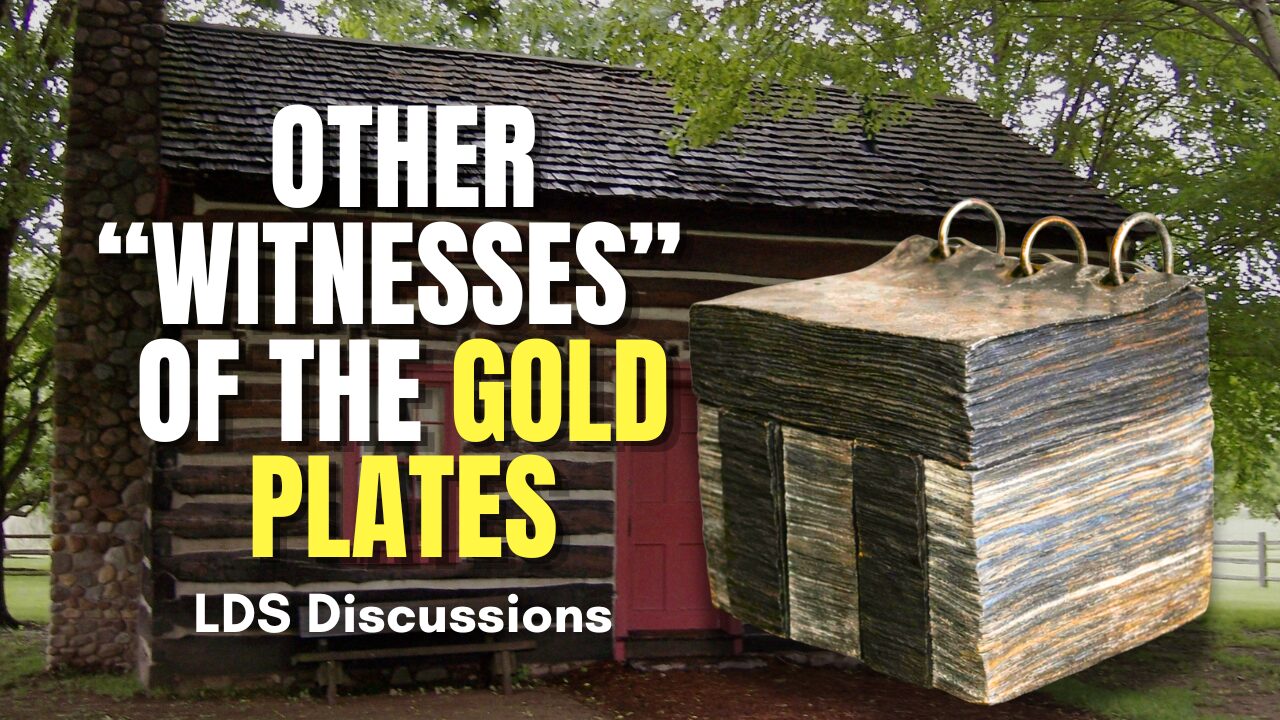
Thumbnail Credits: Main image of plates from Utah Lighthouse Ministry; Background image of the Whitmer farm by Jake from wikipedia
Originally published on mormonstories.org.
Transcript
Machine-generated and lightly edited. Click any timestamp to jump the audio to that moment. The audio is authoritative; please check it before quoting.
Introduction to the Book of Mormon Witnesses
John Dehlin Hello, everyone, and welcome to another edition of Mormon Stories podcast. I'm your host, John Dehlin. It is May 8, 2024, and we are here in the middle of a really important LDS discussion series on the witnesses to the Book of Mormon. For those of you who don't know, the LDS discussion series is our best attempt at reviewing Mormon church truth claims in a way that lets people decide for themselves how they feel about the validity of the church's truth claims. We're like 50 plus episodes into this LDS discussion series, but we did one on the three witnesses to the Book of Mormon. Last time we did one on the eight witnesses to the Book of Mormon. Today we're going to cover other witnesses to the Book of Mormon beyond the three and the eight. And then we're actually now going to have a part four on Witness to the Book of Mormon where we're going to talk about what became of the eight witnesses and the other witnesses to the Book of Mormon. Did they stay in the church? Did they not? Did they go on to follow other prophets or plates? Or not? And then finally we're going to just talk about just general inconsistencies overall, sort of as a summary for all the witnesses, the three, the eight and the other. So this is again part three of a four part series on Book of Mormon witnesses. For those who want to check out the LDS discussion series. We want to make sure people understand that we believe these episodes are best viewed sequentially. So whether it's on Spotify or on Apple Podcasts or on the YouTube LDS discussions playlist that you can find on the Mormon Stories YouTube channel, we recommend you pause this episode, go back to the beginning, watch them all the way through, and that way you'll be fully informed when we in this episode and others refer to past episodes. But. But we know you guys really are valuing this series. This is all based on the amazing work of Mike from LDS Discussions) and Mike, welcome back. Thanks for joining us.
Mike (LDS Discussions) Hey, everybody.
John Dehlin We've also been having Nemo along. Nemo the Mormon from the NEMO the Mormon YouTube channel. Hi, Nemo.
Nemo Hi, everyone.
John Dehlin And to give Mike a break, we've brought Julia Sanders on from analyzing Mormonism on TikTok. She's been doing the research for these past few episodes and others. Julia, we're excited to have you back. Thanks for being here.
Julia Sanders Thanks.
John Dehlin All right, so today we're going to cover other witnesses to the Book of Mormon beyond the three and the eight.
Julia Sanders Yeah.
John Dehlin All right. Should we dive in?
Julia Sanders Yeah. I just want to say there's been a lot of people commenting that I talk really fast, and I do. And I wonder if that comes with having, like, 14 members of 14 Kids in the family. But I will try to do better and I will try to slow down, so hopefully I can get better as we go.
John Dehlin Yeah, well, you know, people think that I talk too slow and they listen to me on, like, one and a half speed or two speed. Maybe when Julia's leading, you guys can use your YouTube settings or your podcast settings to slow it down to like 0.8 or 0.75 then, John, that will
Nemo have you way too slow then.
John Dehlin Anyway. All right, Delia, we know you're doing your best.
Julia Sanders Okay, perfect.
John Dehlin All right, let's dive in.
Seven Additional Witnesses Beyond the Official Eleven
Julia Sanders Okay, so there are seven. I'm going to count seven. I don't know if a lot of people probably wouldn't count, Lucy Harris, but I'm going to counter. So there are at least seven other other witnesses to the gold plates you have. We have Josiah Stoll, who says he saw them. Emma Smith. And this is by feel. She's feeling them. And then Mary Musselman Whitmer, and then Lucy Mack Smith, William Smith by feel. And then Catherine. Catherine Smith, his sister, also felt them. And then Lucy Harris, Martin Harris's wife, had a dream about the plates. So. So, yeah, that's just the whole list in no particular order.
John Dehlin Okay.
Julia Sanders And I just want to point out again, and I've done this on all the other episodes as well, the sources that we are going to go over are by no means every source available on this topic. What I am sharing are the sources that do not align with the testimony of the three innate witnesses or just showing the inconsistencies in general. So this is not all. There are more. I'm not showing all of them.
John Dehlin Makes sense.
Julia Sanders Yeah. Okay, so the first one we're going to talk about is Josiah Stoll. Nemo, do you want to read this slide?
Josiah Stowell and Early Plate Sightings
Nemo Sure. According to himself, this is Martha Campbell speaking in 1843. According to himself, Josiah Stoll was the very first person to ever see the place. In a letter from Martha Campbell to Joseph smith written on December 19, 1843, she wrote, if I understood him right, he was the first person that took the plates out of your hands the morning you brought them in. And he observed, blessed is he that seeth and believeth. And more blessed is he that believeth without seeing and says he has seen and believed and breathed. Right. Yeah.
Julia Sanders Okay. So, yeah, so Josiah is saying that he was the first person to get the plates after Joseph brings them in and I just like, that's just an interesting thing. And oh, I should also point out that Josiah Stowell was one of the, one of Joseph Smith's fellow treasure diggers. He was one of the ones that would hire Joseph Smith to peep or to, I guess to be a glass liquor. So that's just a good background for Josiah.
Nemo But she says this is a letter from Martha Campbell written to Joseph Smith and it's important for the sake of, you know, covering everything she is saying at the beginning. If I understood him right, he was the first one. So she's essentially seeking clarification from Joseph Smith. Do we know if he ever wrote her a letter in response clarifying?
Julia Sanders I, I tried to look this up and I looked up because the church on josephsmithpapers.org it has all the things in Joseph's handwriting and there's no, there's no response letter to him, although he could have commissioned somebody else to write her a response. But as far as I know, he didn't respond.
Nemo Okay.
Julia Sanders To, to her. But I don't know, I could be wrong, but in this next one. So in the, in the New England Christian Herald, on November 7th of 1832, one of Joseph Smith's court trials was published in the summer of 1830. And in it we learn about. We've learned more about Josiah Stowell's observation of the plates. Mike, do you want to read this little. The little quote?
Nemo Yeah.
Mike (LDS Discussions) It says Smith, the prisoner went in the night and brought the Bible, as Smith said. Witness saw a corner of it. It resembled a stone of a greenish cast. Should judge it to have been about 1 foot square and 6 inches thick. He would not let it be seen by anyone. The Lord had commanded him not. It was unknown to Smith that the witness saw a corner of the Bible so called by Smith told the witness, the leaves were of gold. There were written characters on the leaves.
Julia Sanders Perfect. Okay, so. So there are some.
John Dehlin You give a context of, of the trial and, and what's going on here.
Julia Sanders Sure. I think you'd know better. Mike, I feel like you've done. Have you done episodes on this in the past?
Mike (LDS Discussions) We haven't done episodes, but I believe this was the trial where basically they were trying to get Joseph Smith and for being a glass looker. And if I remember correctly, this is the trial where Oliver Cowdery kind of goes in and gives a statement as to the translation process that I think is not what I would call honest. And it's one of those first instances where you can see Oliver Cowdery lying to protect, you know, Joseph Smith and the church.
John Dehlin And Josiah Stole. He was the guy who brought Joseph and his dad down to Susquehanna, Pennsylvania area to. To try and find the silver mine. Right.
Mike (LDS Discussions) So Jose, Josiah Stole was the one that led to the 1826 trial. And this is where his. His nephew saw through what Joseph Smith was doing and basically brought him to trial. And Josiah stole defended him. And at the trial. But it's also the trial where we got a perfect glimpse into how Joseph Smith was outright intentionally defrauding people. And that's why that Josiah Stole is such an important figure, in my opinion, because Joseph Smith tells Josiah stole, I am being told by this guardian spirit that there's a feather buried deep within the treasure, Right? And then the next day, would you not believe it, but Joseph Smith uncovers a feather in the ground. And Jose. Jose still is like, whoa, that dude. You've got the power. And as we talked about in our episode, feathers decompose in, like, weeks or months, which means there's no way in the world a feather is going to be preserved with gold, with. With ancient treasure and survive. So the point is, Jose Soul is. I mean, not to be a jerk, but he's a very gullible person because he's believing stuff that is outright false, and his own nephew sees through it. But he defends him in the trial, and he's defending him here as well.
John Dehlin But I'm. But I'm right that. That stoll asked Joe Smith Jr. And his dad to come down to Pennsylvania to help him find a silver mine. Right.
Mike (LDS Discussions) I don't know what they were looking for, and I don't know if his dad was there, but he did pay him to bring him there.
John Dehlin I. I know that. Okay. And that's how Joseph meets Isaac Hale and Emma Hale. Because while he's trying to do the dig with Josiah Stole, he. They board at Isaac Hale's house, Right?
Julia Sanders I think so. I'm getting my. I get my. I get like, Willard Chase and the treasure diggers mixed up, but there. It wasn't him that came down to get Emma's furniture, and he saw the Isaac and Joseph talking, and Joseph admitted that he never saw anything through the stone. Was that with Josiah? I can't remember.
John Dehlin Isaac Hale.
Julia Sanders Yeah, well, who. Who was the one witnessing that?
John Dehlin Oh, right, right, right.
Julia Sanders Yeah, I think it was, but I get my early characters mixed up.
John Dehlin Okay. All right. I'm just trying to understand the context of what's going on here. I'm Pretty sure that, that what I said's right about Josiah stole.
Julia Sanders Okay, okay, so there are some problems with this testimony. So Joseph had said that if anyone was to look upon the plates, Joseph would be destroyed, yet he was not. Stole described the plates as being greenish, yet no one else describes them this way. And also Mike, as you were reading it, he describes it as being 1 foot square inch, 1 foot square and 6 inches thick, which is a size that none of the other witnesses describe it as being. And Joseph Smith seemed to be unaware that Stole saw the plates, which is also really interesting. And Stole had to be told that the leaves were gold and that they were. That there were characters written on them. So there's a lot of problems to me. Do you guys have thoughts?
Nemo I'm just showing this is one foot by one foot for the audio listeners. I'm holding well a 12 inch rule in front of my face which is much bigger than other people would report it to.
Julia Sanders 8 by 4 or the 8 by 6. I mean.
Nemo Yep. Yeah, the biggest one is that the Joseph would be destroyed and he wasn't like Joseph laid out there a very clear benchmark. If someone looks on these plates that isn't meant to, then I get destroyed. And he didn't know that a witness had seen the plates. So I mean, but what would he have done if someone saw the plates? Even his like prop set that wasn't meant to like he's not going to kill himself to. To complete the ruse. So what does he do there?
Mike (LDS Discussions) He.
Nemo He's going to have to pivot and try and make a way in which oh, the Lord has spared me this time but xyz.
Julia Sanders Right. And then like even. And I put in these the couple of revelations that we've talked about in the past where the, the Lord, the Lord gives them the. The instruction not to let anyone see it or else he could be destroyed. And so I added those two in here just like what's happening here. Like what. Why was Josiah able to see it? Should we read these just for context? Mike, do you want to read this one?
Mike (LDS Discussions) Yes. This is DNC5 and it says, behold, I say unto you that my servant hath desired a witness that my servant Joseph hath got the things which he hath testified that he hath got. And now behold, thus say unto him, I, the Lord am God. I have given these things unto him and I have commanded him that he should stand as a witness of these things. Nevertheless, I have caused him that he should enter into a covenant with me, that he should not show them, except I command him.
Nemo God doesn't like punctuation.
Mike (LDS Discussions) He didn't in the Book of Mormon either.
Julia Sanders Right, so with that one, I guess because the Lord's saying, I'm covenanting to you that you don't show this to anybody. He, Joseph, didn't show it to Josiah. Josiah just happened to see it. But in this next one. John, do you want to read this next one right here? It's from the History of the Church.
John Dehlin Okay. In the History of the Church, Joseph Smith recorded that. Again, he, the Lord told me that when I got the plates of which he had spoken for the time that they should be obtained was not yet fulfilled. I should not show them to any person, neither the breastplate with the Urim and Thummim, only to those to whom I should be commanded to show them. If I did, I should be destroyed.
Nemo Okay, so it's the argument that it's passive. Someone's passively seen them show them.
Julia Sanders Yeah, that's what I was going to say. I think that's the only way out of that one. No, you're fine. No, you're totally fine. Yeah, with. Because he's not showing them to Josiah specifically. He just happens to see them. But I also have problems. There's also problems there because the size is different and the color is different than what all the rest of the witnesses are saying. So I. There's a lot of problems with Josiah's witness, in my opinion.
John Dehlin Yeah. I mean, just really quickly, what we just read it. It just seems so convenient if I'm just trying to look at the story through neutral eyes, having been raised Mormon and having never thought about this more neutrally. It just seems so convenient that there's a question as to an angel really delivered plates to Joseph. There's a. There's a decent chance he didn't because that's not how the world works. However, isn't it convenient that the Lord then gives a revelation commanding him not to show them to anyone or he'll be destroyed. That just seems weird because the Lord could show them to everyone. I think we covered this last time. The Lord could show them to everyone if they. If he. If he wanted to. Right?
Mike (LDS Discussions) Yeah.
John Dehlin So it seems more like a cover. It's more likely a cover, an excuse so that Joseph doesn't have to produce plates that probably don't exist. It seems more likely to be that than God really making commandments about who came and can't see them.
Nemo Unless we believe in the idea that, you know, faith is necessary and you know, that's. That's where that argument will go is like, people have to have faith so they can't see them because they have to believe in things that they can't see, etc. Etc. Right. That's where that argument would go.
John Dehlin Yeah, yeah.
Mike (LDS Discussions) I think it feels like early Mormon apologetics, because that's written in 1837, right? I think it's 37 and 38. And it's almost like Joseph Smith is trying to answer the problems he knows he's created in there. And by saying, like, well, yeah, I would have shown more people, but God would have destroyed me. So that's not in the earlier revelation in that direct way. So it almost feels like Joseph Smith is trying to get out ahead of the fact that there's a lot of holes in his story. And it's like he's trying to plug them up as he's rewriting his own history. That's just something that.
Julia Sanders Yeah, that's a good point. So the first slide it shows. Can you just put it up for a second? So this is the revelation. This one here. The revelation was given in March of 1829. And so what Mike is saying is that then in the history of the Church, what you said was. Was 38 right from here.
Mike (LDS Discussions) Yeah,
Julia Sanders yeah. So he's saying Joseph's adding in that he would be destroyed, whereas before he just says, you know, you're not supposed to show them to anyone.
Mike (LDS Discussions) Yeah.
Julia Sanders So, yeah, it's just interesting.
John Dehlin Okay. All right. So what do we make of. Do we make anything of Josiah stole? Is it just possible that he was inserting himself into a story but was just making stuff up or had a bad memory? Like, I don't know what to make of Josiah stole.
Julia Sanders I don't know. Because that letter. Wait, sorry. I'm sorry. Can you put it back up again? I can't remember what day when the letter was published to Joseph. It must have been later. Okay, so, yeah, so I guess the letter happens with this account. 1843 is when he says he was the first to see it. But then also in 18, when the trial, Joseph would have heard him give his testimony. I don't know. I don't know what to make of his. It just seems super inconsistent with the rest of the witnesses.
Nemo Just to be clear as well, that letter isn't Josiah Stahl saying anything. That's Martha Campbell saying, Josiah Stahl told me this. Am I understanding it correctly? Joseph? And we don't know whether Joseph said, yes, you are understanding it correctly or no, you're not.
John Dehlin So I guess maybe as I'm thinking this through, the Church doesn't claim Josiah stole to be an important witness for the Book of Mormon. So if he turns out not to be credible, it kind of doesn't relate to the Church's truth claims because they're not claiming him to begin with. Right.
Julia Sanders They're claiming him in a small way, like they'll say, oh, these few people happen to see or handle the plates or whatever, they'll kind of mention him briefly. But as far as which of the witnesses, which of the other is most important, I think they hold up Mary Wimmer and Emma Smith as being kind of the most important ones, in my opinion, from what I've seen.
John Dehlin Okay.
Mike (LDS Discussions) Yeah, I think it's fair.
John Dehlin Okay.
Mike (LDS Discussions) I think it's also, it's also interesting. And just to be quick about this, we've mentioned this, I've mentioned this a lot in previous episodes, but it's always funny how when Joseph Smith is in control of a situation, he can really control the details. This one he has no control over because Josiah still claims to see it. It's in the court record and it vastly is different than what Joseph Smith is going to present to the other witnesses. And so I have no idea what Josiah stole. So I think he was a very gullible victim of Joseph Smith. He was involved in all this treasure digging stuff. But I do think the fact that his details differ just shows that what happens when Joseph Smith is not in control of leading you through what you're seeing versus when he is.
Julia Sanders Well, and then the part about him having a bad memory. The trial, the court records came out pretty in the 1830s, so like, yeah, I don't know how much he could have forgotten. I mean, I guess Joseph obtained the plates in 27 and it was a few years later, but anyway.
John Dehlin Okay. All right.
Julia Sanders Okay. So the next one is Emma Hale Smith. And so this, as far as I know, this is the only. This, what we're seeing here is all that we have from Emma seeing the plates.
Emma Smith as a Witness to the Plates
John Dehlin So this is Joseph's wife for those who aren't Mormon.
Julia Sanders Yeah. So in an interview that was published in the Saints Herald on October 1st of 1879, just five months after Emma had passed away, Emma made these statements. And so this is a, this is a question and answer. Do we. Do two of you want to, like, kind of play?
Nemo I'll question you. Julia, do you want to answer?
Julia Sanders Sure.
Nemo Do that. Are you sure that he had the plates at the time you were writing for him?
Julia Sanders The plates often lay on the table without any attempt at concealment, wrapped in a small linen tablecloth which I had given him to fold them in. I once felt the plates as they thus lay on the table, tracing their outline and shape. They seemed to be pliable like thick paper, and would wrestle with metal with a metallic sound when the edges were moved by the thumb, as one does sometimes thumb the edges of a book.
Nemo Could not Joseph Smith have dictated the Book of Mormon to you, Oliver Cowdery, and the others who wrote for him after having first written it or having first read it out of some book?
Julia Sanders Joseph Smith could neither write nor dictate a coherent and well worded letter, let alone dictating a book like the Book of Mormon. And though I was an active participant in the scenes that transpired and was present during the translation of the plates and had cognizance of things as they transpired, it is marvelous to me, a marvel and a wonder as much as to anyone else.
Nemo I should suppose that you would have uncovered the plates and examined them.
Julia Sanders I did not attempt to handle the plates other than I have told you, nor uncover them to look at them. I was satisfied that it was the work of God and therefore did not feel it to be necessary to do so.
Nemo Major Bideman here suggested. Did Mr. Smith forbid you examining the plates?
Julia Sanders I do not think he did. I knew he had them and was not especially curious about them. I moved them from place to place on the, on the table as it was necessary in doing my work.
Nemo This is really important stuff. Go on, Julia. Sorry.
Julia Sanders Yeah. Oh, actually, if you can put it up so I can just see and kind of go through it. So I just want to note that Mr. Her husband, her new husband, Vitamin is in the room when she's having this interview. And it's just really interesting. Like I highlighted a few things because. So she's moving them around the thickness like we talked about last time, doesn't make sense because to have to have engravings on both sides would make the paper like she's describing thin paper. They've wrestled with metallic sounds. You can thumb it like, John, you have that. You have the plates in your office that are tin. I think they're 10. And they don't wrestle, they're very heavy, they're very sharp, they don't bend, they're not pliable and things like that. And also I highlighted the part where she says Joseph couldn't write a coherent and well worded letter. Somebody, I don't remember who it was, but somebody published the letters. Between Joseph and Emma. And if you've read any of his letters, they are coherent and they are well worded. They're not. They're not punctuated. Well, he doesn't spell well because the spelling wasn't the. There. There was no. How do you say that? Set spelling, standardized spelling. And so, like, you'll see those things. But like, Joseph could write a well worded, coherent letter. But what were you guys that we thought there's so much in there.
John Dehlin Definitely could dictate a letter, right?
Julia Sanders Oh, yeah, he could dictate.
Mike (LDS Discussions) Yeah, yeah, we. We covered that in our earlier episode, the letter he wrote to her in like 1829. And it reads pretty good. It actually, you know, if you compare it to the original manuscripts of the Book of Mormon, it reads just as good, you know, because the book of. The original Book of Mormon manuscript, for those who have not watched the earlier episodes, does not read like it does today. It's heavily edited now. It's got punctuation, it's got all sorts of ways to make it sound a lot more elegant than it would have sounded at the time. And so that statement tells you right off the bat that Emma Smith is working hard to make Joseph Smith seem more and more miraculous by giving us a claim that he couldn't do something that we have evidence he did in those letters to her in 1829.
Nemo And that's really, really important because a lot of apologetic arguments based around the idea of Joseph Smith being uneducated, and that's the miraculous nature of the Book of Mormon, is that he couldn't have written such a thing when actually we know he could write he wasn't illiterate. Like some people will try and claim Joseph Smith to be illiterate, which is just not the case. We have physical evidence and I mean, the church has printed evidence to the contrary. Right? The church has printed letters written by Joseph Smith's own hand.
Julia Sanders Yeah.
Mike (LDS Discussions) Yeah.
Nemo Well, that's what Joseph Smith papers is.
Julia Sanders No, right.
Mike (LDS Discussions) Yeah, I think that.
Nemo Yeah.
Julia Sanders And then I just want. Just want to say about the education of Joseph Smith really fast. William Davis has done a lot of research about the education of Joseph Smith, and you've interviewed him on Mormon stories. And recently Colby Townsend published this book and it has a lot of William Davis's research in it about how educated Joseph was. So if you want to learn about that, then maybe go to those resources.
Nemo William Davis has visions in a seer stone. Right.
Mike (LDS Discussions) Yeah.
John Dehlin So as far as Emma's testimony goes, Emma's important because she was married to Joseph. She's one of the early. I don't know, co founders of the church. In a way. The church needs her testimony about Joseph just to make him look like a decent guy. Is there anything problematic about this account as it relates to the Church's truth claims or the veracity of Joseph's story
Julia Sanders as like troublesome things like the. I don't know. I guess some of this. I'm looking at the specifics of what she's saying. She. I don't know. Do you guys have thoughts?
Nemo Well, I mean the. The major thing there is her claims about Joseph Smith's abilities I think are really detrimental to the Church's truth claims and the claims about the nature of the translation process and how Joseph Smith did or did.
Julia Sanders And during. During this time, people. There are other witnesses that were talking specifically about the Solomon Spalding manuscript. And even though she doesn't say it. Yeah, I think that's. I think that's exactly what she's trying to hit. Specifically.
Mike (LDS Discussions) 100%.
Julia Sanders Right. Because I think. I can't remember if it was William or somebody. Some of the other witnesses were talking. They're like, no, he did not use the Solomon Spalding manuscript. And anyway, so I think that's what she's trying to. Yeah, that with.
Mike (LDS Discussions) Yeah, that's it. 100. Because she says, sorry, keep up the slide. She actually specifically says no nor script. Right. So you know, she's basically trying to get ahead of the fact that there's a spot. The Spalding rumor out there. And in no way is she saying, like we talked about this in our earlier episodes. That's not her saying Joseph Smith didn't use the Bible. It's her saying he wasn't using a manuscript that he was copying from. And that is a direct kind of attack on that Spalding manuscript theory that had been out there at the time. So yeah, that's. That's what she's referring to. 100.
Julia Sanders So as far as, like, if. Whether these sources support or don't support the Church's claims. I'm not. Every source that I'm putting up here is against what the Church is trying to say. What I'm trying to show is just what I can show and just show that it's not all consistent. There are things that are different, like the. The thickness. Her downplaying his education. She was like, oh, I don't remember if Joseph Smith told me not to see the plates. Whereas with all of his family members, he says specifically, do not see these. You cannot look at these Plates. So I don't know if she's trying to downplay that as well or she just can't remember. So there's little things in there that I don't. That I wonder at.
Nemo And the thing. He's not especially curious about them. She moved them around as was necessary during her work. That phrase there is really interesting because it very much lends itself to this idea of the seer stone in a hat, which we're now kind of accepting as the dominant narrative which the church hid for a long time. Yeah.
John Dehlin Something that doesn't seem realistic to me is the idea that these are supposed to be golden plates delivered by angels. They're sitting around the cabin covered by a cloth. Emma's literally dusting and cleaning around them, moving them. But she never once tried to peek at them. I mean, I guess if she thought she would be destroyed by looking at
Julia Sanders them or Joseph would be destroyed.
John Dehlin Right. But I. It's. I'm just. It seems hard to believe that she didn't peek at him.
Nemo And also that they're in. They're just on the table in her way like that. They're not in some sort of spot where they can stay. Do you know what I mean? Like, they're not like hidden under the
Julia Sanders hearth or hidden in a. The barrel of beans or wherever else they hide them.
Nemo They're just sitting open out on the table. And in her way,
John Dehlin conspirator in the story. Or is she totally being duped? And it's hard for me to.
Nemo I wouldn't know by 1879. You know, what do they say that was five months after she died, that was published. But this is like a late life account. I think my feeling about Emma, and this is just my feeling is that by the end of her life, she was trying to defend her husband's legacy. And it was very traumatic for her. And she's gone through all these experiences with Joseph and she's just trying to defend her husband's memory of him that she keeps hold of in her head because he's died. She's just trying to keep that sacred.
Julia Sanders Yeah. And we know that's simply with polygamy. Oh, sorry. We just know that. Specifically with Emma denying polygamy. No. Josephson has never lived polygamy. Her sons who are raised. Or her children are raised thinking that he was never a polygamist. And then they find out later that he. That his. The Joseph iii, that they. They all find out that he was a polygamist. So. So she was trying to.
Nemo We know that Emma knew. So you have to ask, why would she deny it? And I think that that's where I come to with that, is that she's trying to defend her husband's memory, even just to herself.
Mike (LDS Discussions) Yeah, I agree. I think it's a legacy issue where she's trying to defend Joseph's legacy, because, let's be honest, that reflects on her kids, her grandkids, her entire. The posterity of the. Of Joseph Smith's family relies on Joseph Smith being looked at as a prophet and not as a charlatan. And so this statement to me doesn't. Doesn't come off to me as someone who's trying to engage in a conspiracy as much as someone who's trying to make the best of what she's got to deal with. And yeah, to Nemo's point, the. The idea that she is just like, oh, yeah, these were just on the table. That, to me, is really damning. Because if that's true, as I mentioned the last episode, the fact that Joseph Smith then couldn't bring other people in to look at the. For the eight witnesses, couldn't bring people who are skeptical of them, is even more damning because those plates were just sitting there. They're not secured. So why couldn't Joseph Smith had brought a reporter in when it was time for the eight witnesses? But I know we covered that in the last episode, but her statement has so many problems. You could do a whole episode on it. But I do believe it's her, as Nemo said, trying to shape and define Joseph Smith's legacy more than anything else.
Nemo Yeah, you got friends over for dinner. And you're like, hold on, guys, I can't let you in. I've just got to go get the sacred ancient records off the table first. You know, like. Yeah, that's how. In the way they are. Anyway.
Mike (LDS Discussions) Okay, cool.
Mary Whitmer and Her Account of the Plates
John Dehlin All right, so who's. I guess going to the next one, right? Julia Sue? Mary Whitmer is really quick.
Julia Sanders Yeah. So Mary Whitmer is the mother of the majority of the eight witnesses. I should say, like, she's the mother of David Whitmer, who was one of the three witnesses. Christian Peter Whitmer Jr. I can't remember all the other the whimmers that were witnesses, but she's the mother figure. And so here she's. For a while. Joseph Smith removes himself to where they live, and they. That's where they finish the translation of the plates. And so she now has Joseph living there. She has Emma there. I think she has Oliver Cowdery. Even there. And I can't remember who else. But so she has more mouths to feed, she has more chores to do and things like that. And so she's. In this moment, she's really overwhelmed. But also, I should say that the Wimmers believed in seer stones. They believed in divining rods. They all come from this magic view, this magic worldview. And so that's where she's coming from as well. So this is. I don't know if that's enough for background, but that's great.
Nemo Okay.
Julia Sanders Okay.
John Dehlin So.
Julia Sanders In November of 1878, the Deseret News published an interview that Joseph F. Smith and Orson Pratt had with David Whitmer. This is the first instance of the story of Mary Whitmer being published. Part of the story reads, sometime after this, my mother was going to milk the cows when she was met. She was met out near the yard by the same old man, judging by her description of him, and we'll talk about the old man in a second, who said to her, you have been very faithful and diligent in your labors, but you are tried because of the increase of your toil. It is proper, therefore, that you should receive a witness that your faith may be strengthened. Therefore, he showed her the plates. My father and mother had a large family of their own. The addition to it, therefore, of Joseph, his wife, Emma and Oliver very greatly increased the toil and anxiety of my mother. And although she never complained, she had sometimes felt that her labor was too much, or at least she was perhaps beginning to feel so. This circumstance, however, completely removed all such feelings and nerved her up for her increased responsibilities. And so that's the story of Mary Whitmer. And then we will talk about it some more. But I just wanted to say that the old man that David is referencing here comes from earlier in the interview when he and Oliver and Joseph passed an old man on the way to the Wimmer home. The man said that he was heading to Cumorah, which David Wimmer had not couldn't understand at the time. He didn't know what Cumorah was. David described the man as being about. He says, quote, about 5ft 8 or 9 inches tall and heavy set. About such a man as Jesse Van Cleave there, I guess he's sitting next to this man, but heavier. His face was large. He was dressed in a suit of brown woolen clothes. His hair and beard were white, like Brother Pratt's, but his beard was not so heavy. David feels certain that the old man was moroni despite Mary Whitmer always calling him, quote, Brother Nephi, if it was indeed. So my question is, if it was indeed Moroni, why did Joseph never describe Moroni that way? Can resurrected beings change the way they look? So I just think there's problems with that. That whole thing confuses me.
John Dehlin Can somebody restate what we just read, just in common terms? What did we just read? So.
Julia Sanders So Mary's doing chores, and then an old man comes to her and he's like, hey, because you're. You're kind of stressed out because you're having to do all these things.
John Dehlin This is a random old man.
Julia Sanders A random old man. A heavyset guy, random guy, brown clothes. He's like, hey, I'm going to show you the plates. I guess he says, my name's Brother Nephi, and I'm going to show you the plates. So he sits down with her and he's showing her the plates. And then we have more details later in different interviews. And so she's. Once she sees the plates, she. She's like, okay, now I feel like I can do my chores better because I know, like, I guess she's more converted to the cause and things like that. And then with. With David going backwards. When Joseph Smith was going to the Wimmer's house, he traveled with David and Oliver. And they passed an old man, same old man, brown clothes, heavier side guy. And they're like, oh, do you want to ride? And he's like, well, no, I'm going to Cumorah. And David Wimmer looks at Joseph and he's like, what is that? And they said Joseph looked white as a sheet. And they're like, what's happening? And Joseph's like, that's the angel Moroni. And in his pack is the gold set, is a set of gold plates. And so then he's claiming, David's claiming that his mother later saw the same man, old man with a brown suit and the same knapsack.
John Dehlin So, Mike, what do you make of that story?
Mike (LDS Discussions) It doesn't show for 50 years. So to me, you know, we talked about the transfiguration of Brigham Young in that episode and how in 10 years it went from the most ordinary event to the most miraculous event in modern history. And now we have the same situation where 50 years later, a story is being told in someone else's behalf, and it doesn't add up. It was never mentioned contemporaneously. And so to me, I look at that and I just go. The church uses it as faith promoting because it Sounds awesome, but from like a skeptical point of view, I'm like 50 years and no one mentioned this? I don't think so. That's just me.
Julia Sanders Right. And then like, like just the description of Moroni or Nephi, that's confusing too. Just the, yeah. The switching of who this person is. But then like if it is Moroni, Joseph said it was Moroni. Why does Moroni look this way when. When all of his other accounts say that he looked different? Like I, like I'm confused by that too. And then. Yeah, the fact that it came comes later is problematic.
Mike (LDS Discussions) Yeah, there's a number of those stories in church history that are like, what's the one where Snow sees Jesus in the temple. Right. And, and his granddaughter tells it like long after. And, and so it's this faith promoting story about how Jesus was in the temple with, with his rest of Snow. Right. Or Lorenzo. I can't remember who it was. Anyways, it's being told from somebody so long after the fact and she was a little kid at the time when it supposedly happened. And, and so you know, from. Again as we've talked about this a lot, if you tell people that are in the Mormon church the story and you give them the details without telling its Mormonism, they're like, yeah, it's, it's made up because it's clearly got problems. But at the same time, I mean, who's to say we weren't there? So you know,
John Dehlin okay, so clearly the Whitmers were kind of weird and kooky anyway, so we would expect there to be weird kooky stories. It does. Maybe, maybe at minimum it calls into question just the credibility of the Whitmer family in general.
Mike (LDS Discussions) I don't know. Well, I mean they're, they're from a magical worldview. So for me it's not even that surprising they would believe in having visions. It's just I believe in this particular one, it probably would have been documented somewhere earlier that this had happened. I mean, you know, there's a lot of value in having these visions that can back up the credibility of Joseph Smith in the Book of Mormon. So I just, that's where I'm kind of confused. It's like, how would this story, which would be one of the biggest miracles of that time, just go unspoken until after she's dead and, and unable to tell it herself? But that, like I said, that's just, that's, that's where I'm coming from on that one.
Julia Sanders I think I just get hung up on the, on the man. The old man. Because, like, with. With the three witnesses, Martin Harris had to retreat because whatever was happening with him within him, lack of faith or something like that, he had to retreat. And only then did the angel appear in its. In his glory. And then Mary Widmer is able to see this man in her barn, and he shows her the plates.
Nemo Yeah, this is. Ideas that people have to go through sufficient amounts of mortification of the flesh and all these spiritual preparations in order to have these divine experiences and visitations. And then at the same time, angels are just knocking about on the road, saying hi to people as they go, you know?
Julia Sanders Right.
Mike (LDS Discussions) Yeah. Oh, go ahead, go ahead.
Julia Sanders No, no, no. You go.
Mike (LDS Discussions) I was just gonna say, do you remember when we talked about Joseph Smith getting the plates? Emma comes with them. They have to do all of this crazy stuff. Like, don't they have to, like, dress in black and all this, like, magical stuff? He gets the plates, and she has to stand with her back turned to him the entire time so that she can't see anything. And so you kind of look at that compared to what, you know, is going on with Mary Whitmer. And it's just like, this doesn't make sense to me. Like, it certainly doesn't feel consistent whatsoever. But then again, you know, none of this really does.
John Dehlin Okay.
Julia Sanders Yeah.
John Dehlin All right, what's next, Julia?
Julia Sanders Okay, so there. There are. So I pulled in. There's four times where this story is told with Mary Whitmer. And this one gives more details. I don't know if we should just go over them. Nemo, do you want to read this one?
Nemo Absolutely. That's fine. Okay. John C. Whitmer, son of John Whitmer, one of the eight witnesses, once stated. I have heard my grandmother, Mary M. Whitner, say on several occasions that she was shown the plates of the Book of Mormon by a holy angel whom she always called Brother Nephi. She undoubtedly refers to Moroni, the angel who had the plates in charge. It was at the time, she said, when the translation was going on at the house of the elder Peter Whitmer, her husband, Joseph Smith and his wife, and Oliver Cowdery, whom David Whitmer a short time previous had brought up from Harmony, Pennsylvania, were all boarding with the witness. And my grandmother, in having so many extra persons to care for besides her own large household, was often overloaded with work to such an extent that she felt it to be quite a burden one evening when, after having done her usual day's work in the house, she went to the barn to milk the cows. She met a stranger carrying something on his back that looked like a knapsack. At first she was a little afraid of him, but when he spoke to her in a kind, friendly tone and began to explain to her the nature of the work which was going on in her house, she was filled with inexpressible joy and satisfaction. He then untied his knapsack and showed her a bundle of plates, which in size and appearance corresponded with the description subsequently given by witnesses of the Book of Mormon. This strange person turned the leaves of the Book of Plates over leaf after leaf and also showed her the engravings upon them, after which we hold. After which we hold her to be patient and faithful in bearing her burn a little longer. That should be, he told her, probably promising that if she would do so, she should be blessed, and her reward would be sure if she proved faithful to the end. The personage then suddenly vanished with the plates, and where he went, she could not tell. From that moment, my grandmother was enabled to perform her household duties with comparative ease, and she felt no more inclination to murmur because her lot was hard. I knew my grandmother to be good, noble and truthful woman, and I have not the least doubt of her statement in regard to seeing the plates being strictly true. She was a strong believer in the Book of Mormon until the day of her death. Now, I just want to point out that. That someone having a visitation of an angel that gets them to stop murmuring isn't always the most effective tactic, because Nephi's brothers would then go on to continue to murmur after a short while. So, you know, she's lucky that this stuck with her for a long time.
Julia Sanders Well, it didn't keep her in the church, though, but.
Nemo So maybe it didn't work after all.
Julia Sanders So here, John, if you'll throw that back up.
Nemo You see that parallel there, right, with the Laman and Lemuel. That's. Yes, with the use of the word murmuring and all that stuff.
Julia Sanders Right. So this one's. So this is just a few years later. So the other one was 78. And the second time, or then another time, the story is told in. Is an 88. So this. There just. There's more details in this. He unties the knapsack, he shows her plate after plate or leaf after leaf. And also, I think. I think the. The part where her grandson says that the personage suddenly vanished, I thought that was interesting. And then he's reiterating that she continued, she never denied her testimony at the Book of Mormon, which you Know, that's one of the things the Church says. But just because you don't. Just because you don't deny your testimony doesn't mean that you actually experienced these things. Also, that's interesting to me because I think he references. This is a story that she's told often, but it's. But why then if she's telling it often and she sees the plates in 1829. Well, why. Why are we only hearing about this until the 18. The late 1800s? Like why the Church had their own publication. She. I mean, she could have written it down. There's a. There's a pattern with Mormonism where they don't write important events down until way later. And we'll see this throughout all throughout these eight witnesses.
Nemo First vision, priesthood, restoration. Yeah.
Mike (LDS Discussions) Transfiguration of Brigham Young. Yeah. I mean, that. This, to me, I just keep thinking transfiguration of Brigham Young where you have just an ordinary event that turns into a miracle. And then as it gets to a told, the people who are telling it later take those original miracle details. They add on. They add on. They add on. Grander and grander it gets. And then at the end, the angel, like Bilbo Baggins, the Lord of the Rings, put the ring on, just vanishes. It's just so. It's goofy to me. It's just all I could think of when you're reading that is, you know, if you have seen Lord of the Rings or read it, I guess. But I just picture in the movie where Bill Baggin puts the ring on, he disappears, and the whole part is like, whoa. You know, that's like the angel doing. Doing magic tricks for everybody. It's just. It's so comical sometimes when you read this stuff, because from, you know, knowing the details about the other stuff, you just go, yeah, I could see where they're going. But no, this. This doesn't add up.
Julia Sanders Yeah. It's just interesting that it's. It's just so late. So this. So Mary Whitmer's story was also published in the Latter Day Saint Biographical Encyclopedia four years later, and it uses the exact same language that we just read. And then the. The Whitmer family also has their own family version of it. Mike, do you want to read this version?
Mike (LDS Discussions) Yeah. So this is being told by mary's granddaughter in 1958. So now we're talking like 130 years later. Grandma stopped telling a story of mother Whitmer till 1900, when B.H. roberts printed it in his New Witness for God. Then she said I'm so glad I could tell it again. David Whitmer had invited Joseph and Oliver to live in his father's home while translating the Book of Mormon. When Oliver's hand and Joseph's eye grew tired, they went to the woods for a rest. There they often skated rocks on a pond. Mary Whitmer, with five grown sons and a husband to care for besides, visitors often grew tired. She thought they might just as well carry her a bucket of water or chop a bit of wood as to skate rocks on a pond. She was about to order them out of her home. One morning just at daybreak. She came out of her cow stable with two full buckets of milk in her hands when a short, heavyset, gray haired man carrying a package met her and said, my name is Moroni. You have become pretty tired with all the extra work you have to do. The Lord has given me permission to show you this record, turning the gold leaves one by one.
Nemo If he came up and said, my name is Moroni, why did she keep calling him Nephi?
Julia Sanders Right? And then you see from David Whitmer where she's like, oh, even though she says Nephi, she obviously means Moroni. And so like they're clearly trying to make it fit. Another thing I liked about this one, this slide, is that it's showing. Even though Joseph Smith and Oliver Cowdery are engaged in the translation process, they have time to. She says that they often skated rocks on the pond and they're just out, they're just, they're just kind of hanging around and she's frustrated because she's doing all this work and she's doing like all the things, all the other chores. And I just think that's interesting. Is that why, why did they take breaks so often? Or like, why? Like, I don't know. I think Dan Vogel has talked about the timing of it, of them, like, why did it take them so long to translate and things like that. Anyway.
Nemo Yeah, I thought, I always grew up believing that Joseph Smith was a hard working family man who would beat rugs and give kids marriage advice and stuff, you know what I mean? He was always engaged in the menial tests of the household. Yeah, that's what, that's what I grew up believing about Joseph Smith. So to find out that actually during which time he wasn't going down and helping out the woman who was kind of letting him stay in her home, but instead he was going out to the pond with his mate and skipping
Julia Sanders rocks like, well, even with the treasure digging, like the Church tries to depict him as a hard working like farmhand. And in one of their main videos you see him walking with his shovel on his shoulder. But the witnesses for the, for the treasure digging, they said he actually didn't do any digging. He's just, he just looked in his stone in a hat and he just basically just told them what to do. And so, yeah, so Joseph as a hard working man might not be super
Mike (LDS Discussions) accurate, but yeah, it might not be. It's just.
John Dehlin Yeah, different types of work too.
Julia Sanders Yeah. So Mary's story of seeing the golden plates while working in the barn has been recorded multiple times and is shared often by the church to promote the literal existence of the plates. And so it appears only four times or appears four times 1958 and then it goes to 1901, 1886. And then like I said, the first time it was published. So the first time it was published was in 1878 and that was 49 years after the event would have taken place and then 20 years after she had passed away. So again, it's a very late coming source.
Nemo Can I just explain to the listening audience why I laughed at that? On this slide there is a picture from the church website. It's a picture of gold plates on a table and it says that moment in the barn is one she'll never forget. And that did the rounds in the Mormon zeitgeist on the Internet for a while when that first came out. I believe the church changed the, the title of the article afterwards because everyone's thoughts instantly went to Fanny Alger, who Joseph Smith famously was found copulating with in the barn. So yeah, that's. It was an unfortunate title. It's. It's almost as unfortunate as that BYU one where it talks about filling the holes left by. Yeah, by. By becoming non married after marriage. Yeah.
Julia Sanders Oh my gosh.
Nemo Filling the holes left by sex or something like that. It was pretty bad.
Mike (LDS Discussions) It was bad, yeah.
Nemo Had some humdingers in its time.
Julia Sanders I haven't seen that one. That's interesting.
Nemo Sorry John, I lowered the tone there. No worries, they'll let you pick it back up.
John Dehlin So the point you're making about this slide is that Mary's, that Mary Whitmer is not a very reliable witness.
Julia Sanders It's just a far. It's just so. I don't, I wouldn't say immediately that because something is a late source, it's false. But I think the events surrounding it, for instance, Joseph Smith's first vision, Joseph Smith saying it late doesn't necessarily mean that it's false. But looking at the Palmail revivals, looking at the, when the preachers came in and when, when he, when he had access to them, and all the things around Joseph's life, like the first vision, there's no record of it happening or even with the, the. What did you just say? The priesthood restoration, it's a late said source and nobody remembers it. Like, even the 12, even some of the 12 apostles were like, Joseph never talked about the angels or anything like that. And so the fact that it's late doesn't mean it's false, but I just want to point out it is a very late. So, yeah, and then like just the inconsistencies with who's showing her the plates, who is Angel Moroni, what does it look like? And just, I just have questions. I guess it's. I'm just, I'm just trying to point out that there, the, the water for this is very muddy for all the witnesses.
Mike (LDS Discussions) And I would put it a different way and just say if this was a person that was saying they were around Joseph Smith and he was making it up and doing stuff, and it was the same timeline, every person that worked within the church or apologetic arms of the church would say, this story is absolute crap. Look at the timing of when it appeared and how it changes over those next, you know, 80 years. So to Julia's point, the fact that it's late doesn't mean it's not true. The problem is that we have all of this other context around it, all these opportunities for her to tell her story. She doesn't do it, and then it's being told by someone else, it's almost worse. Like, you know, if I experience something at the age of, let's just say 20, and then when I'm 75, I'm telling a story to my grandchild. It's already a little sketchy because that's 55 years removed, but at least I'm telling it. This story is now being told through other people looking to promote the church. There's a lot of issues with it. And like I said, if it was the other way around, apologists would be like, this is so far. So not only is it far removed, but it's secondhand. And so just read Fair Mormon about secondhand sources and then compare it to this and you'll go, yeah, that's why this is problematic.
Julia Sanders Right. And then we'll see a lot of that in these later sources, specifically with Katherine Smith and the problems with her testimonies. Okay, so next we're going to talk about Lucy and I think I find this super interesting. So. So Reverend Henry Caswell published a book in 1842 called the City of the Mormons, or Three Days at Nauvoo, in which he interviewed Lucy Mack Smith. He had gone to her house to see the mummies. These are the mummies that they got from. What's his name? Chandler. Yeah, they got these mummies from Chandler. I think there was four mummies. Right. And then. So she's displaying them at her house and she's charging 25 cents, which is probably the equivalent to to around $9 for us today in 2024. But anyway, so she says, I have myself seen and handled the golden plates. And they are about 8 inches long and 6 wide. Some of them, or excuse me, some of them are sealed together and are not to be opened, and some of them are loose. They are all connected by a ring which passes through a hole at the end of each plate and are covered with letters beautifully engraved. I have seen and felt also the Urim and Thummim, which resembled two large bright diamonds set in a bow like a pair of spectacles. My son puts these over his eyes when he reads unknown languages. And they. And so she's scrubbing out the seer stone, it seems, and they enable him to interpret them in English. I have likewise carried in my hands the sacred breastplate. It is composed of pure gold and it is made to fit the breast very exactly. And then one thing I think, yeah, so there's other descriptions of this where it's like she's describing these things as being very, very huge. And so there's now, there's now theories that the Jaredites were large, they were almost giants. And so that's another thing that I think was interesting. So this she. So according to Henry Caswall, Lucy Mack Smith is claiming to have seen the golden plates. However, the following paragraph in Caswall's book is very noteworthy. John, do you want to go ahead and read this paragraph?
John Dehlin Yeah. While the old woman was thus delivering herself, I fixed my eyes steadily upon her. She faltered and seemed unwilling to meet my glance, but gradually recovered her self possession. The melancholy thought entered my mind that this poor old creature was not simply a dupe of her son's knavery, but that she had taken an active part in the deception.
Julia Sanders So I just thought that was really interesting. So even though Lucy's standing here telling him, hey, I've seen the plates, he doesn't believe her. He thinks that she's just, just an active part of, of this lie or the deception. And so one thing that I want to point out is that the church. So like you talked, John, you were talking about which ones the church says. So this is from the church's website, this from the page called who saw the golden plates besides Joseph, besides Joseph Smith. And here you'll see on the screen that there's the. The photo of Mary Wimmer. And then they list off the witnesses and where the air was pointing. You see Josiah stole. He says he glimpses a corner of the plates and. And then it says, and at least four others lifted the gold plates. And then it says that there was Lucy Mack Smith, Emma Smith, William Smith and Catherine Smith. So they're not claiming they. The church does not. Doesn't seem to be claiming that Lucy saw the plates. They're just saying that she lifted them. And so that's just interesting to me if you're trying to connect that with Henry Caswell. And then one thing that I wanted to point out too is in her autobiography, Joseph Smith the the Prophet and His progenitors, published in 1853, Lucy says nothing about having seen the golden plates. Even in a letter written to her that she writes to her brother Solomon Mack on January 6th of 1831, she does not mention handling the plates, nor does she mention the first vision, which is a different topic. And then in a letter by a woman named Sally Parker on August 26th of 1838, she says, I asked her, Lucy Smith, if she saw the plates. She said no, it was not for her to see them, but she hefted and handled them. And I believed all she said, for I lived by her eight months and she was one of the best women. And so I just, I'm just pointing out these things. So, like, was. So if Lucy's saying she never claims and during these writings that she saw the plates, in fact, she says she did not. She was not permitted to see them. So I guess I'm having problems with Henry Caswell. Is. Is Henry Caswell lying or is Lucy lying? And that moment that he thinks that she's lying. And then one thing I do notice is that there are certain apologetics. I just saw a video from Scripture Central where they also claim that the re glucy may have even seen the plates. And this is the only account that I can find is from Henry Caswell of her seeing the plates. So, like, I don't know if I'm making sense. So it's just none of those make any sense.
Nemo So I don't so you're trying to determine whether Henry Caswall is lying, putting words in her mouth, saying that she claimed something she never claimed. So he could say that it was a bad claim. Yeah, like is she lying to him to try and bolster her claim and her status.
Julia Sanders Right.
Nemo Because we've talked a lot about status in the past couple of episodes and how the status of these individuals to the people that believe them is beyond compare. So, you know, she's going to want to get in on some of that social capital of having seen the plates, etc possibly. That could be one motivation.
Julia Sanders Yeah, like, anyway, so I just was pointing out that, that there's problems here too with Lucy being a witness. So she does say that she handled and hefted them. And then there's the one of her having seen the plates.
John Dehlin I guess, I guess the point I just want to bring up that's coming to me is we, you know, we talked about these other witnesses saying that we were going to share them just so people had the information about. And as I was, and as I was listening to you give the accounts of Lucy and Mary and Emma and Josiah, I'm thinking, well, these don't seem like very reliable accounts. So it's not even really relevant necessarily to the church's truth claims until you show us this website page from the Church of Jesus Christ of Latter Day Saints website. Because it's clearly saying who else saw the gold plates besides Joseph Smith? And it's, you know, listing all these extra witnesses as either seeing the gold plates or lifting them. And so what the church isn't doing, in my view, they're like, I think Mike, I think this is the point Mike made earlier. They're name dropping these witnesses, the three, the eight and the others in ways that would lead members to believe that they add to the validity of Joseph's overall story. But what they're not doing is they're not communicating to us how problematic and unreliable their testimonies are. Is that fair?
Julia Sanders I think you said that very well. Can you put that slide up again? So the church at the very end, none of these 17 people ever denied what they saw and experienced. So if you like take those 17 people and kind of kind of overlay like the problematic sources that we've been talking about. Oh, Mary Whitmer was super late. She was almost 50 years too late. Some of the eight witnesses, they never even talk about seeing the plates or the three witnesses they all said they sought in a vision. Like the church does not give you those problems. They just, they just say, oh, 17 people said that they were around, saw or handled the plates.
Nemo Got it. And there as well. That's some slightly sneaky language where they say, no, these 70 people ever denied what they saw and experience. It's like. Well, actually, only 13 of those saw the plates by the Church's own reckoning. And then you've got the four that handled them. So again, there's just everything there is designed to make it as. As meta, as, like, as broad as possible. It's as inclusive as possible.
Julia Sanders And they're talking about that specifically. They're not talking about their. Their, like, testimony of Joseph Smith as a prophet or the church at all. Like, they're just. Yeah, so the church is wording that very carefully.
John Dehlin Got it.
Julia Sanders Yeah.
John Dehlin Okay. Yeah. All right, that's. That's helpful.
William Smith's Testimony of Handling the Plates
Julia Sanders Okay, so the next one is William Smith. And there's a. There's a few slides on him. And they. And I. And as I was putting them in. What were you going to say? Something.
John Dehlin Oh, you. Are you going to say who he is? Let's make sure.
Julia Sanders Oh, yeah, sorry. Okay.
Nemo So.
Julia Sanders So William Smith, I think he's Joseph Smith's younger brother. I don't know if he's the youngest, but he's. He's one of the younger brothers, and he and Joseph often butted heads. Um, I. It seems like he was very passionate or very. William. Like, he's very stubborn, maybe is a good word. And I think he's the one that Joseph Smith and him would often get into fistfights. And then we'll see later on with his leaving the church and coming back to the church. Like, he was part of the twelve apostles pretty early on, and then he was taken out of the apostleship, and then he was placed back in. And then I. Joseph Smith's death, he was taken back out. So he's. He's got a. He's got a hard relationship with the church, and then he later doesn't stick with the. With the mainstream church. So. So that's William and then he. William Smith. So there's three. There's three slides that I'm showing, and I. As I was typing them in here, you can tell that they're all the same. They're all the same experience because of the words that they're using and the way he's describing it. So this first one, in his own book called William Smith on mormonism, published in 1833, William Smith relates and. Does somebody want to read this? The quote?
Mike (LDS Discussions) Yeah, I'll do it.
Nemo Okay. The story Being noised abroad, he was pursued while on his way home with the plates by two persons who desired to obtain a possession of the plates to convert them into money. However, he escaped to the house and brought the plates with him wrapped up in a tow frock. He could not permit us to see them because he said the angel told him not to do so. And he was determined to obey strictly this time, for he had disobeyed before and was compelled to wait four years before he could come into possession of the plates. In consequence of his vision and his having the golden plates and refusing to show them, a great persecution arose against the whole family, and he was compelled to remove into Pennsylvania with the plates where he translated them. I was permitted to lift them as they laid in a pillowcase, but not see them as it was contrary to the commandments he has received. They weighed about 60 pounds, according to the best of my judgment.
Julia Sanders Perfect. So he's saying that Joseph Smith brought them home and he brought them in a tow frock, which I. A frock is just a coat. And so they're probably just wrapped in a coat. And then he was able to. The story goes. I guess we can skip to the next one. So this next one is the. Is more details. So this one's 1883, and this next one is published in 1884. Again, another really late source. Joseph Smith received the plates in 1827. William doesn't talk about this at all until 188, until the 1880s. So in 1884 in the Saints Herald, William gave another testimony of handling the plates. Mike, do you want to read this one?
John Dehlin Yep.
Mike (LDS Discussions) He says when the plates were brought in, they were wrapped up in a tow frock. My father put them into a pillowcase. Father said what, Joseph? Can we not see them? No. I was disobedient the first time, but I intend to be faithful this time, for I was forbidden to show them until they were translated. But you can feel them. We handled them, the plates, and could tell what that we could tell what they were. They were not quite as large as this Bible. Could they tell. Could tell whether they were round or square. Could raise the leaves this way. Raising a few leaves of the Bible before him, one could easily tell that they were not stone hewn out to deceive, or even a block of wood being a mixture of gold and copper. They were much heavier than stone and very much heavier than wood.
Julia Sanders So I just think this one's interesting because he's so The Joseph Smith senior puts them in a. In a pillowcase. And then he says, even in the pillowcase, they're able to hand. They were able to raise the leaves. So I just think that's really interesting. And he's describing them as being really heavy. He doesn't describe the thickness of it, but, like, it's hard to picture, like, handling the plates in a pillowcase, even though they're, like, parchment. As thick as parchment as what Emma
Nemo would say, you kind of. You kind of can. Like, in terms of the ones that John's got. When I received my set and they were wrapped up in, like, a piece of linen or whatever, as you kind of pick them up, you can feel the leaves shift. And through the pillowcase, you can kind of knock a couple of leaves up.
Julia Sanders Well, I would say that's the case with. With something that's the thickness of the ones that you guys have.
Nemo Yeah.
Julia Sanders But as far as what Emma was describing as pliable as paper.
Nemo Yeah. So this is a diff. This is a problem between the two witnesses, not necessarily between his account, because by his account, if he'd got hold of what Joseph had. Could have possibly made, then that's the experience he probably would have had. It's interesting that he mentions they're a mixture of gold and copper. That's. I've heard that theory bandied about, but I've never seen it in writing. Like. Or whatever like that.
Julia Sanders Yeah, yeah, yeah. I wasn't saying that William was contradicting himself. It's just interesting, like, seeing his. His Emma versus Emma and Martin Harris. So, like, it's. Yeah.
John Dehlin Can you. Can Mike, can you. Or Julia. Can you remind me what Joseph did in, what, 24. 1824, to make it. So he had to wait four years to get the plates.
Julia Sanders Oh, he like, why. He was forbidden. So I. So they. So the story goes that he was. 1824. 1823. I think Joseph Smith first claimed to see the plates or to go to the place he. So, excuse me. Joseph Smith has a dream or a vision of where the plates are, and so he sees them in the woods, and then he goes. Goes there, and the angel's there. And Joseph, while he's about to get the plates out of the hole, he's thinking about selling them and making money. And the angel. I think this is. I think, if I remember correctly, it's been a while. Um, but I think the angel forbids him. And the angel's like, you're not ready. You're. You're too young. You're gonna. You're not thinking this in a sacred way. That they need to be thought of. And so Joseph Smith says that he comes back every single year for the next four years, and then in 27, he's able to finally get them out of the ground and take them home or take them into a hollow tree or something like that.
Mike (LDS Discussions) Yeah, I think in one of the years, doesn't he claim he digs him up, but then he takes his eye off him for one second, and then the treasure guardian kind of zaps him back in.
Julia Sanders I feel like that was still the last time. I think the angel was trying to warn him, don't take your eyes off these. So I think that was still the last. The. When he got them in 1827.
John Dehlin Yeah. Because in the 1883 William Smith account, he said he was determined to obey strictly this time, for he had disobeyed
Julia Sanders before, which is interesting, because as far as, like, letting people see it, he didn't. No one else had seen it. So I don't really know what.
Nemo So what was the instruction that he disobeyed, I think, is the question.
Julia Sanders Right, right.
Nemo What did he disobey?
Mike (LDS Discussions) Yeah.
Julia Sanders Also, I think this is interesting to me. I think Dan Vogel pointed this out, but on the morning that he. So he gets them in the middle of the night, he's dressed in black. It's. It's on the autumn equinox, so it's a very. It's sort of a very cult situation. And when he gets them, he. He steals a man's horse. And I think he must be in a carriage because he's got Emma with him. And then the next morning, his dad has no clue where he is. His dad's like, oh, like, is Joseph gonna come out for breakfast? Because I usually eat breakfast with him. And they're like, oh, no, he's not here. And then the guest is like, my horse is gone. And then they. He goes in searching for the horse. Anyway, my point is that the family didn't even know that Joseph Smith was going to get the plates. But if this is a. If this is a big thing for him to go every single year on this day on the autumn equinox to go meet with the angel. Why is Joseph Smith Sr. And his family kind of confused about where he is on the morning that. This anniversary, like, it's kind of confusing.
Mike (LDS Discussions) Yeah.
Nemo Unless it's Joseph goes out at night but is normally back by now sort of type thing.
Julia Sanders Like you think that Joseph Smith senior would have a little bit more idea of what was going on, because Dan
Mike (LDS Discussions) Vogel talks about that where he talks about how the first year or two he goes. There's. There's like an actual, like, kind of account of it. Then it doesn't seem like he goes again for a couple years. Maybe he's doing the other treasure digging stuff. And. And to Julius point, then when he does go again, it's almost like it's a surprise to his family. But, like, it'd be kind of like if you were going every day on a day that's a magical, as Julia said, kind of like a culty kind of day. And then all of a sudden, like, they're like, well, where'd he go? It's like, well, you know, where he went. He's been going every year. So it does show that that story was dropped and then picked back up.
Julia Sanders Yeah.
Mike (LDS Discussions) Or at least indicates that I should say.
Julia Sanders Yeah. And another thing that's interesting is that in her book, Lucy Mack Smith says that Joseph Smith started telling stories from the Book of Mormon in 1823, which, if you look at it in a sense of Joseph Smith himself wrote the Book of Mormon. That just gives him so many more years to come up with the content for the book. So.
John Dehlin Yeah, okay, that's.
Julia Sanders Yeah, okay. So we talked about him raising the leaves. And then. So in an interview with JW Peterson that he had with William Smith, it was recorded. He. William said he had hefted the plates as they lay on the table, wrapped in an old frock or jacket in which Joseph had brought them home. That he thumbed them through the cloth and ascertained that they were thin sheets of some kind of metal. When asked why he had not covered them, he said that they were told not to do so unless the Lord would give permission that they were the property of an angel and had received strict commandments with regard to that matter. Brother Pender remarked that most people would have examined them anyway. The old man suddenly straightened up and looked intently at him and said the Lord knew he could trust Joseph. And as for the rest of the family, we had no desire to transgress the commandments of the Lord. But on the other hand, was exceeding anxious to do all that we were commanded to do. So this story is just interesting because. So Joseph. He's saying that Joseph brought them home, they were wrapped in a jacket. And then he's like, why did you guys not look at the plates? And then he's. He's saying, William Smith straightened up. And he was like, look, dude, we knew that the Joseph Smith. That the Lord would. That we could. The Lord could trust Joseph. And we would not. We were not going to break that trust, so we were not going to look at the place. And so if you. If you see this from, like, a magic worldview and you believe in guardian spirits, you believe in, like, devils and other things like that that they did believe in, it kind of makes sense for them not to have seen because they. They maybe really believe that Joseph Smith would be struck dead. So, anyway, it's just another. A little bit of the perspective of the family.
Mike (LDS Discussions) Yeah.
John Dehlin And interesting. Mike. Mike and Nemo. Any reactions to that?
Mike (LDS Discussions) I'll just throw out the. To tie this into our earlier episodes, that William Smith was one of the guys that was on trial for spiritual wifery. That Joseph Smith stood up in front of the trial and said, if I hear one more word against my family, there will be blood on the curb or street or whatever. And all the charges were removed against William Smith while the other people got excommunicated. So, you know, I just.
John Dehlin He.
Mike (LDS Discussions) William Smith had no problem violating the commandments in other areas. But, you know, I just wanted to tie it into earlier episodes.
Julia Sanders Yeah, that's a good point. Yeah. And I think that's the reason why he was removed as the. As an apostle. It was for his relationships with women.
Mike (LDS Discussions) Yeah. William Smith was. Was. Was doing that and telling women that he learned it from Joseph. So I'm sure he was. But that being said, when he got caught, he was spared while the other ones were not.
Julia Sanders Yeah,
Nemo yeah, yeah. I've got nothing to add to that.
Catherine Smith's Accounts of the Plates
John Dehlin Okay.
Julia Sanders Okay, so this next one is Catherine. And I think Catherine is, I think, one of the most problematic of using her as a witness. So in 1945, Catherine's grandson, Herbert Salisbury. So she. So Catherine married a Salisbury. Herbert remembered his grandmother relating. John, do you want to read this memory?
John Dehlin Yes. Catherine Smith Salisbury told me she was present at home when her brother Joseph Smith came in nearly exhausted, carrying the package of gold plates from which the Book of Mormon was translated. He was carrying the package clasped to his side with his left hand and arm, and. And his right hand was badly bruised from knocking down at least three men who had leaped at him from behind bushes or fences as he ran, until out of breath. She said he entered the house running and threw himself on a couch, panting from his extraordinary exertion. She told me Joseph allowed her to heft the package but not to see the gold plates as the angel had forbidden him to show them at that period. She said they were very, very heavy. Again, I'm just going to say it's weird that he gets to. He gets to allow a bunch of people to heft him, but they can't actually see him. It just. Why. Why are so many people allowed to have them but they can't see them? Why?
Mike (LDS Discussions) Because they can't pass visual inspection.
Nemo Well, yeah, and it's. You can prove then that there is a physical object. That's. That's what that's there to do is there is something physical, tangible. Is there? Because you've got these spiritual witnesses in the three witnesses who have been shown these things miraculously by spiritual eyes. But Joseph needs a way of testifying to people, proving to people that there were physical plates. But the problem is, like Mike said, they can't pass physical inspection. You know, the question would be why are they just hefting them, not seeing them as well? Because then you've got the whole package, right? They've seen them physically and they've held them like. But then, you know that that's too much. It's too much power. He's got to. He's got to silo the different experiences in three people visually, in the eight people physically or tangibly so that he gets all of it. But, you know, they don't. They don't work together, as it were. I hope that makes sense.
Julia Sanders Yeah. I also think it's interesting that when you put all these together, the little. Their little house seems to be really crowded with people because you've got Josiah stole there. Who. I guess so. So Catherine saying that Joseph comes right in, he's out of breath and he's got the package and he kind of. He sits down and he's kind of catching his breath from fighting off these three guys. So he's holding the plates. But then Josiah stole said that he. Joseph handed him the package and he was able to see the green corner. And so it's just like. It's kind of confusing to know, like, who did Joseph Smith pass off the plates to, like where. What was happening here? Because Catherine's view is very different than what you hear from William where it seems like a calm thing where his dad's like. He's just stuffs it in the pillowcase. He's like, can we not see the plates? Joseph's like, no, we're not allowed to. We're. And then Josiah stole.
John Dehlin Who.
Julia Sanders Who sees them anyway? So all the putting them all together kind of confuses what is actually happening that day that he gets that he brings the plates home.
Mike (LDS Discussions) I thought wasn't one of the stories that someone had to make A box for it, like a wooden box, like that was supposed to have a lock on it that Joseph was supposed to have to be able to just put it right into when he got there.
Julia Sanders I think Hiram was it. Did Hiram get it from Willard Chase or he asked somebody to make a window box?
Mike (LDS Discussions) Yeah, something like that. So I mean, like that's why I'm like, why is it in a pillowcase? Because the whole point was having that box. Because Joseph Smith, remember, he leaves the, you know, we're told earlier, he takes his eye out of it and then they disappear. And now in this one, he's going to leave him in a, in an empty log and hollowed out log. And then he leaves them, he leaves them there for days. I'm doing air quotes and there's that story about Emma running in. It's like Joseph, people are going for the plates and he pulls out his rock, he puts in the hat, he's like, nope, plates are good. And so it just, you know, the whole thing, this whole thing, like it's so comical when you, when you put all together. And then now you've got Joseph running through the, the path from the, where he hid the plates to his house. And these people decide they're going to spread out and jump out of fences one at a time like an action movie. And then apparently when they fail, they don't follow them to the house. They're just like, well, he got away. And they, they stomp on the ground and walk away. It's like none of this adds up. So, yeah, to your point, when you put it all together, it's just a complete mess. That, that just tells you. It screams of somebody making up a story to try to give cover to all these other things that are happening.
Julia Sanders Yeah. If you like try to put all this into a timeline. I don't think it would make very much sense. Strike. Well, this person says that they, they got them first and this person says that they handled them first and it's complicated.
Mike (LDS Discussions) I would love an interview. Oh, go ahead, Nemo.
Nemo As you say, Catherine's story sounds as though, you know, he comes in, he's exhausted on the couch and she's allowed to pick them up and take them off him because he's so tired. Whereas just all that he said is also claiming to be the first one that received them.
Julia Sanders And, and as we, as we keep going, you'll see that her account is a little bit different even with itself.
Mike (LDS Discussions) Oh, okay. You know, it would be, you know, it'd be a cool account. Would be as if we had an account for one of the three people that Joseph beat. Beat off. That's bad phrasing. One of the people that Joseph fought off when bringing the plates back to the house. Oh man, that's bad phrasing. But anyways, that'll be a great account is if someone said, I tried to. I'm done. Let me try this again. What would be great?
Nemo I'm saying that it would be great if one of the three people that supposedly attacked Joseph Smith had written an account. Today I tried to mug a bloke with gold plates in the woods and he ran away and I couldn't be bothered to chase him. That's what that account would read like, right?
Mike (LDS Discussions) Yeah, like he had supernatural speed and
Nemo power, but I didn't fancy using it in any way other than as a stick to beat a man with. Maybe I ran out of bullets or balls or whatever the, the musket ball type things, you know, that's what that account would read like. Tried to rob a man, Failed. Bad day for me.
Mike (LDS Discussions) Well, sorry, I guess, I guess I'm trying to say is everybody apparently at this time knows Joseph Smith is looking for these plates, right? I mean, that's kind of the. Because he's a treasure digger, he's involved in the community. So all these other treasure diggers want this plate because they believe Joseph Smith, because they believe in this worldview. So that's why we apparently have three different people at three different points in this, in this trail jumping out and going after him. And Joseph fights him off. You know, which we talked about in that episode is just kind of when you think about it, holding heavy plates, it's not happening. But you would think because of the fact that it's such a well known thing that one of these people will be talking in the town. Like, yeah, we thought we had Joseph cornered and he's somehow holding this massive hunk of metal, was able to fight me off and then fight the next guy in the fight. That dude's for real. But there, you know, I, I guess I'm just saying, like you would think there'd be some sort of a thing where this would be documented. If all that happened outside of what Joseph tells everyone, maybe it wouldn't be because you wouldn't want to write down that you got beat up or anything or that you got knocked over. But it just feels like everything that we get is from Joseph's perspective in mind and all of those extra details are not corroborated anywhere.
Julia Sanders Yeah.
Mike (LDS Discussions) Okay, let's continue on.
John Dehlin So we continue with Herbert Salisbury.
Julia Sanders So Years later, in 1954, Catherine's grandson again shared the experience of his grandmother in an interview. So I think this was like nine years later. Nemo, do you want to read this one?
Nemo Yes, I do. Question. Mr. Salisbury, at one time I had a conversation with you in which you were kind enough to mention a testimony which your grandmother catches. Catherine Salisbury gave to you in regard to the fact that the Prophet did possess the place on which the Book of Mormon was translated. I wonder if you would be kind enough to tell us now on what occasion it was that she told you this story, where you were living at the time and why did she relate this to you? Mr. Salisbury replied, Mr. Ball, I was then in my 45th year, as I remember it, and country surveyor of Hancock County, Illinois, and I was visiting my grandmother at her home in Hancock county near Fountain Green, when I asked her for some recollections of her brother, the Prophet Joseph Smith, Catherine Smith. Salisbury then told me that while dusting up the room where the Prophet had his study, she saw a package on the table containing the gold plates on which was engraved the story of the Book of Mormon. She said she hefted those plates and found them very heavy, like gold, and also rippled her fingers at the edge of the plates and. And felt that they were separate metal plates and heard the tinkle of sound that they made. Well, hang on, which is it? Did she pick them up off Joseph when he collapsed on the couch, or did you find them dusting a room?
Julia Sanders Right. And it gets more problematic, too. But I also think it's interesting that. So this is in. So he first tells the story in 1945 and then again in 1954. But he says when he's recollecting and he says, I was in my 54th year and this is her grandson.
Nemo So 45th year.
Julia Sanders 45th year. Is this. So he's saying, I didn't hear this story until I was 45 years old.
Nemo Yep.
Julia Sanders So, like, which is super interesting to me. So she doesn't start telling him the story until he's a grown man. Like with kids of his own. Like, it's just as interesting.
Nemo Why?
Julia Sanders Because, like, at least with Mary Wimmer, they all say her kids say that, oh, mom, she grew up. We grew up with hearing, hearing her tell this story. But he's like, oh, no, I was, I was 45 years old when I heard that she hefted the plates. So I just think that's interesting. And then also the, like, John, you made this point last time where like how thick are the plates? Like are. Can you ripple them? She's, she's even saying rippling them and then like William Smith can feel them through the pillowcase and he, he says they sound like metal anyway, so it's again, just confusing is what. What this. What this is that they're looking at.
Nemo Very confusing and, and very improbable with the fingers of the tinkling edges of the place.
Julia Sanders Right, right.
Nemo It sounds like one of those details that is. Has been passed on almost through like the folklore of the people that believe in the Book of Mormon, whatever. So it's one of those that people feel the need to include in their story because it almost lends credibility. It's almost like a, it's a learned detail that witnesses all try and include so that they can sort of seem to be corroborated or whatever.
Julia Sanders Yeah, yeah. I, I just like just thinking about the metal on both sides that it's. That is thin that way that can be rippled. It's just doesn't.
John Dehlin And yet raved and it's gold. And that technology didn't exist back then in Mesoamerica anyway.
Nemo And if you think about it, if you're trying to ripple something through a cloth, if they're that thin and you ripple them, the side of the cloth is going to get caught between the leaves of the metal and it's not going to tinkle because it's going to deaden the sound. Just thinking practically, as your thumb goes up and applies pressure, it's going to push the folds of material in between those leaves as they separate. So they're not going to tinkle and fall back down on one another. They're going to go. Because the little bit of cloth is going to get stuck in. Right?
Julia Sanders Yeah. There's just a lot of problems with that. Like.
John Dehlin Yeah, okay.
Mike (LDS Discussions) I mean it kind of fits if you have a prop set of thin tin. Like, I think, I think it was Dan Vogel again who talked about how back then they used like these really thin plate pieces of tin to like secure barrels and to secure other things. And so that would be where Joseph Smith could easily get scrapped in. So if you put, if you stack those up and put them in a cloth, it would make that kind of. Not maybe they wouldn't rustle maybe, but if you kind of picked them up, you could make them drop on each other and kind of give you that really thin kind of sound, which. So to me this makes some sense. If Joseph Smith did make a prop set of plates, wraps it up in a cloth and says, you can't look at it, but you can kind of play with it. And. And you would get some of that. But I'm sure they're exaggerating. Like to Nemo's point that you couldn't put your thumb like a book and just flip it, it would. You'd have to kind of almost like pull the cloth off the side a bit and then just kind of play around with the. With this. With the different sheets of tin underneath. But yeah, it doesn't add up as far as to what Julia said to. To being thin enough to be written on both sides. It wouldn't make sense.
Julia Sanders Right. Yeah.
Nemo Well, John's getting bored of this nonsense by now. That much has become. Become clear.
John Dehlin I'm not bored. This is fascinating. This is.
Julia Sanders Okay, so this is a different story that we hear. And this one. So in the Saints Herald in 1954, so the same year as Herbert gave his. His little version. So Catherine's granddaughter, now Mary Salisbury Hancock, published this quote, it's called the Three Sisters of the Prophet Joseph Smith, in which she relayed this story. When Joseph was bringing the plates home from their hiding place to work on the translation, he was followed to father's house, to the. To father's very door at one time by some men who were determined to get Joe's. Get Joe Smith's gold plates, as they were called. Ever watchful for his brother's safety and hearing an unusual commotion outside, Catherine flew to the door and threw it open just as Joseph came rushing up. Panting for breath, he thrust a bundle in her arms and in a gasping voice, whispered hoarsely, I think it's supposed to say, get these quickly and hide them, or take these quickly and hide them. Then he disappeared quickly into the darkness. Closing the door, Catherine ran hurriedly to the bedroom where she and Sophronia slept. Sophronia threw back the bedding and Catherine put the bundle on the bed, quickly replacing the bedding. Both of them lay down on the bed and pretended to sleep. The mob, failing to find Joseph outside, returned to the house to search, but they did not disturb the girl since they appeared to be sleeping.
John Dehlin What?
Nemo What? So hang on. So we've had these where Joseph turns up and these men haven't followed him back to the house. And he's gone. And his dad's like, oh, well, then let's have a look. And he's like, no, no, sorry, you can't have a look. And it's this kind of. He's brought this stuff back and everyone's wanting to have a piece. Then you've got him diving onto the couch and his sister taking them from him. Then you've got his sister finding him in the bedroom. Then you've got him thrusting them into his sister's arms. And then the mob somehow turns up. No one else has mentioned the fact that their house got raided by a mob. That's the sort of thing you write down, that then men broke in following Joseph into the house to try and find the place.
Julia Sanders Right. But also. Well, as I was reading this because, like, having heard the other accounts we just read, because she says, when Joseph was bringing the plates from their hiding place, which one does she mean? Does she mean in Camorra, where they were there for a hundred years, hundreds of years? Or does she mean from the, like, hollowed out log in the forest? Like, does he bring them home a couple of times or like. It's very confusing about what's happening here because like you were pointing out, like Josiah had them first, Joseph was on the couch and she picked them up. And like here he's rushing in in the middle of the night and handing them to her. And then a mob comes in. And I don't think I've seen that anywhere else in the, in Joseph Smith's, in the history. I don't think I've seen any record of that. So it's. So her, her account coming from her grandkids is very confusing.
Nemo Some, some, some might say embellished.
Mike (LDS Discussions) Yeah, yeah, I think there's one. I think there's one account. It's. Oh, my gosh, what's the, the other treasure digger that kind of almost dupes Joseph adding the spectacles. Right. And if I remember correctly, there's one story where Joseph is telling them, hey, be on the lookout for him because he knows I'm going out there. And I thought there's. I mean, I could be wrong. I thought there was one story where they talked about how they had somebody outside of the house watching for them to make sure they didn't come to the house.
Julia Sanders But, oh, there is a straight.
Nemo Was it Hiram was on the lookout?
Mike (LDS Discussions) It could have been Hiram. Maybe it was one of the brothers.
Julia Sanders I think there was a story later, I think when Joseph was moving it around during the translation or during the time where he had them, because he has the plates for a while before he starts translating. Translating them.
Mike (LDS Discussions) Right.
Julia Sanders And there was a time where he had them, he hid them in the hearth and then he removed them out. And then somebody, I think it Might have been Samuel Lawrence. I can't remember who was, but somebody came in with divining rods and they, they're like, oh, it's in the hearth. And so I guess it's sort of like, oh, divining rods work. But he had just moved them, so that's why they, they didn't actually work. Anyway, so that might have come from Samuel Lawrence, but anyway. Yeah, yeah. Okay, so, so I, so I want to point some, the problems out with Katherine Smith's testimonies. So two, two earlier interviews were published during Catherine Smith's lifetime. One was published in the Saints Herald on May 1st of 1886. Here she does not mention holding the plates, but shares the story of Joseph Smith obtaining the plates and reiterates her testimony of the Gospel. The second one was published in the Kansas City Star on April 10 of 1895. She is quoted as telling the story of Joseph Smith and the golden plates, but nowhere does she mention hefting them. Joseph Smith obtaining the plate. Joseph Smith obtained the plates on September 22nd of 1827. The first that we hear of Catherine hefting the plates doesn't happen until 1945, 45 years after her death. She passed away in two. In February of 1900 and 118 years after the event of Joseph Smith obtaining the plates. So this is her hefting the plates is a very, very late account. And in my opinion, this might just be because it's so late. 118 years late. This makes room for me for fabrication or for embellishment.
John Dehlin Makes sense. Makes sense.
Mike (LDS Discussions) Okay.
Julia Sanders Yeah. So I think hers is really problematic because, like, at least with the Whitmers, he says, oh, we, we grew up hearing this story. Although it's weird that it was published. It wasn't published for 50 years. But like with Catherine, it's just a very late source is the, the main gist of it.
Lucy Harris as a Witness
John Dehlin Yeah. And that takes us to Lucy as the final witness we're going to talk about today.
Julia Sanders Yeah, and it's just a really quick one. So the church, probably the church does not see Lucy Harris as a witness at all because.
John Dehlin Who is this?
Julia Sanders Oh, excuse me. This is Martin Harris's wife.
John Dehlin Okay.
Julia Sanders Martin Harris is one of the three. And Martin Harris, he did a lot of stuff to help fund the publication of the Book of Mormon. He. So I think he sold his whole farm to help publish the book. So the church doesn't see her as a witness because it's not a real witness, it's a dream. Or I guess you could say it's A real witness. But I'm including her in here because I think it's really interesting and it gives me a moment to also talk about Martin Harris and his credibility. And then also her dream about, about seeing these plates is very reminiscent of the three witnesses and their vision that they have. So. Because like from their own language, it doesn't seem like it was a physical experience. It was a dream or some kind of vision, and that's what hers is. So I'm going to include her anyway.
Nemo Can I just put something out there real quick?
John Dehlin Sure.
Nemo It's not surprising that the Church doesn't want to put a lot of stock in Lucy Harris, given that she's the reason the 116 pages went missing. Like she's not a favorable character in church history.
John Dehlin So she also didn't believe Martin's story.
Nemo Right, exactly.
John Dehlin Fraud.
Nemo Yeah, yeah. So, but also.
Julia Sanders Yeah, but also I think even they
Nemo know that would be too difficult.
Julia Sanders But also her using her as a witness, then you have to believe everything that she says or you. That'd be.
Nemo Well, this is my point. Right. If you start opening that can of worms that we're taking seriously, the things Lucy Harris says, you then have to start. I mean, you don't have to. Because Mormon apologetics proves that you don't have to be consistent in your treatment of individuals as credible or non credible. But one would think looking into it, and perhaps this is where the decision comes from, the Church doesn't want to mention this story because they don't want to open the case for examining Lucy Harris.
Julia Sanders Yeah, it's sort of reminds me of how they don't ever want to talk about John C. Bennett because if talking about him and using his language at all is just, just opens up people to be introduced to John C. Bennett and everything that was happening. And, and like we'll talk about in this next episode that we do, Lucy Harris opens up the possibility of Martin Harris abusing her, cheating on her, and just being like a horrible person. And so that, that takes away credibility from Martin Harris and they really need Martin Harris to be credible. And so that's one reason he's already
Nemo doing a great job of his own accord, not looking particularly credible. So yeah, you don't want to add his wife into it.
Julia Sanders Okay, so there's the, the account of her. This, the. So in Lucy Max Smith's autobiography, she tells of an experience that Martin Harris's wife Lucy had concerning the golden plates. And this is only found in Lucy Maximus autobiography. That's she. Lucy. Lucy Harris didn't write it down herself at all. So she says. The next morning, soon after she arose, she. Lucy Harris there. It's just complicated because they're both Lucy. She related a very remarkable dream which she said she had during the night. It ran about as follows. She said that a personage appeared to her who told her that as she had disputed the servant of the Lord, meaning Martin or Joseph, either one. She didn't like either one. She said his word was not to be believed and had also asked him many improper questions. She had done that which was not right in the sight of God. After which he said to her, behold, here are the plates. Look upon them and believe. After giving us an account of her dream, she described the record. She described the record or the plates very minutely. Then she told us that she had made up her mind in relation to the course which she intended to pursue, namely that she had in her possession $28 which she received from her mother just before she died, while she was on her deathbed. And that Joseph would. That Joseph should accept it if. If he would. If he would, he might give her. Give his note, but he. He should certainly take it upon some terms. So I think she means like, pay me back later. That's what I'm getting from it. So I wanted to point out that in Lucy's timeline of when the dream took place, Lucy Harris would have seen the plates before her husband had lost 116 pages. And this would be also be. Be before any of the other. The three or eight witnesses had a view of the plates. And so it's interesting when Lucy says. She tells. She says that Mrs. Harris described the record very minutely, which is like, very specifically. So she's describing the plates, I guess, in the same way the other witnesses are like. Like, she's not giving specifics, but she's like. And when I think of the plates, they're. They're six by eight by four. And then. So she's. So she's saying Lucy Harris describes the plates very specifically before any of the witnesses have ever seen them. So I just thought that was interesting.
Nemo I think this is a way of trying to, after the fact, write loose, write Lucy Harris in as someone that ultimately came round sort of thing, like. Because everyone knows she caused a problem with questioning what Martin Harris was up to and all that sort of stuff. But if you can claim that she had a miraculous witness of the Book of Mormon, then that puts her in the camp of. Yeah, no, she. She got there eventually. And that's what strikes me as what's going on, particularly because this isn't in Lucy's own hand. This is being reported by Lucy Mac Smith. I don't know what your thoughts are.
John Dehlin What do you think, Mike?
Mike (LDS Discussions) I agree with Nemo. I think this is just what we see, you know, where Joseph Smith is kind of writing the history of the church after the other two witnesses are basically. Actually all three witnesses are run out of town. And in this case, Lucy Mack Smith can write whatever she wants because Lucy Harris isn't around, Martin Harris isn't around. And it puts a really nice spin and a really faithful spin on all the people surrounding the Book of Mormon for those who are going to read this autobiography. And obviously, the idea is to promote faith in Joseph Smith and in the church, so it makes sense.
Julia Sanders Another thing that I noticed is that Lucy brings up money a lot. In her. In her autobiography, she talks about. Even when she sees the breastplate, she's like, oh, that. That was probably. That's probably worth $500. Or she gives some kind of dollar amount, and then she's. She notices that Martin's giving, or she knows that Martin's giving them a lot of money. She asked money from other people, and she's asking money from Lucy. And I think she's trying to make. Maybe she's trying to make herself feel better, like, about this or like, oh, Lucy gave. Lucy Harris had this vision, and that's why she was able to give US$28, which was a lot of money back then. And so it's just interesting how she's probably just trying to make it better for herself or like, trying to, like you said, make. Make it seem like Lucy Harris is coming around to believing.
Mike (LDS Discussions) Yeah, I mean, Lucy Harris ultimately doesn't believe the story. And I know we've talked about this before, and I know in the Bible there's instances where people see miracles and they fall away, but if someone came to me and showed me plates in a. In a angelic form, I'm not going to then turn around and believe Joseph Smith is making it up. So I think that's another error where there's just so many holes in this.
Julia Sanders Yeah,
Nemo right. Oh, okay.
John Dehlin So we've got.
Julia Sanders Yeah. So this last slide. I. I think this is just the last slide. Yeah. So this. I'm just throwing it in here because I think it's interesting. So this is from Orson Pratt and the Deseret News, published in 8 and published on January 12th of 1859. So Orson Pratt's not. He was not a witness at all. He's not one of the three or not one of the eight. He's just. He. He's just a. I think he's an apostle. But he says, upon each side of the leaves of these plates, there were fine engravings which were stained with a black, hard stain so as to make the letters more legible and easier to read. And so what I think is interesting is, to my knowledge, of all the research that I've been doing, Orson Pratt is the only person to describe black stain on the plates. And so I just think that's interesting is like, where is he getting this information? No one else describes it at all.
Nemo It's a slightly sort of odd little practical detail. Right. It's almost like he's going, oh, okay, I'm imagining these plates. Someone were to engrave them. They're very shiny. What would make them easy to read? I know, yeah, you'd put a black stain in. Like, it's like he's kind of just going through what would need to. What is a possible, like, exception. Someone could take to the practicality of gold plates as a writing method or as a record keeping method. And he's trying to, you know, just explain some of that.
Julia Sanders Yeah, it's just really interesting to me because, like, where does he get this? Like, he must have heard it from somebody because he didn't see the plates. Anyway, I just thought, that's interesting. I also wonder. I don't know the answer to this, but if there have been any, like, have there been any ancient records found that have black heart stain on them, I think that'd be an interesting thing to.
Nemo And. And also, do church depictions of the gold plates show them with some sort of darkening of the characters? Or do they show the characters as, you know, the same sort of mirror finish as the rest of the. The plate, etc. Because it would be interesting if this detail has made its way into sort of church art and video, etc.
Julia Sanders Well, I mean, this.
Nemo More detail.
Julia Sanders Well, church art is not very reliable, so.
Nemo No, but church art is based off things like this. Right. Church art is based off the accounts and the stories and the tales of.
Julia Sanders Well, other than the Seer Stone. But, yeah, that was. Sorry, it was sort of just a joke about.
Nemo Oh, I see what you're saying. Right. Yeah.
Julia Sanders Yeah. Anyway, so that's. So that's the. That's all the slides that we have. And then the next. The next that we have is. Is trying to go over the inconsistencies of the witnesses and what happened to the eight Witnesses and the, these six or seven other witnesses and whether they stayed with the church or not.
Final Reflections and What These Witnesses Tell Us
John Dehlin So Mike, I, I know that you had mixed feelings about just covering the Witnesses at all. Is there anything you gain from today or that you insight you glean from today that you think is important or relevant to the overall mission of LDS discussions?
Mike (LDS Discussions) Well, I think it ties in, like I said, I, I, I have said this a number of times in this series too. I think that the Witnesses kind of give members who are believing a choose your own adventure where you can kind of, we can kind of move around all of these problems and just stick with the statements that work with each other. And so I, I think the witnesses to us to a certain extent, or you could kind of go any way you want because of the fact it's like a, it's an experience more so than a hard history. Like we talked about earlier in this episode, where to mention the first vision, the priest, the restoration. We have really good timelines as to how these stories evolved and changed. But where I like the Witnesses is that it gives us insight into what's happening around the Church. We talked about Hiram Page being one of the witnesses and having revelations on the Seer Stone. We talked about how some of these stories are late, very, very late appearing and how they get grander, just like we talked about the transfiguration of Brigham Young. So I think what's valuable is looking at the patterns, looking at the common threads and how it fits into the things we've talked about in the previous 50 episodes. So I, I think it works well together and I think after you do all the, all that initial groundwork, the Witnesses give you a lot more flair not just for that event, but how it kind of fits into the context. So I don't know if I'm making sense in that because I still find the Witnesses as, as a, as a topic to not be terribly important to church history just because of the fact it is inexperience and not a historical data point. But I do think that you get a lot of info by really studying it and looking at the people who are involved and looking at the way Joseph Smith is kind of navigating them and as to how he's doing other things as well. And I think that's where it's valuable to me.
John Dehlin Nemo, anything you want to add?
Nemo I just love that John's doing a Lucy Max Smith on, on Mike as Lucy Harris. He's like, he spotted that Mike is the non believer and, and Mike doesn't He's not on board with. With covering the witnesses. So John's like, well, we got to find a way to paint him as. So we'll get there eventually. We've got to make sure that he's on board and on side. Yeah. I've never really thought about the impact of covering the witnesses so much as the idea that these are meaningful to some people. And so this will be a meaningful thing for someone to deconstruct or to analyze in some way. You know, like some people will be basing a lot of their testimony, a lot of their belief system on the three witnesses. They will be using them as intended by Joseph Smith. They'll be using them as something to bolster their understanding of the events of the translation of the Book of Mormon or the reality of the gold plates. And for some people, it'll be incredibly important to dive deeper in. So, yeah, I think that's why, to me, they're important is not necessarily from a historical point of view, but from the stock that some people put in them. That means that they need to be addressed.
John Dehlin Yeah, for me, I'll just. My final thoughts. And Julie, you can have the last word. I. What it. What Talking about these other witnesses sort of reinforces several points. Just the cast of characters around Joseph Smith just generally weren't very credible people. Today's episode kind of reconfirms that. It reconfirms that their stories, their accounts are sketchy. They're. They're varying and they're even contradictory that they. They cast questions on the overall process. You know, again, like, why are some. So many allowed to touch it but they can't see it? Why are they. You know, why can't they see it? And then why are their accounts contradicting? But then also it just. Just reinforcing this idea that the Church feels very comfortable using people's accounts is selectively if it reinforces the story. But they do that often, leaving out the problems and the contradictions and in that way deprive their membership of true informed consent. So that, you know, because it's pretty clear that if the church were to give all the information about all the different witnesses and all their varying and contradictory accounts, it probably wouldn't be faith confirming. It would be faith unraveling. That's. That's my. That's what I got from today. Any last. Yeah, you like that, Nemo? All right, Julie, any final thoughts?
Julia Sanders Yeah, I just really like that going off of what you're saying. Like, the church does a really good job of painting Painting a really good picture. And they do that with these witnesses. They're like, oh, these three men saw it, these eight saw, these six sawed. And none of them denied their testimony. And it kind of reminds me of, sorry to bring in media, but my daughter and I watch is a cake. And what they do is they make this cake that looks like something else, but they don't. When they have observers observe, observers come in to say whether it's cake or not. But they have to stand at a really far distance, and then they have to assess which one is cake and which one's the real object. And so with this, it's like if you stand back far enough and you kind of squint your eyes, everything looks like a great picture. But when you get close to it, you can see that there's a lot of problems. Like you said, contradiction, contradictions. These are late accounts. These are people with a very different worldview than the rest of us. Like, these people are not credible people. But if so, if you take all that out, it looks great, but if you add it all in like you should, then it confuses and muddies everything else.
Nemo Can I just add something really quick to that, Julia? Because I think that is excellent, and I think that points to a broader pattern of behavior amongst the church almost from its inception, is that you have. They want you to look at everything from a macro point of view. They want you to look at everything as a broad overview. And they don't ever particularly want you to dive into the details of any specific thing, because it's once you do that that things stop working together. Because from an overview, 17 people that can all testify that these plates are real. Some of them have seen them, some of them have lifted them. Great. Awesome. That's bolstering. That's great. But you start to look into the details of each of those people and what they say happened and how they interlink with one another, and that's how the whole thing starts to fall apart. So I think broadly that the truth claims in the Mormon Church and the historicity of all these things relies on them all being siloed and contained individually away from each other. And that's what the Church tried to do for years, and now they're trying to manage how those things come together because they know they can't keep them apart forever anymore because of, well, the work of things like this and others that have gone before us.
Julia Sanders Yeah, I think that's one of the reasons why they have the Gospel topics essays to keep them.
Nemo They get to manage how the things interact because they know that if you let them just collide together, they break.
Julia Sanders Yeah.
John Dehlin All right. Well, this has been an important set of pieces for the puzzle, Julia. Next time we're going to have part four of the Witnesses, as you mentioned, where we're going to talk about kind of what happened to all the witnesses, the ones that we haven't talked about already, and just kind of summarize all the contradictions. Is that right? Is that what's coming up?
Julia Sanders Yeah, yeah. Figuring out what happened to everybody and then the contradictions and stuff like that.
John Dehlin Okay. Well, thanks, Julia, for your contributions today. And Mike and Nemo, it's always great to have you as well. Please check out Mike's essaysdiscussions.com Please remember, you can see this entire library of episodes either on Spotify under LDS Discussions), Apple Podcasts under LDS Discussions), wherever you consume your podcasts, or if you want to see them in video, they're under a playlist called LDS discussions on the Mormon Stories Podcast YouTube channel. Please check out Nemo, the Mormons YouTube channel, because.
Nemo Right.
John Dehlin Look. And he's amazing. And also check out Julia's analyzing Mormonism TikTok and Instagram. And you've got a YouTube channel, too, right?
Julia Sanders Yeah, it's the same. Same title. Yeah.
John Dehlin All right, perfect. Well, thanks, everyone. And thanks to everyone for joining us today on Mormon Stories. We hope you're enjoying these episodes. We'll continue them for as long as people find value in them. And we'll look forward to seeing you all again soon. Thanks, everybody.
Transcript © 2026 John P. Dehlin. All rights reserved. Brief quotations are welcome with attribution and a link to mormonstories.org; all other use requires written permission.