Witnesses Roundup & Finale
Listen on Apple Podcasts Spotify YouTube Download MP3
About this episode
Julia joins the team again to examine the fates of the alleged witnesses to the golden plates of the Book of Mormon, revealing a trail of broken testimonies, apostasies and bizarre offshoots. Nearly all the witnesses later followed eccentric claimants like James Strang, raising serious credibility issues. By scrutinizing discrepancies in accounts, shifting narratives around Joseph Smith’s “translating power,” and the rich local history of buried plate legends, Julia builds a powerful case challenging the orthodox story behind Mormonism’s foundational scripture.
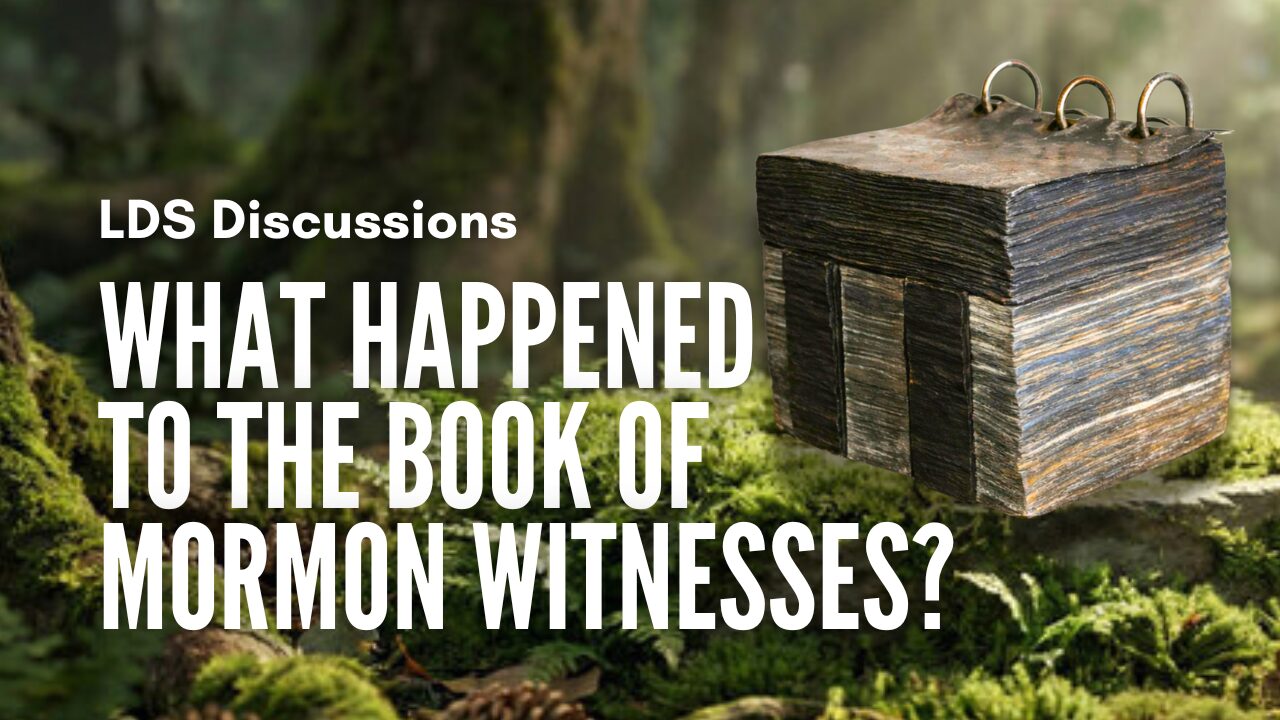
Thumbnail Credits: Plates from the Utah Lighthouse Ministry; Background image from Adobe Stock images
Originally published on mormonstories.org.
Transcript
Machine-generated and lightly edited. Click any timestamp to jump the audio to that moment. The audio is authoritative; please check it before quoting.
Welcome and Episode Introduction
John Dehlin Hello, and welcome back to another episode of Mormon Stories podcast, LDS Edition. I am your host, John Dehlin. It's May 22, 2024, and we are, I don't know, 54, 55 episodes into an amazing series called LDS Discussions, where we talk about the Mormon Church truth claims as dispassionately and as objectively as possible so that you, the listener, viewer, can decide how you think and how you feel about the Mormon Church's truth claims. Today's episode, it's part four in our series on the witnesses to the Book of Mormon, to the gold plates. And we're going to be talking about what happened to the eight witnesses to the gold plates, to the Book of Mormon, and to the other witnesses. This is part four in that series. The first episode was the three Witnesses. The second was the eight witnesses. The third was the other witnesses to the gold plates. And this is part four. I say this every LDS Discussions episode, but these episodes are. Are in a series. They're best understood and they're best appreciated in succession. Which means what we recommend is you go back to the beginning, watch all 50, whatever, and then watch this one. You'll get much more out of it. Of course, you're welcome. If you don't want to do that, you can access the LDS discussion series as a standalone podcast on Spotify, on Apple Podcasts, and there's a YouTube playlist on the Mormon Stories Podcast YouTube channel where you can just watch them all in succession as well. Millions of views and listens now have come about from this series. I'm hearing in the past year that this is one of the most important things we've ever done. And of course, it's based on the amazing work of Mike from LDS discussions.com website. And then we've brought Julia on now as well. She's been producing and writing and. And managing some of the episodes. And of course, we're always grateful to have Nemo the Mormon from his YouTube channel with us. Hey, y'. All. How's it going?
Julia Good.
John Dehlin Thanks for joining us, Julie. Are you tired of the Witnesses yet or not yet?
Julia No, I'm actually still fascinated. I went and bought Richard Lloyd Anderson's book about it, and I'm, like, ready to read that now.
John Dehlin Cool. And you've been reading Grant Palmer's An Insider's View?
Julia Yeah, yeah, that one is so good. Yeah. And we'll talk about some of that today, too.
Grant Palmer's Work and Series Overview
John Dehlin Mike, I don't know if you know this, but I've asked Julia to produce at least a few episodes just Kind of highlighting some of Grant Palmer's main points from his book, because I think it's an important book. Do you agree, Mike? Do you like Grant Palmer?
Mike (LDS Discussions) Yeah, I mean, I haven't. I've listened to his interviews with you years ago, and I don't remember.
John Dehlin You didn't read his book.
Mike (LDS Discussions) No, I haven't. So, yeah, you know. Yeah, I think. You know, I think from what I don't remember a lot of. I do know there's a lot of pushback to a lot of what he's. A lot of the points he's making. I know there's a few where I've heard, like, other people who are, you know, critical or whatever say, yeah, that's a little bit of a stretch. But I think a lot of the other points that he makes are good, and they tie in a lot to what we've done already, especially when you talk about how Joseph Smith could have created the Book of Mormon. I know Graham Palmer has a lot of stuff where he looked at, like, what was taken from the Bible and all that, so. So there's a lot of work that he did that we're all kind of building off of now, which, you know, is, you know, Grant Palmer, Dan Vogel, all those people have done such incredible work, and now we're kind of benefiting from that today.
John Dehlin Yeah. The one part of his book, and I don't know if you got to that part, the golden pot is the. Is the part that's most sort of pooh poohed, but I think pretty much everything else stands up. Is that right, Julia?
Julia Yeah, I skipped over that part because I guess I just didn't see it as super. I don't know why, but I skipped over that. And then I was reading everything else, so I'm almost done. I just have a few more pages left. But, yeah, it's so far as everything else that I've seen. It's really, really good research.
John Dehlin I want, like, four episodes out of you on this, Julie.
Julia Sure. Yeah.
John Dehlin All right. All right, cool. All right. So anyway, welcome back. All of you are really excited. Mike, I think you're taking off the summer. Anything you want to say? I guess we could talk at the end, too, but I'm grateful to have you before. You have to go into hiatus again.
Mike (LDS Discussions) Yeah, no, it's actually good to go into hiatus sometimes. I think one of the things about doing this for so long is I think there's people who can keep it up for a long time, and then there's people who can't I'm definitely. I think, to a certain extent, when you go through all these topics, it's like, you know, you feel to a certain extent like you're beating a dead horse. And so, for me, I am kind of happy to be able to kind of get away from it for a bit, just because I haven't done. The last year, I've barely watched any Mormon podcasts and stuff. You know, it's. It's not because I don't find it interesting. I still find it fascinating. But there's also that kind of mental part where you're just like, I've kind of. You know, I think John Larsen talked about it once where he just says, you get to a point where you've kind of, like, covered it so much that it just kind of gets to a point where you're just like, I just don't want to right now. So. So, yeah, I find it fascinating still.
John Dehlin Does that make me Julie and Nemo dead horse beaters? Is that what you're saying? Basically, No.
Mike (LDS Discussions) I think you guys are finding different angles of it. It's just, for me, like, I think when we started the series, we had all these topics planned out, and then we got through them all, and it's like, oh, my gosh. Like, we went through so many episodes, and it was like we were. We're going quick. And I think that was just too quick. Too much too quick. And so for me, it was like, yeah, I'm good. I'm good for a while, but, you know, yeah, I have some other projects I'd like to do, so, you know, we'll hopefully get to those.
John Dehlin I often say that my superpower is, like, not quitting. Anyway, it's fun. Julia's brand new to this. I mean, Nemo's been doing this longer than Julia, so.
Julia Right, right. So I still feel like I have energy to keep going.
John Dehlin Julia's like a baby. All right.
Nemo I just. I think it's really good that the audience are getting to see this. Normally, this is the sort of half hour chat that we would have before an episode starts. And then John would be like, right, let's get going. But Jon came in today like a man possessed. It was on fire. He was like, right, let's get in. Let's get started. Meaning I started. And then we just wasn't super late. Hey. Just full of vim and vigor today, John.
John Dehlin All right, Nemo, anything you want to say before we get going?
Nemo No, I'm feeling good.
John Dehlin I'm.
Nemo I'm fueled. I have my Jammie Dodgers. I'm. I'm feeling good about life. I'm feeling cheery and cheeky. It's gonna be a good episode.
John Dehlin Are they Dodgy Dodgers?
Nemo No, just jammy ones. Raspberry jam.
John Dehlin All right, well, Julia, take us home.
Julia Yeah. So if we go. If you put the slides. Yeah. So this. So this first slide here is just a summary of what we're going to be talking about. And you've already talked about this too, John, but I'll go over it again. So we're going to talk about what became of the eight and the other witnesses, and we've talked about what became of the three witnesses already. And then next we're going to talk about the inconsistencies of the witnesses, which we've already talked about a lot of this already. And then the last thing I wanted to talk about was the history of metal plates, because I think that's important that a lot of people don't understand that history.
John Dehlin All right.
Julia Yeah. Okay. So the first thing is what became of the eight witnesses and the other witnesses. Okay, so the church likes to boast that none of the witnesses ever denied their testimonies. But concerning the eight witnesses, this isn't much of a boast because five of the witnesses died during or just after Joseph Smith's lifetime. Two of them were excommunicated, and one of them left the church. And so if you. So I've made a list of all the witnesses and what happened to them, and it's really not that impressive like that. None of them doubted because it's really only. It's really only a few.
The Eight Witnesses and Their Later Lives
John Dehlin Oh, my gosh. Those are mind blowing.
Julia Right, so let me read it.
John Dehlin Everyone survived the church past 1844, right?
Julia Right. So for those. Yeah, for those just listening, we should probably read it.
John Dehlin Oh, yeah, let's do it. Yeah.
Julia Nima, do you want to read the list?
Mike (LDS Discussions) Sure.
Nemo So Christian Whitmer died in 1835. Jacob Whitner was excommunicated in 1838. Peter Whitmer Jr. Died in 1836. John Whitmer was excommunicated in 1838. Hyrum Page left the church in 1838. Joseph Smith senior died a patriarch of the church in 1840. Hyrum Smith died alongside the Prophet in 1844. And Samuel H. Smith died one month after his brother, the Prophet, in 1844.
Julia Yeah, so there's really like three that survive past the 1840s.
John Dehlin It's perilous being a Book of Mormon witness.
Julia The three. The three lived. So that's fine. So, like, the odds are not in their favor.
John Dehlin Wow. Okay.
Nemo You know what? The. The two that died, Christian and Peter. Do we know what they died of?
Julia I don't remember exactly what they died of, but I think Christian died pretty when he was young. Like, I think he was a younger man, too.
John Dehlin Nemo's thinking poison is what Nemo's thinking.
Julia Oh, yeah, that's.
Mike (LDS Discussions) That's what they think about Samuel Smith.
John Dehlin Right.
Mike (LDS Discussions) Don't they think he might have been poisoned?
Julia Oh, I think so. It was kind of an abrupt death. Yeah.
Mike (LDS Discussions) Yeah. And it was one, you know, right after Joseph Smith dies. And then there's that power struggle. And Lindsay Hanson park has done some podcasts on it. I know she has. I've listened to one of them at least a while back, and it's pretty compelling. But of course, it's all somewhat speculative because no one wrote in a Journey, like, you know, in the journal, like, hey, I tried to poison Samuel Smith today. But, yeah, he seemed to die under suspicious circumstances for sure.
Julia Well, Joseph Smith certainly thought he was being poisoned by Emma specifically. So no real evidence around that, except for what he was having.
Nemo That many extramarital relations, should we say, would make one suspicious of their wife and any sort of acts of vengeance she may or may not deem to take.
John Dehlin Take, you know, why were Jacob and John Whitmer excommunicated? Do we have any idea?
Julia Yeah, we'll talk about that. We'll talk about that.
John Dehlin Okay.
Julia Right. I think. I think right now we'll kind of go over that.
John Dehlin Let's do it.
Julia Yeah. So for John Whitmer, he was excommunicated on March 10th of 1838. There had been problems with the Kirland Safety Society Bank. Their leadership struggle was. And the entire Whitmer. Okay, there was leadership struggles, and the entire Whitmer family was excommunicated. Upon his excommunication, John Wimmer refused to give the Church the documents and records he had worked on as a church historian. He followed James Strang for a time and then later joined the Church of Christ, which we'll talk about.
Nemo Also see the reference there is Hamer. Is that John Hamer?
John Dehlin Yeah, for sure.
Julia Yeah.
John Dehlin Okay. So he didn't want to give up his.
Julia Yeah, I thought that was interesting because the church tried really hard to get that history. I'm pretty sure they have it now because I think the community of Christ had it. And so I think the church just got. Just got the access to that, I
Mike (LDS Discussions) guess I could only imagine jokes on John.
John Dehlin I can Only imagine that he didn't want them to destroy the evidence because. I don't know. Could we think of any other reason
Julia why that's a good point? I don't know, because maybe he was aware that they had been changing some of the revelations in the past. Maybe that's what he was afraid of. I really don't know. I hadn't.
Nemo Could just be to hurt the church. You know, he's upset. They've made this attempt to kind of solidify their position in church leadership, and it's not worked out. And so he's like, right, well, I'm gonna leave and I'm gonna take my ball with me sort of thing.
Julia Yeah, yeah.
John Dehlin Okay. And then to the credibility point, he goes and follows James Strang, which questions his judgment or his spiritual compass. Right, right.
Nemo Well, certainly from a Mormon perspective, like, from a Brighamite perspective. Yeah. Because the idea is that he was right because he knew to follow Joseph and he was spiritually in tune enough to follow Joseph and all that sort of stuff. But then if you follow someone else. Yeah. That undermines that.
Julia And then him staying true to his testimony of the Book of Mormon also. Say that again.
Mike (LDS Discussions) Yeah.
Julia Oh, yeah.
Mike (LDS Discussions) I was just gonna say also from an outsider perspective. It makes you question their credibility if they're, you know, if we're claiming that God can give you the right answer on what church to join and you leave Joseph Smith and you go with James Strang. I mean, that's an issue not just for the Brighamite church, which of course would say, well, man, the devil led him away, but from anyone on the outside, you're like, these guys had no ability to tell truth from fiction. And we've shown that so many times. But, yeah, I think that's one of the issues with a lot of these witnesses. And, you know, we. We talked about a lot of that. But, like, the HM page story with the searstone, to me is one of the biggest kind of underspoken stories that these. The main two of the three witnesses believed he was getting revelations from God through this rock and a hat. And you just go, they can't tell what's real and what's fake. And that's a pretty clear sign that, you know, when you get into this and you get into the details, you could show how it was done. You could show Joseph was doing it. You can also show these people are making mistakes all along the way.
Julia Right. And then, like, with the. He still believed in the Book of Mormon, John Whitmer did, even though he's Joined the String Church and then this Church of Christ. Like, so the Book of Mormon was so different from what the Joseph Smith was teaching at the time. Like, it condemns polygamy except under very rare circumstances or specific circumstances. And then just so many of its teachings were not Joseph added to the Book of Mormon. It doesn't have the Book of Mormon, does not have the fullness of the gospel. So it makes sense for these people to hold to the Book of Mormon and believe the church.
John Dehlin Yeah, makes sense. Okay.
Julia Yeah. And the next one is Jacob Whitmer. So not much is known about Jacob Whitmer's excommunication. It could easily have been due to the Kirtland Safety Society Bank. As with the. As was with the rest of the family. He joined the Church of Christ, which is David Wimmer's church, with his brother John Wimmer, and passed away in 1856, still affirming his testimony of the Book of Mormon, which we talked about earlier, where his kids just have the same kind of copy and paste testimony from their father.
John Dehlin So.
Julia Yeah, so he also was excommunicated and joined David Whitmer's church. So.
John Dehlin Okay.
Julia Yeah.
John Dehlin All right.
Julia And then Hiram Page. Mike, do you want to read this one?
Mike (LDS Discussions) Yeah. Hiram Page left the church when the Whitmers were all excommunicated for at least a year. Hiram Page followed James Strang from March 1846 to April 1847. Records show that on September 6, 1847, William E. McClellan baptized Hiram Page, David Whitmer, John Whitmer, and Jacob Whitmer into his newly formed Church of Christ, or the Whitmerite Church. McClellan had hoped that David would lead the church. Paige was ordained a high priest in that church and participated in the ordination of others. Paige died on his farm in Excelsior Springs, Missouri, still affirming his testimony of the Book of Mormon.
Julia Thank you. So. So he also joins the Strange church and the David Wimmer. David Wimmer's church later. It's just interesting to me how all the. All the other witnesses seem to kind of stick together when. When they. After they leave the church. It's just interesting.
John Dehlin And you've got. McClellan had hoped that David would lead the church. That's not Hiram. That's. I'm just making sure I understand.
Julia Oh, yeah. So we're just. I just added that in there. That was probably a little confusing, but.
John Dehlin No, no, no, it's okay. I'm just making sense of it all.
Julia Yeah. We'll talk about more about William McClellan and Strang, we're going to talk about these other characters too.
John Dehlin Okay. I'm just reflecting. Like, to me, this shows that the Book of Moral Witnesses just follow whatever. Can we rely on their inspiration? And why were they leaving God's one true church? What I'm getting from this, just trying to be objective, is at a minimum, the church should not tout these guys as credible witnesses based on this account. And that if they are going to tout them as a point we've made in previous episodes, they owe it to the membership through informed consent, to inform the members about what these dudes did afterwards.
Julia I totally agree. I was also thinking as you were talking, that these men continue to believe the Book of Mormon. The James Strang. James Strang's church absolutely believes the Book of Mormon. The Wimmerite Church does. The FLDS Church does. The Community Christ Church to some degree believes that. Not quite as historical, but there are so many other churches that believe the Book of Mormon. The Book of Mormon is not the keystone to the Church of Jesus Christ. Latter Day Saints, dude.
John Dehlin Warren Jeff's. Warren Jeff's Book of Mormon. Freaking. Deborah Snuffer believes in the Book of Mormon.
Julia Exactly.
John Dehlin That means nothing to the church today.
Julia Right? So like, as a. As a missionary, you teach, if you find out that this book is true, that means this specific church is true. But that's not true because so many other religions believe that the book is true. So that book being true does not equal.
Nemo Yeah, that. That's the point I wanted to bring up, was that the church can't conflate their testimony of the Book of Mormon with. Therefore the truth claims of the Brighamite sect of. Of the restorationist movement is true because there's so many other people that believe it.
Julia Exactly.
John Dehlin No, if they're going to rely on the eight witnesses, then the Strangite Church is true.
Julia Well, for a time, they. They didn't stick with him forever, but. Yeah, yeah, right.
John Dehlin Yeah.
Nemo Okay. Rights. And. Yeah, all manner of heights, as they would say.
Mike (LDS Discussions) That's always the. No, I was just gonna say to Nemo's point, that's always what you run into when you talk to people. And there are still a lot of them who say, Joseph Smith didn't implement polygamy. Brigham Young did, and it was against God. And I'm like, well, then you're in the wrong church anyways. Because if Brigham Young wasn't a prophet, then all of a sudden your authority is gone. And if Joseph Smith did it, which you then kind of concede is wrong because you're saying, Joseph didn't do it, then you're screwed either way. And I always find it funny because when you bring that up, then they kind of hop around, you know, as we all do when we're trying to protect our beliefs. But yeah, it, it just shows sometimes when you really start to focus on this and you make people focus on one specific issue, it becomes a lot more difficult than when you let like the fair Mormon style response to say, the CES letter, where you're, you're jumping all over the place, all sorts of different apologetics, they can't work with each other and that's what, that's what you get. And so, yeah, this shows when the credibility is shot, you really then have to question what does that mean? Because it means a lot. And we're showing that in these episodes.
Nemo But then there's a parallel, you know, that I could draw from a, from a sort of more believing standpoint would be that, okay, you've got these people that believe the Book of Mormon's true. For whatever reason, they still believe that the things that happened to them, the experiences they had. And a lot of people, when they're leaving the church more broadly, people say, oh, what about your spiritual experiences? And the thing that I've always, kind of the way I've always looked it as well, there are still experiences that you've had. You may just have different explanations for them now, or they may mean different things to you now. And similarly, they may, the, the, the witnesses of the Book of Mormon may have gone, right, okay, well, I still believe this book is true, but I've now seen that Joseph Smith is a fallen prophet because prophets rise and prophets fall right to their mind. And God has more than one prophet. They see it through scripture. So they go, right, okay, well then who's meant to be in charge? Now, that could be very much their worldview. And you see that analogous today for people that discover a lot of the problems with the Brighamite sect and go, okay, well, I still believe in the Book of Mormon. I still believe the, you know, the, the foundational parts of Mormonism. In that way, I'm going to go to Community of Christ instead. And you do get people that do that and they find a home there and they find that it gives them what they need. So this isn't just like, therefore Mormon Church, everyone should leave. It's like, well, you've been seeing then and now ways in which people can take parts of the church's narrative and the church's history and Take it with them to other places.
Mike (LDS Discussions) Yep.
Julia Yeah.
John Dehlin Nice. Okay, what's next?
William McClellan and Splinter Church Movements
Julia Okay, so next we're gonna talk about William McClellan. And in one of the other episodes, I can't remember which one it was. It might have been part one, but I misspoke. In another episode, I said William McClellan had a goal, had another set of gold plates, but that's not true. I misspoke. I said the wrong name. So it was just James Strang and Gladden Bishop who made those claims they had. That they had.
Nemo We're talking Mormonism. You don't need to, like, own up to mistakes and apologize. That's not one I want.
John Dehlin You neither seek nor request, nor offer a book.
Nemo Yeah, exactly. So just carry on. I was too nice earlier. I need to get some snark out.
John Dehlin We're teasing Elder D jokes. Who's on the record saying we neither seek nor offer apologies. Okay.
Julia Yeah, yeah. And he shouldn't have done that when he had such a raspy voice. It was. It just. Anyway.
Mike (LDS Discussions) All right.
Julia Okay. So William McClellan joined with others to form the Church of Christ, or the Whimmerite Church. In 1847, McClellan called on David Whitmer to assume the presidency, claiming that Joseph had called him to lead. McClellan even visited Oliver Cowdery and Emma Smith and others in hopes that they would also join the church. The church only lasted briefly before it died off. However, Years later, in 1875 and 76, David Whitmer started the Church of Christ back up again, this time without William McClellan. And I'm not exactly sure what. It seems like he didn't really want William McClellan in the church the second time around. And I'm not exactly sure why. I haven't done the deep history on that one, the deep dive on that one. But. Yeah. So William McClellan pushed David Wimmer to start another church because he felt that Joseph Smith had called him. I don't. I haven't. I don't know the evidence on that specifically. The family was very convinced about James String being called by Joseph, But I haven't seen any evidence so far that Joseph at all called David Wimmer to lead the church. But.
Nemo But then, could that not have been part of the leadership debacle that was going on around the curtains?
Julia That very well could have been. Because in my head, it's just like David or it's just like Brigham Young is one of the biggest guys. And I guess I don't. And then. Is it Sydney Brigman was the other guy.
Nemo I mean, Hiram Page was vying for power when he was trying to get his own revelations. Right. So a lot of this is all men jostling for power. Jostling to make claims that could then put them in a position to lead and this and that. You know, making claims about what someone said to them that God told them to say. Etc. There's a lot of that sort of politics going on.
Julia Yeah, yeah. So the next one is James Strang, and he's probably the most interesting to me. If you want to put that slide up.
John Dehlin Oh, sorry. Go ahead. Go ahead. Yep, Perfect.
Julia Okay. John, do you want to walk us through this slide, if you don't mind?
John Dehlin Yeah. So James Strang produced 11 witnesses for his plates. Four witness. Wait, can we say something? Are you.
Julia Yeah.
John Dehlin Talk about. Didn't Joseph Smith. Isn't there good evidence that Joseph Smith designated String as his successor at some point? And are you going to talk about that?
Julia Well, we'll talk about it. I'm not going to talk about it. Super in depth. But yes, his family, all of Joseph Smith's family, was very convinced that the. James Strang was called. And we talked about this a little bit, I think, with. With John C. Bennett, where he produced letters from Joseph Smith, he said, from Joseph Smith claiming that. Or calling James Strang as the next prophet. And so, yeah, we'll kind of go through that. There's not a whole. This isn't an episode about James Strang. So I don't go into super in depth.
John Dehlin But I mean, I just think it's interesting that we note that not only did a lot of the witnesses follow James Strang, I think they followed James Strang because there was decent suggestion that Joseph Smith had potentially designated Strang as a successor.
Julia Successor, Absolutely. And his mother specifically did not have a doubt in her mind that Joseph
John Dehlin had called James Strang Joseph Smith's mother. Not James's mother.
Julia Yeah, Joseph Smith's mother. Sorry. Lucy Mack Smith. Yeah.
John Dehlin Okay. All right. So James Strang, James Strang produced 11 witnesses for his plates. Everyone gets plates. You get plates. You get plates. Four witnesses for his voree plates and seven for the sealed portion of the plates, who all signed and never denied their testimonies of. Of seeing the plates. All of the remaining eight witnesses, John Whitmer, Jacob Whitmer and Hiram Page, joined James Strang's church. Additionally, of the three witnesses, both David Whitmer and Martin Harris also joined James Strang, William Smith, Joseph's brother, and Lucy Smith, Joseph's mother and his three sisters. This is Joseph Smith's three sisters, Right?
James Strang and His Plate Witnesses
Julia Yes.
John Dehlin Sophronia, Catherine and Lucy all followed James Strang. They all followed from 1846 to 1847 after the Prophet's death. They believe that Joseph Smith truly appointed James Strang as the next prophet. Lucy even wrote in a letter, quote, I am satisfied that Joseph appointed J.J. strang. It is verily so. Letter to Reuben Headlock From Lucy Smith, May 11, 1846. Oliver Cowdery never did join with James Strang, but his father William did. That's William Cowdery. Oliver did move 12 miles from Strang's home in 1847, but it's unclear what his affiliation was with the church. That is mind blowing that not only so many of the Whitmers, but Martin Harris and so many of Joseph Smith's own family.
Julia Exactly.
John Dehlin Followed James Strang. That is mind blowing.
Julia Yeah, yeah, yeah.
Nemo So is Oliver Cowdery was the only witness alive at that point who didn't follow a lot of my understanding.
Julia Right. You're right. And then it is interesting though that he would move him, remove himself and move only 12 miles from. From Vory or from where James was.
Nemo I wonder whether at that point it's just more about that he's gone through a lot with these people. These people are community that he knows and he wants to be near friends.
Julia And that's true. That could very well be true. Yeah.
Nemo Be a non religious sort of social aspect to that, I would imagine. But yeah, yeah, just. It just. I think we really need to nail this point down for a second that of all the witnesses alive, only one didn't then go and join James Strang. So if you're the Brighamite Church saying, yes, we were the right ones to follow Brigham Young and this was correct and. But the witnesses that you're touting have all gone another way. That's pretty problematic.
Julia Right? Yeah. Yeah.
John Dehlin All right. Mike, you want to add anything?
Mike (LDS Discussions) No, I just. I think one of the things that they talked about or people talked about when I first started looking into all this stuff and Dan Vogel really hammers this home is just how this is all a game of charisma. And part of that charisma is getting people to believe you're the one that was chosen by Joseph Smith because Joseph Smith is the one who is constantly being challenged by others, but ultimately had the charisma to be the person people believe to be a prophet of God. And so of course, straying whether it was something that people really heard from Joseph or whether it was communicated in a way that was then believed Carried enough charisma to pull all of these key people to his side. And as Nemo said, that that becomes a problem really quickly when you're trying to also tout these people is having this special spiritual gift from God of discernment and all of the other things, because it just shows how messy all of it is, but more importantly, how it is. You know, one of the things I fall back on a lot. And I'm sure to some people this seems kind of like a cheap shot, but it's like God can send an angel down to tell, you know, little teenage girls, you know, oh, I guess to be fair, the angel would go through Joseph, but that. That they should marry Joseph Smith. But an angel can't go down and tell these witnesses, like, guys, JJ String is not the dude. It just shows how powerless God is in all of this. And it's all about charisma between all of them.
Julia I will say that some of the wives did say that they see. They saw an angel, but.
Mike (LDS Discussions) Yeah, yeah, yeah, kind of. I mean, yeah, usually the angel didn't come. I know. I. I. No, no, no. I know We. We covered this in our polygamy episodes, but when they. When they claim to see angels, wasn't it more just like a light angel in the background? It wasn't like an angel that's like, hey, yeah, we really did tell. Tell, you know, Joseph, that you're to marry and have sex with them. Right. Wasn't it more just like they were. I don't know, that they ever saw brightness.
Julia Well, one of them, she said she saw him, and then she covered her face and the angel never spoke because she.
Mike (LDS Discussions) Yeah, and then Joseph was like, oh, you didn't. You didn't hang around to talk? Like, he, like, kind of chastises her for, like, not sticking around, and you're just like, oh, my goodness. Like, man.
Julia Right.
Mike (LDS Discussions) So obvious from our perspective. But yeah, yeah, yeah.
John Dehlin Fascinating.
Julia Yeah. Okay, so the next one is we're going to talk about Gladden Bishop. Nemo, do you want to.
John Dehlin I don't even know that name.
Julia Oh, yeah. Nemo, do you want to read this slide?
Nemo Yeah, sure. Before Joseph Smith's death, Francis Gladden Bishop claimed that Joseph Smith was a fallen prophet and was excommunicated in 1842. Just to be clear with the punctuation there, Francis Gladden Bishop claimed that Joseph Smith was a fallen prophet, and then Francis was excommunicated in 42.
Julia Yeah, sorry.
Nemo Yeah.
Julia Not Joseph Smith.
Nemo Francis isn't claiming that Joseph Smith was excommunicated. In 42.
Julia Yeah. Yeah. Because he said Joseph was a fallen prophet. He became excommunicated.
Nemo Cool.
Julia Sorry about that.
Nemo I just wanted to make sure that was clear. Afterward, he claimed to have sacred items such as the golden plates of the Book of Mormon, the Urim and Thummim, the breastplate, the Liahona, the sword of Laban, and small silver crown representing the Aaronic priesthood, and a larger golden crown that represented the Melchizedek priesthood. He also claimed to have possession of the lost. 116 pages. Surprise, surprise. Those were my words. Martin Harris even followed Bishop for a time. Gladden Bishop also had witnesses to his plates and other items in his pamphlet, An Address to the Sons and Daughters of zion, published in 1851. Gladden, through Revelation, called on Martin Harris and his own wife Phoebe to be witnesses. My witnesses have borne their testimony before my people in this place. Yea, and in my house, even that which my people have built and dedicated unto me. In Kirtland.
Julia Yeah. So there's another guy that says.
John Dehlin Weird.
Julia Yeah. Yeah. So everyone's.
John Dehlin If they were made up, anyone could claim to have all those items in their possession. Right, Right.
Julia And what's interesting to me is that some of those items James Strang said he had, and then even Lucy Mack Smith later said she had the Urim and Thummim. So, like, are there. Are there several urban Thummims? Are there several, like, swords of Laban? Like, I don't know, it's just kind of confusing because, like, the sword of Laban was later said to be in a cave that Brigham Young was describing, and it was unsheathed and things like that. So, like, everyone's saying that they have these different items. So it's. It's just curious and interesting.
John Dehlin Yeah, that's fascinating. And did he have any credibility or reputation with the Saints that we know of? Did it. Would anyone care? Or was he just some random?
Julia Well, Martin Harris cared. I don't know that he was necessarily random, but Martin Harris joined his church as well.
John Dehlin Okay.
Julia He was a witness for his plates. So, like,
John Dehlin Martin Harris just. He should be disqualified. It's like, if they're a referee, it would be like, Martin Harris, you're disqualified
Julia as a witness and even doing reading. I think it was the book that you were telling me. Hang on. Grant Palmer's book. I think it was in his book, but he said that Martin Harris saying that the witnesses only saw it in a vision caused a lot of people to leave the church. And so they're like, oh, I thought these were real. And, like, so they just up and left because they just realized Joseph Smith wasn't being honest with them. And so, anyway, so more problems from Martin Harris, I guess.
Nemo Yeah, I'm just. I'm just having a look. I can't quite find it. I'm always talking about the restored branch of the church because, you know, it's a UK branch of the church, but started by Matthew Gill in, like, the late 2000s or early 2000s, and he claims to have been given records by an angel, and his father is one of the witnesses. And just this pattern repeats over and over again. You know, we kind of. We laugh a little bit. Oh, you know, Martin Harris joined in and. Yeah, Martin Harris would follow anyone the same way a dog follows anyone with food. Right. He just. Anyone that was around, he would just follow, it seems. But, you know, he chose. I. I wanted to point out that Francis Gladden chose his wife Phoebe. And there is a habit of choosing familial members to be witnesses for your book or your movement the same way that Matthew Gill and his father is also one of his witnesses. And, you know, it's still going on today.
Julia I'm curious to know. I. I don't know if Strang was related to any of his 11 witnesses, but that would be interesting to see if that was the case.
John Dehlin Interesting.
Nemo Yeah. Do we. Do we know who they are?
Julia Yeah, they're listed. I just don't have them. I just don't have them up on here.
Nemo Because it would also be interesting to see if any of the Book of Mormon witnesses became witnesses to Strang.
Julia No, I don't think so. I don't think there are any of the 11, but it would be interesting to see if the 11 were related to Strang.
Nemo Okay.
Julia His own. Yeah. Okay, so this next one, we're going to talk about the. What happened to the other witnesses. Um, so Josiah Stole. We talked about these in the last episode. Josiah Stole was one of the men who hired Joseph Smith as a treasure seer or glass looker. He joined the church in 1830, but never left New York. So he. He left the main body of the. Of the Saints, and he passed away in 1844. So even though he. He saw a corner of the plates, I guess it wasn't enough for him to. To keep going with the Saints. So he eventually.
John Dehlin Can I just say, that's fascinating. So I. I had. I had tried to get y' all to confirm my memory, which. The Josiah Stole was the one who hired Joseph and his dad to Come help him find a silver mine in the Susquehanna area. And that's how Joseph meets Isaac and Emma Hale. But. But we all know that no treasure was ever found. And I think it's really important to mention that even though Joseph Smith never found any silver with Josiah stole. Even though Josiah stole. Paid Joseph to find silver and Joseph did the whole like, oh, it's there, but it's too far down up. The angel took it away. That Josiah Stowell not only continued believing and testified, I believe in Joseph's trial that he still believed Joseph had special powers. Even though Joseph never found anything. It's mind boggling that he joined the church in 1830. Because what that shows is that Joseph was able to convince people he had special powers even when they could see that he didn't. And I think that's kind of. I think that's important.
Nemo Well, certainly when the product of those powers, the thing that should have come of those powers never came. Like the finding of the treasure. Yeah.
Julia But just enough happened that convinced them. Because I think one of the stories was that the chest, they were trying to get this treasure chest and they got the corner of it off, but the rest of it sank into the earth and somebody was able to keep the corner of this chest or the story of the feather, like you mentioned earlier, Mike, like Joseph will bring them to just. Just far enough and then they'll be convinced, but he will never. But they never found any treasure. So.
Nemo And it's a testament to the power of persuasion or the charisma of Joseph Smith. Like I think the thing that church apologists have to try and do is paint Joseph Smith as illiterate or uneducated or just in inconsequential in any way. When actually what you realize is he has something about him he must do in order to get people to follow him and to keep communities together in this way that there has to be something about him, even if he does have a funny whistle when he speaks, you know.
Julia And an accent.
Nemo Yeah, and an accent.
John Dehlin And I just want to say, I think we need to really understand. Joseph's special power was convincing people he had power when he didn't. Yeah, that was his special power because everyone wanted to find someone who had access to God and who had special powers. And he was good at convincing people he. He had access to God and that he had special powers. What an honest person would say, I don't have special powers. And an honest person would say, I don't talk to God. Right. That provides an opening for a Dishonest person to claim divine access and special powers to fool people. And that's what charlatans do.
Mike (LDS Discussions) So anyway, I mean, it's like what psychic does, right? So you go to a psychic and they ask you a bunch of questions and you give them all this information, and when you walk away, you don't think like, oh, my goodness, they missed on all of these questions. You think, holy crap, they knew my grandmother died from a heart issue and they were able to connect me to her. And they don't feel like they were duped. You know what I mean? And so Joseph Smith had that same ability of getting people to string them along. And even when he failed, because obviously there's no such thing as guardian spirits guarding treasure, they still felt like even after they wasted their money on it, they were so close. They were so close. And it just shows, you know, when you want to believe something, you can get your mind to believe it even after you've been lied to and deceived
Nemo for, you know, and yeah, Joseph has the social skills. Joseph has the social skills and the ability to read people, to understand. How do I have to talk to this person to get them to feel like it's either to get someone to feel like it's their fault that something didn't work that he promised, or to get someone to feel like they're both in it together and they've both lost out on this treasure and I'm just as shocked as you are type thing, right?
Mike (LDS Discussions) Oh, 100%.
Julia Yeah.
Nemo It's a skill in that, I guess.
John Dehlin Fascinating. Anyway, I didn't mean to derail.
Julia Oh, you're. No, you're totally fine.
John Dehlin Okay.
Julia So Emma Smith did not join the Saints to Salt Lake. Instead, she supported her son, Joseph Smith iii, who started his own church, the RLDS Church, now the Community of Christ Church. And so she. So that's how it ended with her. She went off with a. The RLDS or a community of Christchurch. So. So even though she was a witness in a way that she was able to hold them and feel them, she eventually did leave the main body of the Saints. And then Mary Whitmer was excommunicated in 1838 with the rest of the Whitmer family. She moved to Richmond, Missouri, where she lived until she passed away. Lucy Mack Smith. And this is Joseph Smith's mother. She's. She for a time followed James Strang and. Sorry, I kind of left that blank. So she did eventually rejoin the. I should say she sort of stayed at the main body of The Saints to the sense of. She helped. She gave one of the very few rare times where a woman gives a talk in general conference. She spoke and she said, I'm going to stay here because I can't make this journey. Which is probably very wise of her. But so she. And then she stayed back and she stayed kind of with. With Emma. But I don't think she. I don't know if she. What her affiliation was with the community of Christ, if there was any. So, yeah, she. I guess you could say that she stayed with the church, but she did follow James Tring and then come back to the church. Then William Smith, Joseph Smith's brother, was appointed one of the Twelve Apostles in 1835. In 1839, he was suspended from fellowship for speaking against Joseph Smith. He was later reinstated and published an apology in 1840. In 1845, he was dropped as one of the 12 and as a patriarch of the church, he was excommunicated on October 12th of 1845. He later joined James String, was excommunicated from there, and then joined the RLDS Church or the community of Christchurch. So I think that he and Brigham might have had some beef, and that's why Brigham didn't want to keep him in. Then Catherine. Catherine Salisbury, who was Joseph Smith's sister, followed James Strang's church for a time. She did not endorse the teachings of Brigham Young and later joined the RLDS or Community of Christchurch. She passed away in Illinois. And then Lucy Harris, whom we talked about earlier, she had that dream about the plates. She's Martin Harris's wife. She separated from her husband sometime after 1830. In 1833, she claimed, along with J.W. stoddard, that Martin Harris was an abusive man and would frequently abuse her, whipping her, kicking her. Lucy even reported that Martin Harris was having an affair with a neighbor. So I thought that was an interesting little perspective of Martin Harris as well. So.
John Dehlin Yeah, again, another reason to disqualify Martin Harris.
Julia Right. He was not a. Not a great husband, although.
John Dehlin Well, go ahead, Nemo.
Nemo I was gonna say from. From a. From a. From a believing perspective, people will say, well, you know, these people aren't meant to be perfect. You know, they can still be valid witnesses the Book of Mormon and beat their wife. Or, you know, like, we. We have. We have lost the. Genuinely we. We've lost the position where these men have to be moral in order to be prophets of God, because the excuses come thick and fast, even when their behavior is patently immoral. People Go. Well, they don't have to be a good guy. They just have to be listening to God. Which is weird, but that is a position held by apologists and people trying to keep their faith intact.
Mike (LDS Discussions) And if you hold that position, then you have to ask why they couldn't have invited, like, say, a local reporter, a local politician, someone, you know, someone who could actually go in and say, holy crap, Joseph wasn't making it up. Instead of people that were related to him and friends and family. But, you know, small details.
John Dehlin The other thing I want to just note is, you know, people like, for, let's say Oliver and Martin did return to the church someday. Like, what does that really mean? Like, William Smith returned to the church, but eventually was dropped from the 12, excommunicated, and then joined Strang was excommunicated and then joined the RLDS Church. Like, I think this sort of speaks to the point that once your fame, your status, your reputation is tied to Mormonism, you're a nobody outside of a Mormon context. And so if William would go as far as to join Strang or the RLDS Church, it's got to be because no one would care about him otherwise. And that speaks to me to the relevance of Oliver or Martin eventually coming crawling back as witnesses to the church. I don't think that means much other than life gets super hard and you'll be celebrated as a celebrity wherever people will celebrate you, you know?
Nemo Well, yeah, there's a lot of social capital in being the brother of the man that put the Book of Mormon in everyone's hands. Right. However he did it, there's a lot of capital in that.
John Dehlin Yeah, yeah, yeah.
Julia It makes me wonder about, like, Martin Harris joining Gladden Bishop and being a witness for his plates. Whereas eventually he did leave Gladden Bishop's church and he rejoined the main body of the Saints. I wonder if Gladden's church just didn't take off as well as, as the Brighamite church or if there was just more to be found in the main body, like the more fame, I guess, if, if you're going to go that route.
Nemo Yeah.
John Dehlin But again, it just speaks to how these people just in general are not credible people. They're just not right. And spiritual witnesses aren't credible ways of discerning truth.
Julia Right.
John Dehlin Stop. I, I, we were doing an episode on Heaven's Gate recently, you know, about this cult in Southern California that ended up, you know, all dying by suicide. And they all bore their testimonies just like Mormons do. Their testimonies of Marshall Applewhite and Doe and T. And how they know that when Hale Bop comes and the space saucer comes, that when they die, they're going to go up to the space saucer. They were crying and saying that their testimonies were, you know, were true, just like a believing Mormon. And I think all of this just condemns Mormon epistemology that our feelings can. Can tell us whether something's true or not. All our feelings tell us is that something feels good. That's all our feelings can tell us.
Credibility and Consistency of the Witnesses
Julia Right, right.
John Dehlin Anyway, all right, let's keep going.
Julia Okay. So all of those who left the church still had great reason to defend their testimony of the Book of Mormon, which we talked about as it was a continued part of their religious experience. So again, just because they held to the Book of Mormon, so many other religions hold you the Book of Mormon, it doesn't mean that this church is true.
John Dehlin Yeah. Yep.
Julia And then. So now we're going to talk about the inconsistencies of witnesses. Sure.
Nemo Just real quick. Point is, that is why you possibly never growing up will have ever realized that the, the fundamentalist church believed the Book of Mormon. Right. It's often news to a lot of people later in life that. Hang on, these are the people believe the Book of Mormon too, because we almost try and make the Book of Mormon just as in the Brighamite section. Like, no, this is just us. We're the only ones that believe this. So no, actually it's the fundamental extra scripture of a lot of these groups.
Julia Yeah. So many other churches. Yeah. Not just the flds, but. Yeah, I didn't know that either as an active member of the church. So that's a good point.
Nemo Well, because the church doesn't want you thinking that Warren Jeffs is teaching from the Book of Mormon.
Julia Right, right.
Nemo That's not going to help them.
Mike (LDS Discussions) And one thing they really don't want you to know is that. Well, I mean, no, and to your point, this is something I never thought of as a believing member either. Is that because you always hear like when people talk about the fundamentalist sex, they always make it sound like they just have their own crazy ways, but it's like, no, they actually believe in the Book of Mormon and they take literal the fact that DNC132 is still canonized, which whatever we want to say about the official proclamation, DNC 132 still there. So you could make an argument, I mean, I think it's fundamentalist sex are horrible, but you can make the argument that they're living the truer church as Joseph Smith would have foreseen it, than what Russell Nelson is leading today in a more mainstreamed kind of. We're just like all the other Christian kind of sex that Mormonism is doing with. With what they're watering down today. But yeah, I mean, not only do they believe the same things that the. The Brighamite sect believes, but you can make an argument that they believe the church as Joseph Smith and Brigham Young saw it, more than we do today.
Julia Yeah. And I think you can see that with some of the other doctrines. If I'm not mistaken, they believe in the blood atonement and the Adam God doctrine. I think that the FLDS still holds to those. And so because of that, it makes me. It makes it sort of gives a little bit more credibility to our church history in the past of us teaching those things of blood atonement and Adam God. Yeah.
John Dehlin Yeah. Okay. Inconsistencies of the witnesses.
Julia Yeah, so we've talked about some of these before, but I wanted to make this point. So for the eight witnesses, Hiram Page never claimed outside of the. The witness statement that he handled the plates. Jacob Whitmer's remain. Jacob Whitmer's remaining testimonies are the same, and they do not say that he saw or handled the plates. And we have no further testimonies from Peter Wimmer Jr. And Christian Wimmer. So in taking higher pages, testimony of, quote, what I saw as not specifically saying that he saw the plates, then only half of the witnesses made outside claims of seeing and handling the plates. So. So you have John Wimmer, who we have multiple testimonies from him. You have Joseph Smith Sr. Who I give, I think only has one other testimony outside of the witness statement, and Hyrum Smith, and then Samuel Smith, who I think only has two. And then. So the rest of them, Hiram Page, Christian, Jacob, Peter, they don't say anything. So only half of them have.
John Dehlin Go ahead, finish your sentence.
Julia Yeah, so only half of the witnesses, half of the eight, say anything else outside of the witness statement.
John Dehlin And when you add to this that the witness document that we have appeared to have been signed by a single person, not them, that adds to the question of whether the eight witnesses statement was problematic for many reasons. Right?
Julia Yeah, yeah, yeah.
John Dehlin Not to mention their craziness,
Julia their magic worldview and things like that. Yeah, yeah.
John Dehlin Okay.
Julia Okay. So where and when and where did they see the plates? So Lucy Mack Smith said that the eight witnesses repaired to a grove and there they saw the plates. John Whitmer said That the four. That four of the eight witnesses viewed the plates in Joseph Smith's house. John Whitmer is not sure where the other four witnesses saw the plates. Some have tried to say that the other four saw them in a grove so as to make both stories true, which I think is an interesting apologetic thing to say. But. So there's inconsistencies on where it took place. And in the witness statement, we don't have any that doesn't say where it took place or nor does it say when it took place.
John Dehlin Okay, so problems with the. With the details.
Julia Right.
John Dehlin Yeah.
Julia And then this is also really interesting to me. So what did they see? So Joseph Smith Sr's description of the plates as we talked about before is so very different from the rest of the witnesses. And I have little pictures here that I sketched.
John Dehlin Oh, nice work, Julia.
Julia Yeah. So the, the one on, on the right is Joseph Smith seniors description. It's a longer, it's thinner, it doesn't. And he says several rings, which could be. I guess it could be three, but I put four on here. And then the other plates is the one that the other witnesses describe as 8 inches by 6 inches by 6 inches. And then there's a sealed portion which Joseph Smith Sr. Never describes. So they're super different in descript in the way that they're being described. And then Josiah Soule says that the plates were of a greenish cast, yet no other witness described them this way. And then Orson Pratt, who was not a witness at all, claims that the plates were stained with. With a black hard stain which no one else describes.
John Dehlin And so even that maybe Joseph was using different plates at different times to try and, you know, convince people. And he was always hiding them with the cloth anyway. Why is he hiding him to begin with? And then. And then if people are seeing different colors, it cast doubt on whether he was just making different types of plates at different times to please people.
Julia Right, right, right. So it's just super inconsistent.
John Dehlin Yeah.
Julia All those things.
John Dehlin Yeah.
Julia The color, the sizing, it just sort of feels like Joseph's not. Maybe not using the same prop throughout the. Throughout the history. If he is using a prop, it's
John Dehlin kind of like the first vision.
Julia Yeah. Where he gets. Yeah. I think most of what Joseph goes through is it gets sharper over time rather than duller, which is how history and memories work.
John Dehlin Yeah, Interesting. Got it.
Julia Okay, so this one we've talked about before, but I just think it's really important. So how thick were the plates? Mike, do you want to actually Read this one. Or Nemo.
Mike (LDS Discussions) Yeah, I can read it. Emma Smith. That's fine. Emma Smith said the plates were pliable like thick paper and would wrestle with metallic sound when the edges were moved by the thumb. As one sometimes. As one does sometimes thumb, the edges of a book. David Whitmer said the pages are thick as parchment. John Whitmer said that the plates were just so thick the characters could be engraven on both sides. Martin Harris said that they were of the thickness of plates of tin. And Orson Pratt, who was not an actual witness of the plates, said that plates were not quite as thick as common tin.
Julia Thank you. So I was just thinking, like, so, John, you have. And I think Nemo, you have a copy of the plates, too, that are made from tin from one of the viewers of Mormon stories. And it's. They are not pliable like paper. It's very. It's. It's very sturdy metal. And even as I'm reading this, like, so David Wimmer and Emma and Martin and Orson never handled the plates. Emma's the only one who actually. Of all those. Of all this list. Oh, I guess John Whitmer, too. So Emma got to feel them. And John Wimmer is saying that he also got to feel them. And then he's saying that they were engraving on both sides. I don't know. I just feel like that it's very inconsistent with what we know about metal and engraving on both sides.
Nemo And I find it really interesting that Martin Harris described them as the thickness of plates of tiny. Almost as though that's what they were. It actually strikes me as a recent weird descriptor, given that one of the leading theories for a prop set is that they were just plates of tin.
John Dehlin Tin feels a lot differently than gold.
Nemo It's a lot lighter.
John Dehlin Yeah, yeah. Oh, lighter.
Nemo So tin's lighter than gold. Yeah, yeah. It's less dense.
Julia Yeah. So, yeah, yeah.
John Dehlin It's at this point where I just think it's silly that we're even talking about it. It's like, can hobbits beat elves? You know, it's so silly at this point. I know, Mike, We've talked about that before.
Mike (LDS Discussions) That's why I mentioned it at the first episode. This reminds me of the book Abraham to a certain extent. The book Abraham is a lot more concrete as far as Joseph just being flat out wrong and what he was saying he was doing. But the. To a certain extent, once you realize that their stories are changing and yet they kind of like. I'm trying to think of the word Here where they kind of combine them all into one very solid, fluid story. And you know that now they're willing to kind of brush over some of these inconsistencies to create that cohesive story. You already know the official statement of the Book of Mormon is not how it happened. We can all argue as to whether or not they had an experience, but we know that the way that the three witnesses and in the Book of Mormon is portrayed did not happen based on Joseph Smith's own history. So once you have those details now, the burden shifts to them because now, you know, they've already fudged details to make it a more cohesive story. And so to a certain extent, this could be a very short. This four episodes could have been a short episode saying, here's what they said happened, here's what we know from their own words happen. It's not credible. I mean, it really does boil down to that.
Nemo Yeah, but you know us, Mike. We like to drag things out here at Mormon Stories. That's how we know how we do it.
John Dehlin No, that's funny. But also. No. I mean, if I have. One thing I've learned over the past 20 years is that Mormonism doesn't wash off. If you've been raised in a high demand religion with all this education indoctrination for decades and decades, if you taught it, if you believed it, if you knew it was true, if it takes people decades sometimes to. To. To distance themselves or rewire their brains from the conditioning that they obtained as a devout member of a high demand religion or cult, that's just a fact. So people can't. That's why Mormon stories exist. People can't get enough of processing and learning and deprogramming their conditioning.
Mike (LDS Discussions) Well, yeah, and I think when I did. Yeah, when I did the website, it was like, okay, so you're doing these topics that should be pretty straightforward and simple. Like if you talk to someone that had nothing to do with Mormonism, I'm excuse the Book of Abraham because I feel like there's parallels here. It wouldn't take long for them to go, oh my goodness, this guy made it up horribly. But if you were to do an episode that was 30 minutes and you say, this is what Joseph Smith said it said, this is what it actually says. This is when he said it was written, this one. The church even admits it was dated to blah, blah, then you have a lot of apologetic podcasts and websites. We'll just say, like, you know, fair Mormon, Book of Mormon central, does this crap all the Time. And they'll then plow through what you don't say. And it sucks because it's like, we shouldn't have to go through all these details. But if you don't, then they'll go, isn't that funny that they left this part out? Well, no, it's not funny. It's just irrelevant. And more to the point, of plates, go watch. What? But I implore all of you, go watch the presentations from Book of Mormon Central on historicity of plates in ancient America in the Old World. And just think about what they're not telling you, because it is one of the most dishonest, weaselly approaches to apologetics you'll ever see. Because they'll use words like this could mean this or this shows the technology existed somewhere else, but nowhere will you find one single example that fits what you need for the Book of Mormon. And they've given presentations firesides. And so if you're a believing member and you see that, you go, oh, my goodness, these critics are totally lying to us. No, no, no, no. The apologists are picking out these little data points, have nothing to do with the issue at hand, and they're blowing it up to say, well, this could be. This could fulfill this requirement. It doesn't. So we have to do four episodes on the Witnesses, which really should be a half hour episode. And because you have to cover these points, because if you don't, then you've got a lot of people that will try to drive these semi trucks through and say, well, look at what they didn't say. So we have to do it. So I apologize for all of you people that are like, why are we beating this dead horse? It's because. Yeah, and it really is because. And that's why when I did the website, I was constantly reading apologetics and then putting it back into these topics and saying, here are the common apologetics, here's why they don't work, and you need to. Because otherwise. And I've gotten this so many times, well, here's a fair Mormon article. Why didn't you address it? It's like, well, one, I did address it. And two, the reason it's crap is xyz. I can go up against any of that and explain why it's bad. Whereas apologetics, when they do it, they just dance around, expand the universe, and say, here's what they're not telling you. And so I'm sorry to go on this little rant, but it is important as to address why we have to go into such detail on something that's not credible.
Nemo Well, to. To wrap that, I guess you'd say that expanding the universe is key, because what they've done is if you only addressed the Hill, Cumorah, or if you only address the archaeological problems with the Book of Mormon as they exist in the North America model, they would go, ah, but what about all this in South America? And you have to go, well, Joseph Smith and everyone. It was contemporary to his time believed it all happened here. It was in the. It was in the footnotes of the Book of Mormon that it happened here for a very long time.
Mike (LDS Discussions) Yep.
Nemo Until the early 1900s. So that's why I'm not addressing all these things. And that's the problem with them kind of expanding the universe and doing that. Sorry, John. I'm not complaining about it being too long because I'm a. I'm a. I'm a young man with no attention span, thanks to TikTok.
John Dehlin I don't believe it.
Mike (LDS Discussions) Well, no, and. And I'll make one more point. Just because Animal Nemo's point is good. So let's just say this. My fist is like the. The Book of Mormon universe, where they come to an unpopulated place that was cleared up by the flood. And you're like, DNA shows that that's not what happened. And then you've got these apologists who will write articles, basically, and I'm paraphrasing because they don't actually say this, they'll say, you dumb idiots, you didn't realize the world is actually here. So Book of Mormon was here, but this huge world existed. It's like, no, it didn't. And when they send the scriptures that they say refer to it, when you read them in context, they absolutely do not refer to there being these larger populations. And so that's where apologists continue to expand the universe. And because you have to, because if you stay within the universe that was written and it. Joseph Smith described it as all of the prophets of Mormonism described up until DNA proved that that wasn't the case, you're screwed. So you have to go bigger. And then when you go bigger, you don't address the actual issue. You just give you reasons why. If you just believe a certain way, it could work. It's similar to any other conspiracy, whether it's Big Foot. I'm not equating the two. I'm just saying that's where you go.
Nemo But it's almost the same as the pattern Joseph Smith established right at the beginning, where it's always over. The next hill, it's always buried just a little bit deeper. It's always just beyond the reach of the treasure diggers. Right. The. You know. Okay, you just need to have a little bit more faith. You just need to do a little bit more this, just do a little bit more that, and then it'll all make sense. It's always just over the horizon.
Mike (LDS Discussions) Yep.
Nemo There we go.
John Dehlin Well, go ahead. No, no.
Nemo I was gonna say. And on that note, let us move forward.
Did the Witnesses Sign Voluntarily
Julia All right, so I found a source that I thought was pretty interesting. Not this one specifically, but the next one. So, in the question of did they sign the witness statement? So, according to the Deseret News article published In November of 1878, David Whitmer confirmed that the three witnesses signed their own names. In an interview with David Orson Pratt and Joseph F. Smith stated. Nemo. Do you want to actually read this one?
Nemo Yeah. We found that the names of the 11 witnesses were, however, subscribed in the handwriting of Oliver Cowdery. When the question was asked Mr. Whitmer, if he and the other witnesses did or did not sign the testimonies themselves, Mr. W. Replied, each signed his own name. Then where are the original signatures? David Whitmer said, I don't know. I suppose Oliver copied them. But this, I know, is an exact copy. Someone suggested that he, being the last one left of the 11 witnesses, he sought to certify to this copy. Lawyer D. Whitmer, Jacob's son, suggested that he had better reflect about it first and be very cautious. Joseph F. Smith suggested that perhaps there were two copies of the manuscript. But Mr. Whitmer replied that according to the best of his knowledge, there never was but the one copy Herein, of course, he is evidently uninformed, because he has to be, because again, we have to expand the universe that there might be another copy somewhere to avoid all the problems. Sorry, Julia.
Julia Go on. No, yeah, that was what I was going to say. And then I also think it's interesting that the David Wimmer's son Jacob is a lawyer, and he's like, getting. He's like, be careful what you say. I thought that was really interesting. But also then I found this other source. This is seven years after this other one from the Deseret News. So in an interview that took place on June 28th of 1885, so that's again, seven years later with James Henry Moyle, David Whitmer gave a different answer as to whether they signed the witness statement. The witnesses did not sign the original manuscript, though they were present and ordered Oliver Cowdery to sign for them. Moyle himself noted in his diary, quote, this is him talking. The statement that the three witnesses did not sign the manuscript, but that Oliver Cowdery signed for them and at their request is doubtless true. As to the copy which David Whitmer had, the writing itself indicates that. So he's saying that it's all in Oliver Cowdry's handwriting. This makes total sense. Joseph Fielding Smith, church historian, says his father said that in his interview and that of Orson Pratt, David Wimmer admitted that the three witnesses signed the original manuscript. So. So he's saying that there's two different statements that are being made. This earlier one from David Wimmer with his interview with Orson Pratt and Joseph F. Smith. And I just thought that was really interesting because, like, why would. Why would David Wimmer say two different things? Why would he say that at first they did not. They did sign, and then later he say that they did not sign because
Nemo the lawyer told him to be very careful?
John Dehlin That's sketchy.
Julia Right.
John Dehlin Okay.
Julia And then additionally, in the same interview with James Henry Moyle and David Wimmer, this is. This is Henry Moyle talking. Mr. David Whitmer Senior did not handle the plates, only seen. Saw them, says Martin Harris and Oliver Cowdery did so. So they say, says he did see them and the angel and heard him speak, but that it was incredible that it was through the power of God and was possibly in the spirit, at least. He then spoke to Paul hearing. He then spoke of Paul hearing and seeing Christ, but his associates did not, because it is only seen in the spirit. I was not fully satisfied with the explanation. It was more spiritual than I. Than I anticipated. So that's James Henry saying that I wasn't satisfied. So this is another source of them saying that this is a spiritual. Spiritual occurrence rather than a physical one.
Spiritual Versus Physical Witness Debate
John Dehlin And that's what Grant Palmer brought to us, to our attentions, this idea of a spiritual witness versus a physical witness. But the whole point of having witnesses and of, you know, publishing their statements is to give everyone the impression that something physical, corporeal, temporal happened. Because anybody can have a vision or a dream of anything, including Chad Daybell and Lori Valo and Julie Rowe. Right?
Julia Yeah. If the plates aren't physical, then there's no point in any of these statements. Yeah, yeah.
Nemo Because what I always understood was that three witnesses were there for the spiritual witness and the eight witnesses were there for the physical witness. Right. That's, you know, because the three saw, but the eight held. And so if the ones that held didn't actually hold, then what. What are they for? What. What use are they?
John Dehlin Yeah.
Julia Right.
John Dehlin Okay.
Julia And then so adding these ones that we've talked about earlier today, and then. And then in the previous episodes. So there's three more sources. There's Theodore Turley. He says that John Whitmer said that the plates were shown by supernatural power. And then Thomas Ford, which we discussed earlier. In another episode, the eight witnesses looked into an empty box and were persuaded that they saw the plates. And then this one with James Henry Moyle. He says that David Woodmer saw the plates through the power of God and was possibly, possibly in the spirit, at least much like that, much like Paul in the Book of Acts. And so with these three sources we added to the 10 that we talked about earlier, we now have 13 accounts of the witnesses seeing only a vision of the plates and not. Not in reality. Yeah. Mike, are you able to read. Just read that list for the people for. Just to recap everything.
Mike (LDS Discussions) Yeah. So Stephen Burnett said vision or imagination all hesitated to sign already written testimonies. Jesse Townsend said that Martin saw the plates with spiritual eyes. John A. Clark said that Martin saw the plates with the eye of faith. Anthony Metcalfe said Martin passed into a state of entrance and saw the angel in plates. John H. Gilbert said that Martin saw the plates with a spiritual eye. Reuben P. Harmon said Martin saw them only in a spiritual vision. John Murphy said that David said that the experience was an impression. The angel had no appearance or shape. Anthony. Anthony Metcalf also said that David said, of course we were in the spirit when we held, had that, had the view and agreed with Martin that it was being in a vision. Zenith H. Gurley said David said that they did not handle the plates and it was only a holy vision. Edward Stevenson said the witnesses were favored with a vision. Theodore Turley said John Whitmer said that the plates were shown by a supernatural power. Thomas Ford said the eight witnesses looked into an empty box and were persuaded that they saw the plates. James Henry Moyle said that David Whitmer saw the plates through the power of God and was possibly in the spirit, at least much like Paul in the Book of Acts.
Julia Thank you.
John Dehlin That's a lot of. That's a lot of problematic statements. That's a large number.
Julia Yeah, it is. And so even if it's just. Even if it's. If you take all the witness statements ever made and this is only a fraction, like Richard Lord Anderson was saying, that's only like 5%. I still think that this 5% is a really good, I don't know what the right word is. It's a really good way to reframe everything. If some of them say it was vision only, then it's possible that all of it is vision only. It doesn't. It doesn't. Yeah.
John Dehlin And this may be an obvious point but like how many of us have ever actually seen of an angel standing there face to face? How many of us have ever had any sort of ancient artifact delivered to us so that we could touch it? Literally none of us, none of us that are saying Mike's framing it. Oh, Mike did.
Nemo Yeah, Mike's claiming to.
John Dehlin Mike, tell us. I'll start, I'll join your church.
Mike (LDS Discussions) I can't. But, but my, my, my uncle, my wife, my brother in law, my sister, they can all claim, claim it. I mean like, yeah, I'm being, I'm being, I try not to be facetious on these episodes, but this is where you go with this stuff. And to Julia's point and, and I know there's going to be pushback from people watch this and say, well you're not focusing on all of the statements that promote faith. And that's true. But you know, I've said this a lot in this four part series that go to a Mormon ward on a Sunday and give this story and talk about the discrepancies but don't say it's Mormonism, say it's, say it's for the Strangites, whatever. They will all tell you, oh yeah, they made it up because God wouldn't let them leave, go to the wrong church, they wouldn't give mislighting statements. And that's the point. The point is that when you're born into it, when you join not knowing this stuff, you then make excuses for why there's these differences and why they have these discrepancies and really basic details. But from an out, from the outside perspective looking in, it is really obvious that there are a lot of issues with the story. And this doesn't even get into the historicity of the Book of Mormon and the plates to begin with. So I think to Julia's point, the 5% are what give you the ability to get a deeper look because it's almost like if everybody gave the exact same story throughout their lifetime, either it happened and it's rehearsed or it happened and they're not making it up. But if they're starting to tell different stories, there's a reason for that. They're not Just misremembering these really important details.
John Dehlin And also the fact, to me, the fact that so many people in the 19th century were laser focused on trying to figure out what really happened, you know, all the way into the late 1800s. You've got even like high level Mormon church leaders trying to hunt down Harris or Cowdery to say now or Whitmer, like, what happened again, like, can you, you know, the fact that so many people, including faithful Mormons, spent so much time trying to figure out what really happened and nail that down sort of validates not only that I'm. That I, and all of us are wondering now, but that people back then were clearly not convinced or sure about what happened. Am I wrong?
Julia No, I think that's totally right.
John Dehlin Yeah. Why were so many people talking about this and asking about it and interviewing them in the 1870s and 1880s? It's because there was always question about the corporeal, physical, tangible legitimacy of their claims.
Mike (LDS Discussions) Yeah. And why was there an uprising in Kirtland that was specifically focused on the fact that these, all these people in the church were just finding out for the first time that the three witnesses never actually held the plates because it was a vision. Like, that's not critics just making this up and throwing it back in the discussion. This is a hot topic issue at the time. This is a contempt. This isn't even like 50 years later. This is at the time. And all these people are finding us out for the first time. They're not making that up. I mean, the fact that we have multiple documents and, and accounts of this, and then Martin Harris even has to go back and try to kind of right the ship after he causes the stir. These are real things that you have to deal with. And so again, back to Julia's point of, you know, Richard Lloyd Anderson. Right. Saying, well, 95 of them are, are consistent. Well, that's fine. But the fact that these are inconsistent and everyone in the church is like, wait, what? That is something you can't just brush aside and say, well, they got it right 95 of the time. So that 5% isn't an issue. No, it's a huge issue because it tells you that the accounts in the Book of Mormon are not as they
Nemo actually happened when the stakes are this high. And the amount of. Yeah, the amount of people's lives and people's belief systems that rests upon these witnesses and what these people are saying, like, that's why these things matter. I know we've talked about why the witnesses don't really matter, but they matter because of the stock that people place in them. And when it's at that level, and if that's God's mechanism for ensuring that people have a reason to see the Book of Mormon as credible, then that 5% is unacceptable. I would argue. Right. That's. That's a fly in the ointment that shouldn't be there.
Mike (LDS Discussions) Or, you know, I think I may have used this example in an earlier episode, but imagine you suspect your spouse of cheating on you, and 95% of the time, you can't find any evidence or cheating on you. But then 5%, you can. You wouldn't go, I'm so silly. 5%, that's nothing. You'd be like, holy crap, this dude is cheating on me. Or this.
Nemo Yeah. Unless we subscribe to this version of the Mormon God that likes to trick people and likes to create problems for people's faith. Right. Because that is. That is the retreat of apologists to go, well, you know, this is a test of your faith. And you have to ask just how many reasons to doubt Would God give you compelling reasons to doubt would he give you before you go, well, maybe. Am I meant to. Is he really trying to get me to believe this? Because, you know, he's undermined the witnesses he sent me. He's made the details of the vision that the prophet received unclear because he's given multiple accounts of it. He's made physiological. He's made it against the laws of physics for the plates to exist and operate. As Joseph Smith said, there were all these sorts of things. Right. You know, how many of those are meant to be trials of my faith before I kind of just throw my hands up in the air and go, you're a difficult person to deal with.
Mike (LDS Discussions) Yeah.
John Dehlin All right. We're not letting Julie get through these slides, but that's fine. Everybody should screenshot this slide and. And then go, reg Palmer's book on an insider's so good. Yeah.
Julia And I'm not going to say that this is all of them, but this is just the ones that I was able to gather. So there might be more.
John Dehlin Absolutely.
Julia I don't know.
John Dehlin Yep. Okay.
Julia Okay. So the next thing I want to talk about is the fact that the. The buried metal plates was common, was a common part of Joseph's milieu. It was just super well known. And I. I don't know if it's appropriate to say this, but I'm responding specifically to. To one apologist who claimed that, because.
Nemo Call them out. Call them. You don't have To.
Julia Anyway, so the. This apologist said that because everyone was of the mindset that no records were buried on metal plates. That any. Any records buried on metal plates is. This is a. Is a credibility.
John Dehlin Is a win.
Julia Yeah, is a win. It lends credibility to Joseph Smith's story and that mostly. This all mostly stems from the golden Bible by mt Lamb. And John, if you throw that back out there. Okay, so. So there's a quote published when? 1887.
John Dehlin Okay.
Julia I think. I kind of think it came earlier, but I have. The one I have is 1887.
John Dehlin Okay. Okay.
Julia That's probably not correct because I think that. I think the.
John Dehlin I could look it up while you're reading it.
Julia Okay, perfect. Because I think the Tanners talked about that being an earlier source. Yeah, but Nemo, do you want to read that big block of text from the book?
Nemo Some apologists have tried to use mt Lamb's ignorant statement concerning golden plates as a way to bolster the testimony of the three innate witnesses in his book, the golden bible, mt Lamb stated. But after a very careful study of the Book of Mormon, a conscientious and painstaking examination of all the evidences he has been able to gather both for and against it, the author of these pages has been forced to reject every one of the above claims. He is compelled to believe that no such people as are described in the Book of Mormon ever lived upon this continent. That no such records were ever engraved upon golden plates or any other place in the early ages. That no such men as Mormon or Moroni or any other of the prophets or kings or wise men mentioned in the book ever existed in this country. That Jesus Christ never appeared upon this continent in person or had a people here before its discovery by Columbus Short. That no such civilization, Christian or otherwise, is as is described in the Book of Mormon ever had an existence upon either north or south America.
Julia Thank you. So Mt Lamb has a rather ignorant view regardless of when this was published.
John Dehlin It was 87.
Julia It was 87. Okay. Because I know that in the newspapers the golden Bible was a very big thing. It was being spread around. And so Joseph was responding to the golden Bible problems in his lifetime, but this was published after his lifetime. But this, in this book he's saying that because there are no metal plates and there's no. There's no evidence of ancient civilizations here in the United States or otherwise or around there, then the Book of Mormon is not true. And this is just a very ignorant view because we'll see, we'll go through that. That was Everyone thought that records were kept on ancient or ancient records are kept on plates by these people that were living here. And we know from evidence now that you have the. A lot of Native American tribes were all over the United States. So it's. So it's just a very ignorant perspective.
Nemo Even if, like, you could look at it and you could have someone coming out as contemporary Joseph Symes saying, no peoples ever wrote in a language that consists of pictograms. Right. You can have someone come out and say that even if Egyptian hieroglyphics were fairly well known at the time. But that ignorant statement doesn't make the discovery of hieroglyphics proof that the Book of Abraham is correctly translated or a true ancient record of Abraham.
Julia Right, Right.
Nemo Because you have to then look at the details of what has been found. So, for example, you look at the Purgatory tablets and you look to the details of gold plates that have actually been found and you're like, look, see, people didn't think they were around and now we found them. Yes, but what does our discovery of them now tell us about the way they operate? That physically it wouldn't be possible for you to write a book at the length of the Book of Mormon on plates like that.
Julia Right.
Nemo Sorry, I don't want to steal any thunder there, but.
Mike (LDS Discussions) No, and that's why I, like I said, if you, if anyone watching or listening to this, go look up Book of Mormon central episodes on the, the historicity of metal plates and just kind of look at the examples they give and then do your research. Hop on Google search to see with the, the text actually is. And what you'll see is the text is not long records. And they, they give this one example of these. I think it's like a, a set of laws or rules and it's like outside of an ancient courthouse kind of setup, I think there's four of them. And when you look at the picture, like, holy crap, these are a lot of writing on metal plates. I want to say it's 1500 words over four massive things. So again, you're talking 270, 000 words. And that's why they kind of jump around from one example to the next. And they try to, I don't want to say they're distracting on purpose and. But they don't settle in on the fact that none of these, not one example, is going to be remotely comparable to what the Book of Mormon plates need to be. And on top of that, as Julia will continue after I stop my rant the idea of plates was well known at the time. And so all of these things are fitting together to where Joseph Smith would absolutely use a story, just as he did with the fascination over Egyptian artifacts and whatnot plays into how he deals with the Book of Abraham. This is something in the milieu, which is why Joseph Smith incorporates it.
John Dehlin Let's. You've got slides on that, Julia?
Julia Yeah, I have. Yeah. So we're going to go through some of, some of the. What was in Joseph Smith's milieu about the plates.
John Dehlin Let's do it.
Julia Yeah. Okay. So this is from an insider's view of Mormon origins by Grant Palmer, which is what we've been talking about. This is a great book. Everyone should go purchase it. But he says believers and skeptics alike report that they physically hefted the box and handled something through a cloth. The weight, size, dimensions and rings running through the metal were described by Martin and Lucy Harris, William Smith, Emma Smith, Isaac Hale and others. According to Dan Vogel, the literary phrases of Joseph Smith's Day in 1823 described how the ancient mound builders and Jews were thought to have preserved their writings. They were said to have fashioned books of brass connected together by the rings at the back in stone boxes. These ideas may have been Joseph Smith's inspiration for making a plate like object to persuade belief. And so that's what we're going to go through in these next few slides is what, what could have inspired Joseph Smith's making the. This, this object, if that is the route that you want to go. Because we've shown that the plates, or in my opinion the plates are not actually a real physical thing.
Sources That May Have Inspired the Book of Mormon
John Dehlin Okay.
Julia Okay. So this is from. And Dan Vogel wrote a book called Indian Origins of the Book of Mormon. Mike, are you able to read this block of text?
John Dehlin Julia doesn't like me.
Mike (LDS Discussions) Joseph Smith was certainly not.
John Dehlin Sorry.
Mike (LDS Discussions) It says Joseph Smith was certainly not the first to claim the discovery of a stone box, metal plates, or an Indian book. According to various accounts, some of the North American mounds also contain metal plates. Plates constructed by the Indians were usually made of hammered copper or silver and were sometimes etched. Given the currency of such stories, Joseph Smith's own claim that he found a stone box, metal plates and an Indian record in the hill near his father's farm certainly would have seemed credible to his money digging friends as well as to others of his contemporaries.
Julia Thank you. So, yeah, so this is on everybody's minds. I think this is one of the reasons why kind of like what you talked about, John, with Josiah Stoll where he really thought that there was buried. Buried either records or metal plates or gold or whatever, silver. And so that's why it was so easy for him to believe and so many others to believe that Joseph Smith's story was true is because they all had heard about it.
John Dehlin It'd be interesting to see. Maybe you've got this, like, citations of the discussion about metal plates from, oh, contemporary.
Julia Do you want to read this one, John?
John Dehlin Oh, I get to read.
Julia Yeah.
John Dehlin I'm just kidding. Okay. It's easy. So, rich history of buried plates. Julie's a mind reader. All right, number. Bullet. Number. In 1775, Indian trader James Adair described two brass plates and five copper plates found with the Tacabaches, Indians of North America. That's number one. Number two, the Reverend Thaddeus Mason Harris stated in 1805 that, quote, plates of copper have been found in some of the mounds, but they appear to be parts of. Of armor. Close quote. Quote. Number three. A rat or Seamus Turner reported that in 1809, a New York farmer plowed up an ancient record or tablet. He said it was made of copper and, quote, had engraved upon one side of it. Bullet number four. The Philadelphia portfolio reported in 1816 that, quote, thin plates of copper roll rolled up were discovered in one mound. And I'm assuming they're talking about the Indian mounds, mound builder kind of stuff. All right, bullet number five. In 1823, John Heywood described, quote, human bones of large size. Think Zelf. And quote, two or three plates of brass with characters inscribed, resembling letters, close quote. Found in one West Virginia mound. And then boom. Maybe this is the biggest one of all in 1823, Ethan Smith of Poultry, Vermont. And is that the same Ethan Smith of View of the Hebrews?
Julia Yeah. Pulteney. Yeah. Poleney, Vermont.
John Dehlin All right, so this is the book that many people say either inspired the Book of Mormon or was inspired by the same thing that inspired the Book of Mormon or sets of things that inspired the Book of Mormon. Ethan Smith also was a student at Dartmouth. Who? Who? Joseph's brother Hyrum was also a student at Dartmouth. And John Smith, some uncle or whatever of Joseph Smith was a teacher at Dartmouth. Right. These are all.
Julia And you have. You have a great episode on the Dartmouth stuff, so we should put that in the show notes, too.
John Dehlin Yeah, yeah, yeah. Anyway, 1823, Ethan Smith of Poultry, Vermont. Oh, I should mention he was Oliver Cowdery's pastor. Right?
Julia Yeah.
John Dehlin Ethan Smith of Poltend, Vermont, held that the Indians once had, quote, a book which they had for A long time preserved. But having lost the knowledge of reading it, they concluded it would be of no further use to them, and they buried it with an Indian chief. Now, that one's not mentioning metal plates. Why did you include that one, Julia? Besides the fact that Dan Vogel included it? And if Dan Vogel does it.
Julia Oh, well, yeah, if Dan Vogel. Yeah, I just included. I just was taking this directly from Dan Vogel, but I mean, but.
John Dehlin But I'm. I'm sure there's a. Can we guess why he included that?
Julia Well, yeah, because it's like basically Joseph Smith's story of the Book of Mormon that these hidden plates that were buried with. With an Indian chief.
John Dehlin But it's not plates, this one, right?
Julia Well, no, it says a book. It's a book.
Mike (LDS Discussions) Yeah, yeah.
John Dehlin So bearing records, right?
Julia Yeah, yeah. But also looking at that list. Oh, what were you going to say? Because you might be.
Mike (LDS Discussions) No, no, go ahead, go ahead. I was going to add one more to your list, but you could go first. Or do you want me to add it first?
John Dehlin Yeah, sure.
Julia Just go ahead and add it.
Mike (LDS Discussions) Okay, so this one, I heard this actually on Mormon stories. This is John Hamer. This is from a few years ago. And this is one. I need to reach out to him and get the actual citation. But he's talking about how the mound builder myth is so vital to the Book of Mormon and also how it's vital to this idea of records. And so he talks about how in an 1823 discourse to the New York Literary and Philosophical Society of New York, former New York Governor DeWitt Clinton pointed out that the story of the mound builders would be forever lost unless a record engraved on stone or metal could be found in the mounds. That's pretty close.
John Dehlin Wow.
Julia Yeah.
John Dehlin Okay.
Mike (LDS Discussions) That's a former. Yeah, former governor is. It really is. Like, I've talked to people before and I mentioned the mound builder mythology, and they go, well, did Joseph Smith know about it? And you go, yeah, everyone did. It was a very big thing. And they go, well, do you have books on it? I'm like, well, I don't know if he had books on it, but we did an episode on this where all of these really important people of the founding of America were talking about this idea. And so to what we've been saying here, this is in the milieu of Joseph Smith. And then these remarks about how the mound builders would keep records, either on stone or metal that be buried with them is remarkably close to what Joseph Smith is going to then claim is the foundation of the Book of Mormon.
Nemo Can I throw an analogy at you? And people in the comments can crucify me for butchering it. But like for years, right, films like Jurassic park and whatever, you look at dinosaurs and you think of them as this sort of scaly, smooth things like that. And for years the prevailing theory about dinosaurs, because, you know, soft tissues don't fossilize very well, was that they were kind of these scaly, smooth, reptile looking creatures, right? And then it's come out that some people postulated that actually dinosaurs would have feathers, very possibly like birds, right. And so then things shift and change. So the reason I bring this up is because you've got this unexplained, these unexplained things that the Native Americans have built these mounds etc and you're coming at it with a Eurocentric point of view that, you know, these must have been white people to create such a great technology and civilization and such a sort of ordered society and whatever. So people have come up with their theory and it's not till later that we have better ways of working out who these people were and what their society and culture was, that we then come up with a different idea. So I bring that up to say, you know, it was a pervasive idea because it was people's attempt to explain something they didn't understand. So these people weren't crazy for believing the mountain builder myth. It's not something crazy, it's just was in the same way that people thought dinosaurs were smooth for a long time, right?
Julia Yeah, yeah. And if you throw the slide back up, John, I want to point something out that a point that Mike had made earlier. So these plates, a lot of these examples are a small. They're. They're either one, see the first one is two brass plates and then five plates, five copper plates, and then one of them is just a what a single roll, I think. And so these are two or three plates of brass. So again, these are very small examples. And I don't think we, I don't think, and I think, Mike, you can correct me if I'm wrong, but I don't think any record has been found like the one of the Book of Mormon with 270,000 words or the equivalent thereof that's as big as they say it is. I don't think any record has been found ever about that. Right. So like it's just think it's interesting.
Mike (LDS Discussions) Yeah, absolutely not. Yeah.
Julia Right. Yeah. So even the, even the examples in his milieu were not nearly as big as he later said. The Book of Mormon was so.
Nemo And we understand where they came from because I was having a chat with, I forget I was having a chat with, about the fact that there are deposits of copper that you can find in the States that are like, not like metals where you find them amongst stone and you have to, you know, like you have to heat this up massively to get. To withdraw the ore. They're just lumps of copper that you could then work and smash and hit with stones and flatten out. And so that's why the Native Americans had, you know, copper artifacts. They, they did trade copper and because they would find these naturally occurring, like lumps essentially of just copper. It's quite wild if you, if you Google it. But, you know, so there's the grain of truth there that people have found in these burial mounds some Native American artifacts, copper artifacts, some metal work, but they didn't have true metallurgy and they weren't making these massive blocks of. Right, so it's that grain of truth that gets then expounded upon and, and inflated.
Julia Right?
Mike (LDS Discussions) Yep.
Nemo And I've lost John entirely.
John Dehlin No, you haven't.
Julia So this next slide I have, it shows examples from the. The Apocrypha, actually, which Joseph Smith. So. So the Smith family Bible contained the apocrypha and the first book of Maccabee. We find this verse, it's from 8:22, chapter 8, verse 22. And this is a copy of the Epistle which the Senate wrote back again in tables of brass and sent to Jerusalem that there might have been. That there might have been them, a memorial of peace and confederacy. And then another reference was made of brass plates in, in chapter 14, verses 18 through 19. And so I just, again, just to point out that this was so much in Joseph's milieu, it's just, it's also in the Bible, in the scriptures that he had access to. So not only is everyone talking about it and it's in everyone's minds and they're all looking for this kind of stuff, it's also in his scriptures that we know that Joseph Smith used the Bible in his construction of the Book of Mormon. So it's just another example to me of where he would get this idea.
John Dehlin I mean, there's where brass plates probably come from. Right. Nemo, what are you showing us? Nemo.
Nemo I'm just holding up my copy of the Apocrypha with the appropriate verse. There you go.
Julia That's so cool.
John Dehlin Nice.
Julia Yeah.
Nemo The Apocrypha also has the name Nephi in it. I do Believe. Yeah, it's in the Apocrypha as well. And the Book of Tobit has a talking donkey. So I mean, this is just full of great stuff. This is. This is what you want, guys. This is where the cool Bible stuff's at.
John Dehlin All right?
Julia And so here's another example. This is from 1811. In his book the Star in the east, published in 1811, Reverend Claudius Buchanan says that the Jews of Cochin in Indian. Indian who Buchanan believed were remnants of the lost 10 tribes kept a history of their journey on those parts. On those parts on plates of brass. So here's another. Just another evidence that Joseph Smith was aware that they had this idea that they were keeping their records on plates of metal.
John Dehlin Yeah, it's all over the place. Just like. Just like builder myth, right? This idea of plates, buried plates, it's all over the place.
Julia Right?
John Dehlin That's so fascinating.
Julia Yeah, yeah. And there's just a few more examples that we have. So, John, do you want to read this slide?
John Dehlin Is the Nemo's turn. I'll do it. Thomas hartwell horn in 1814. In his book quote an introduction of the study of Bibliography. Close quote. Published in 1814, Thomas Hartwell Horn spoke of ancient plates history indeed records tablets of lead and copper. The ancient books were covered with wax and the writing was executed in the styles or pens made of gold. Ooh, gold, silver, brass. Ooh, brass, iron, copper, ivory or bone, which at one end were pointed for the purpose of inscribing the letters and smooth at the other extremity for the purpose of erasing the. These tablets, when collected and fastened together composed a book. Boom.
Nemo That's mental.
Julia Right?
John Dehlin What smoking.
Julia Are you talking about the pen? Yeah, that's kind of. That's kind of wilds me if that's.
John Dehlin That's accurate.
Nemo The idea that you would use a very soft metal like gold in order to engrave anything is bizarre. Or certainly engrave on another metal that's. That's pretty wild.
Julia Or to erase on metal. That's interesting to me.
Nemo Yeah, like you just. Yeah, it's really weird. That's. I mean the books are covered with wax, so they say they etched into the wax. Is that the idea?
Julia I actually not sure what he means, but one thing that I thought was interesting is that I've heard when the. I've heard that the. There was a man who recreated this. The gold plates for the church and then he used the. He used beeswax to seal the sealed portion and I haven't to where I was looking and maybe I missed it. I haven't seen any of the. Any of the witnesses describe any kind of wax. Some say it's hard like wood, but I haven't seen any wax. So I thought that was really interesting. So that's one of the reasons why I thought that this quote specifically was interesting.
John Dehlin Yeah.
Nemo Not to. Not to, you know, sound all sophisticated, but I went to the Ashmolean Museum the other day, which is in Oxford. Very old museum from the 1600s, I think it's been going. Anyway, they have a lovely exhibit there on cuneiform, which is one of the earliest systems of writing, and it's done on little clay tablets. And you take the pointy end of a reed and you press it in and you make all these little shapes. And then they'll either, you know, if the clay hardens, too bad, but you can reuse it and all that sort of stuff. But then when they wanted to make it last, they do it in stone. Right. So this method of writing is very ancient, and this idea of taking a surface and engraving, that is the earliest form of writing we have. But to say it was done on plates of metal like this, particularly metal as precious as gold, in the volume needed, again, just doesn't seem to work.
Julia Right.
Nemo But Joseph Smith would have been aware of it. And again, that's where all these people are getting these ideas from. For anyone who wants to say, oh, well, where would they have thought this up? Engraving things on surfaces is literally the oldest way we have of writing stuff. Yeah, yeah.
John Dehlin So silly.
Julia Yeah. So this one, this is a kind of a random source that I just. I'm throwing in here because I think it's interesting and maybe people have more thoughts in the comments, but. Nemo, do you want to read this one?
Nemo Sure. In a letter written by Jesse Smith, Joseph Smith's uncle, to Hyrum Smith on June 17, 1829, he wrote that Joseph Smith's plates were made of lead. I write this at the request of my father, not for your sake. You have not written to me. The story is that the gold book proved to be never wrote, is then crossed out, proved to be led, that the authority have taken it. And Joe is under bonds to appear before his betters. So let it be.
Julia So I added this one because I. Or I found it because of Dan Vogel. Yeah, I thought it was super interesting. So Jesse, I don't think, was very fond of Joseph Smith's church at all. From everything that I could see from him was very antagonistic, but I thought it was really interesting, you know, first of all, the never wrote was crossed out. And then he is describing it as being lead. That. That was also really interesting. I don't know what to make of it. I just put it in here because it's interesting.
John Dehlin The lead, the. The gold book proved to be lead. And that's Joseph Smith's uncle writing to Jesse.
Julia Jesse is his uncle and he's writing to. To Hiram.
John Dehlin Okay. Writing to Hyrum.
Julia Yeah. So I just thought that was interesting.
John Dehlin Or 1830, right?
Julia Yeah. So before any of the witnesses, I guess pretty early.
John Dehlin How about why does the church mention that witness?
Julia Although to their credit, I did find it on Joseph Smith papers.
Nemo So.
John Dehlin Nice.
Julia It's there.
John Dehlin Nice. Thank you, Internet. Okay, let's keep going.
Julia Okay. So then this is. I think I just pulled this straight off of your website, Mike, from LDS discussions. I don't know if you have. Maybe I'll just read some of it. So. So this is from an Ensign article. The story is told of Joseph Smith obtaining the plates. So this is a quote from that. From that as he was jumping over a log, a man sprang up behind and gave him a heavy blow with the gun. Joseph turned around and knocked him to the ground and then ran at. Ran at the top of his speed. About half a mile further, he was attacked again in precisely the same way. He soon brought this one down also and ran on again. So he's literally running with these heavy plates. But before he got home, he was accosted the third time with a severe stroke with a gun. Joseph struck this third and final attacker with such force that he dislocated his own thumb. He continued running, being closely pursued, until he came near the father's. Near his father's house. At which time his assailants, for fear of being detected, broke off the chase. So Dan Voga has written extensively on the gold plates and believes that Joseph Smith was finishing the plates on this day and likely dislocated his thumb trying to finish the D shaped rings that bound the sheets. That would be the final part of producing a set of metal plates of metal sheets that are bound with rings and would certainly be very difficult on the thumb as you're attempting to bend the rings into shape. In this scenario, Joseph Smith needs a cover story for the. For his dislocated thumb that occurred while he was finishing his prop set of plates. So he rushes home with the story of being attacked three times by treasure seekers to account for both the injury of his thumb and the plates finally making their way back.
John Dehlin I like Maven has it Maven shared a quote. She wrote, I'm not a fighter, but dislocating a thumb by striking someone seems difficult.
Julia I guess if you're, like, wrapping it like this, I guess it could be, yeah.
Nemo If you don't know what you're doing, right?
Julia If you don't know how to fight,
Nemo one sure way to dislocate your thumb.
John Dehlin He could have been holding the plates and somehow lost his balance while holding the plates. And. But, I mean, that's one of the most ridiculous stories in all of Mormonism, Honestly, a lot it rivals Ammon chopping off, you know, 100 people's arms and carrying the arms to the king. Mike, why are you nodding now?
Mike (LDS Discussions) It's just we covered this in the gold Plates episode. I just remember at the time, when you're reading it, when you're hearing it read back, it's like, oh, my goodness, this is so ridiculous. And it even has the magical power of three. Can't be attacked by one or two. It has to be the power of three. And so it's just funny how even. Even that detail fits into that magical worldview. And. And just the idea that the attackers are so dumb that they're going to be like, all right, you go a half mile that way, you go a half mile the other way. One of us will get them. Instead of just three people jumping out at once and just being like, dude, you're. You're out the whole thing. And they got guns. And Joseph just like, oh, it's like old school Batman, like, with Adam west, where he's just like, pow, pow. And then the guy flies and Joseph keep running.
Nemo And they say, I just hearing this story is so ingrained in my brain that I. I can visualize still the early episode of Mormon Stories where John's talking to Dan Vogel about this, and Dan is, like, sitting back in his armchair like this. Like, just in this armchair, like, the lights going. Because you've been talking for, like, hours, and Dan Vogel's just telling this story. And I'm like, I still remember it because it's the first time when I ever heard this story and thought, hang on, did Joseph Smith just make this up? Like, you know, that was my first moment of being like, did he just make up the plates story? Because this seems pretty wild at this point.
Julia Maven saying that they're like the three stooges of villains, these three men.
John Dehlin And we talked about this in previous episodes, but, like, just these fake plates that I have behind me that were made from a metal lighter than gold, right?
Nemo Yeah.
John Dehlin Made at the dimensions that the plates are described to have been. I can barely hold them with two hands. Holding them with one is too much for me. So if I can bear. If I. I'm.
Nemo John's a strong guy.
John Dehlin Most people don't know I'm six. Six. I'm 240 pounds. If I can barely hold these plates with two hands, and they're lighter than. Lighter than gold. He's running, presumably with them in a sack and holding them with one hand while he's fighting three people off. While he's running and jumping over logs.
Julia And it's in the middle of the night, according to some of his family.
John Dehlin So, no. Like, how's he seeing where he's going?
Julia Right.
Nemo No offense, John, but I want to start the petition to see Alan Mount. Reenact this with the plates, because if anyone could do it.
John Dehlin Have you seen Brett Metcalf's biceps?
Nemo There we go.
John Dehlin Brett Metcalf's biceps are like my legs, my thighs.
Nemo So I say we get one of these hench individuals to give it a go, and I will have to volunteer to attack them with sticks while they do so.
Mike (LDS Discussions) No. I saw puny Nemo.
John Dehlin Is that what you're saying?
Nemo Pardon?
John Dehlin Are you saying I'm puny? Is that what you're saying?
Nemo I'm not saying you're puny, John. You tower over me, but I'm just saying Alan is a mount of a man.
John Dehlin I lifted weights this morning. There we go.
Mike (LDS Discussions) Look at that.
Nemo Who bought tickets to the gun show? Has everyone got their tickets?
John Dehlin Sorry, Mike, go ahead.
Mike (LDS Discussions) No, I was just gonna say, you know, part of my. My previous job was I worked with a lot of media, so DVDs, you know, books. And I would work with pallets. So you get these pallets of books. It's like a box this size full of books would probably weigh, like, 25 pounds. And we used to get, usually boxes that were a little longer, and they'd be like 40, 35, because you always wanted to be under 50 for shipping reasons. The point is, I would carry those, and I'd move them day after day after day. And you get to the point where you're conditioned well enough to where you could go six, eight hours, moving pretty quickly without, you know, getting overly tired, because you're doing it every day. I could not run miles with that while people are chasing me. It's just not how we work. And so, you know, I guess from a church perspective, you'd say, well, God was with them, and he powered them through whatever but it's just from an outside perspective, you're like, this story is so cartoonishly bad that I can't believe I ever bought it. And it's because when you're a believer, you don't think about those details.
Physical Evidence and the Gold Plates
Nemo I just wasn't told the story.
Mike (LDS Discussions) I don't know if I was either,
Julia actually, but I think I heard the story.
Mike (LDS Discussions) I remember people saying that Joseph Smith was attacked when he was trying to get the plates back, but I don't know if I was told the details because the details are just so. That Ensign article, when you read it, it's just like, wait, what? Like, we're really going with this? And. But yeah, it's.
Julia It's.
Mike (LDS Discussions) It's crazy.
Julia All right, so this next part is actually a clip. I don't know if we were able to. To play that. So it's.
John Dehlin Go ahead. I'll get it set up. Go ahead.
Julia Perfect. Okay, so on Mormon stories, episode 1388, Trent told, and we've talked about him before, Trent Told recreated a set of plates that match the description of the plates using material that Joseph Smith would have had access to. It took Trent two hours to create his own set of plates. And I'll say that. That he's an experienced man, so he. He. His two hours would be different than, say, my two hours who. I have no experience in cutting metal or anything like that.
Nemo But Joseph wasn't short on time either, so he could have, you know.
Julia Very true.
Nemo A number of days.
Julia And he. And especially when he started telling stories from the Book of Mormon as early as 1823, that would have given him five and a half to six years of coming up with everything.
John Dehlin Yeah.
Nemo Once you allow for the fact that Joseph may have premeditated a lot of this and actually planned it in advance, it doesn't seem as fantastical as the Church would have you believe, because one of the things the Church likes to do is to condense the time frames to make it seem more improbable.
Julia Right. Like 65 working days or something like that.
Nemo So many days, etc. Etc. Whereas actually, if you, you know, kind of. You pull it back to, well, he's been creating these peoples and stories and systems of money or whatever in his head for years, then it becomes a lot more believable. Yeah.
John Dehlin Should I play the clip?
Julia Yeah, yeah, go for it.
Nemo Yeah. I was just filibustering for you, John.
John Dehlin Is the in and out take already coded into the slide, or do I have to jump?
Julia No, I think it should be there. I just put it there just in case.
John Dehlin Okay. All right, let's do it.
Julia I know we were struggling with it yesterday.
John Dehlin What did you learn, and what conclusions can you draw from it? Well, basically, what I believe is it can. It is possible. It's entirely plausible that it could be done. He could have created the plates. He could have. It's very easy. It's not hard. It's well within the skill. How many days do you think it took you. How many work hours did it take you to complete the plates, to work hours on this? It only took me about two hours. Two hours. And you're doing this with tools that were comparable to what he would have had? Not. Not high tech. Not high tech. If I. No electricity. No. If I would have put it on my plasma table or something, I could have created the whole thing in about 45 minutes. Boom. Yeah.
Julia He's got a plasma table, and he shows the. The tools that he was using. He holds up copper, which would have been cheap. He holds up the tin that he used. He holds up his little scissors. I don't know what they're called, but they're. Yeah. To. To create these plates. And John. John's holding. Holding them up for those. Just listening now. Now try running.
John Dehlin Yeah. Sorry. Sorry, everyone. I just.
Nemo I want to see John run.
John Dehlin I thought I would go ahead and show you the plate. Help me here. I'm trying to show you the plates, but I can't because they're so freaking heavy.
Nemo Who says we don't do comedy?
John Dehlin Oh, my God. Freaking heavy. Anyway, I'll show you the plates.
Julia Yeah. And Trent says that people guess they're like 50 pounds, and he says, I think these ones are 37. That he. That you were just holding up. So. Yeah, because they're unwieldy.
Nemo Right. They feel heavier. Because they're unwieldy.
Julia They're also really sharp.
John Dehlin They're super heavy. Yeah.
Julia Right.
John Dehlin Yeah.
Julia Yeah.
John Dehlin Mike. We lost Mike. Mike just. He's like. We lost all credibility.
Nemo Yep.
John Dehlin Mike's muted turned into carry on.
Mike (LDS Discussions) I just. It's one of those things where, like I said, it's just so, like. It makes a lot more sense from the outsider's view than it does from the insider's view. And. And you can't, you know, as we've talked about in these episodes, you can't see that until you're willing to see it. But, I mean, it really is, like, one of those areas where. And I've only told a few people these things because I don't really talk about the stuff People who haven't been through the church, and when you tell them, their eyes are just like. People believe that. It's like the south park episode. It's like, you know all this and you still believe it. It really is, to a certain extent true. Because the story is just so. The gold plates are so outlandishly ridiculous. When you think about what Joseph Smith claims versus what we know historically versus what we know about the historicity of metal with long records, it's just none of it works. That's why the witnesses, to a certain extent, to me, don't matter, because all of this other stuff kind of tells you before you even get to the witnesses that the plates aren't really what they claim to be.
Julia But I think that if you. If you just hold up the witnesses and that's the only truth claim you ever, ever deconstruct, I think that's enough to. To say that the church itself is not true, or at least the way that we have it. Because if. If there's no plates, then what is Joseph? What is the Book of Mormon? It's just coming from his mind, like. Yeah, to some ways. Some ways I agree with you that the plates are not important, but at the same time, without them being real, then. Then Joseph has nothing.
Mike (LDS Discussions) No, and you're right. I think there was a interview with Richard Bushman and they asked him something like, what's the point of even having physical plates if he didn't use them? And he basically says that. Basically, I don't want to speak for him, and I might be paraphrasing a bit, but I think he effectively says that the reason for the plates is to have that physical witness of the Book of Mormon, because otherwise, to your point, it is just something that he's dictating with his head in a hat with a common everyday rock inside the hat that we're claiming as beaming words to him. Yeah, I mean, but I guess that's a problem.
Julia I was gonna say, but I guess people still believe the book of Moses, which had nothing. There's no. There's no tangible things. Or the people that know the history of the Church, they know that the Book of Abraham is not a literal translation, but they still believe it. So I think it's really important that. To deconstruct this, but at the same time, people still believe without tangible sources or evidence.
John Dehlin There's a person whose name many of you would know, who's a prominent, let's say, Mormon critic in the 80s and early 90s who was excommunicated and then rebaptized. I won't say who. Who believes. Who still believes in the church, but believes that while there weren't. Like Joseph didn't actually get gold plates. And that while there really were ancient prophets that wrote what became the Book of Mormon, that Joseph Smith needed to create artifacts that would allow people to believe. So he created fake plates to help convince people about the records that he translated through the gift and power of God in revelation. But he needed to forge plates to convince people otherwise. And this is a very intelligent sort of scholar, semi scholar, who's still hanging on to belief. And that's how this person has made sense of all this.
Nemo I could have told you they're intelligent, John, and a scholar. You know why? Because that is some 11 out of 10 mental gymnastics right there. And that takes. That takes a lot of brain power to kind of. To weave that narrative where it all still kind of works. Right?
John Dehlin Yeah, yeah. It's Jonathan Haidt's point that sometimes the more intelligent you are, the more able you are to use motivated reasoning or confirmation bias to convince yourself.
Nemo Yeah.
John Dehlin And others that something's true.
Nemo Just makes you a better lawyer for your own position. That's all it does. Yeah, yeah, yeah.
Julia And you made that point with the Heaven's Gate episode that released, is that that they go after. This cult, went after intelligent people and they, they wrote software, they wrote websites, they created websites. And so like, so it's intelligent people that can still hold on to that and reason that way.
John Dehlin Scientology went after PhDs from, you know, like Harvard, Stanford level PhDs. So it's.
Julia Yeah, but that view is like Nima was saying about the tricky God. To think that God is going to have Joseph make these fake plates so that people can believe something true is just really.
Nemo At that point, why not just step on the whole, well, it's about faith thing and go, well, yeah, people are just going to have to trust that God gave it to Joseph. And why should he have to make artifacts? You know, that's what we'd say about so many other things. Like, well, why, why should God have to prove it to me? You know, it's the whole thing. He's like, why are you tempting God? Why are you saying, show me a sign? Have you not had signs enough? It's like, you know, you could say the same thing about the Book of Mormon. Read the Book of Mormon. It stands a testimony for itself. Have you not had signs enough? You don't need plates. Right. The, the logic's there. So yeah, it's a. It's a strange position to take. I can see why they would take it, but it's a strange position to take to think that God would have Joseph create something just for the purpose of showing people so that they would believe. It's almost the thing that undermines the witnesses in some ways, from a. From a sort of believing standpoint, it's like, well, why would we need witnesses? To them, it's all about faith. So why do these people have their faith undermined by being shown it, when the whole point is we're meant to just believe without seeing?
Julia Right.
John Dehlin All right. You got a couple more slides, Julia?
Julia Yeah, just a couple more. So the three survive. Yeah. The three surviving eight witnesses later joined the Whitmerite Church of Christ and therefore had a strong motive to never deny their testimony of the Book of Mormon. Being a witness to a foreign language that you are not knowledgeable about, even if it is engraved on gold plates, does not mean that the translation is correct, which is something I always thought was interesting. Never denying your testimony of the Book of Mormon or the Gospel is not the same as never denying that you physically saw an angel with a physical set of gold plates. Never denying your testimony does not mean that your testimony is true. And those points I've made before, and I just think they're really important, so I'm just going to hit them again.
John Dehlin That's good.
Julia And then this last one, this last one, I have made this point before. Even if the witnesses truly saw a set of golden plates, this does not change the fact that much of the content for the Book of Mormon is anachronistic. That is the Deutero, Isaiah, the Sermon on the Mount, and things like that. There were thousands of changes to the text. I think the Tanners have it at 5,000, just over 5,000. That it is not supported by archaeological or DNA evidence. That most of the ideas in the Book of Mormon coincide with materials that was available to Joseph Smith at the time, and that scholars today acknowledge that the Book of Mormon is a 19th century text.
John Dehlin Scholars including Richard Bushman, Terrell Givens, Fiona Givens, you know, Patrick Mason.
Julia Yeah.
John Dehlin The church's top believing scholars all agree it's a 19th century text.
Julia Yeah. So even if they. Even if they did see a set of gold plates, even if there literally was. That does not exclude all these. Or. Yeah. Exclude all these other problems.
Closing Reflections and Series Wrap-Up
John Dehlin Okay. Well, Julie, you've done an amazing job with this series. Mike, does Julia get your thumbs up? Let me see.
Mike (LDS Discussions) Yeah. No, she did a great job.
John Dehlin All right.
Mike (LDS Discussions) Always does a great job.
John Dehlin She carries on the spirit of Mike, which is hard to do, right, Nemo?
Julia Yeah.
Mike (LDS Discussions) Yeah, she's got it. She's just got to get a lot more dead inside. I think that would be the next step for her.
Nemo I was gonna say. Yeah. What spirit, Right? Yeah.
Mike (LDS Discussions) You gotta be dead inside to do this. Yeah.
John Dehlin The summer. Are you coming back in the fall? Are you officially retiring?
Nemo I.
Mike (LDS Discussions) You know what? I don't know. I. Like I said, there's a part of me, it's just so. Just exhausted from all of this. And I. I don't mean that in a bad way, because I still find it interesting and fascinating. It's just kind of like I feel like at some point, it's like how much more in depth you need to get to show that this is just. You know what I mean? Yeah.
John Dehlin Can we all give Mike a round of applause for everything he's done so far? There we go. And can we give Julie a round of applause for carrying the mantle a little bit? All right. Yeah. Okay. Well, Mike, we wish you a good summer. You're always welcome back. Nemo gets nothing because you're just Nemo.
Nemo I just turned up and proper opinions
John Dehlin channel that you can do for Nemo. Donate to Nemo the Mormon. Give him your money. So, Mike, you have a great summer. Julia, what. What can we look forward to from you in the weeks or months or years ahead?
Julia Well, like, I'm. I was. I've been podcasting for a little bit, but then with school, everything went down. And I'm hoping that because it's summertime, maybe I can get in a few episodes, but. And then I think TikTok is going away. Right?
John Dehlin Is that if they don't sell, if the owners to an American company are you. TikTok has been taking you away from what you could be doing for us.
Julia Probably we pay you.
John Dehlin TikTok does it remember that, Julia?
Julia True.
John Dehlin Anyway, Julia, I would love our next series to be highlighting Grant Palmer's stuff because he's a name that. It's weird how, like, in five, 10 years, somebody really prominent just disappears from
Nemo our memories because he's not on Tick Tock.
John Dehlin Yeah. And we need to keep Grand Palmer alive. So, Julia, we've got you committed to at least a few episodes on that.
Julia Yeah. Yeah. Great book.
John Dehlin All right. And I'll just tell everybody, in addition, one of the most important books ever written about Mormonism, It's Matt Harris. Dr. Matt Harris is about to publish a book called Second Class Saints, and it's his Book about the church's treatment of black members in the. In the 20th century. I've already got a copy of it. Gerardo, and I have been reading it, and I just want to let everybody know that book is coming out soon. We've got four episodes scheduled with Matt Harris, and it's. It's going to be a banger. It's going to blow your mind. So be warned, everybody. It's a banger. Yeah.
Julia Do you know when the title releases?
John Dehlin Is it, like, July? I think it, like, releases to, like, Amazon in June, but it actually is available for purchase in July.
Julia I think that's so cool.
John Dehlin It's amazing. You're gonna. It's gonna blow your mind, I swear. I promise you. All right, well, Mike, have a good summer. Any final thing you want to say, Mike? Anything you want.
Mike (LDS Discussions) You know, I think when it comes to the Witnesses, we did four episodes on it, and I've drawn a lot of parallels to, like, the Book of Abraham and some other stuff, because I feel like there's similarities just in terms of, like, how these apologetics work. But I really do feel we talked. I think Julia hinted at this earlier. I think I mentioned this in the first episode, maybe. But we're told that God within Mormonism loves us so much that God wants all of us to come back to him so we could spend eternity with our. With our eternal family. And it really makes you wonder why God continually sets his prophets up to look like frauds. Whether it's the Witnesses not being able to get their. Their stories straight on what they saw, what they didn't see, whether it's the whole idea of gold plates. Are they real? Are they fake? The Book of Abraham not being what it claimed to be. Prophets getting really basic information wrong. And so I guess I just kind of look at it at some point, and I go, either the God of Mormonism is not real and it's a creation of Joseph Smith and the prophets after to get us to kind of comply with what they want us to do, or the God of Mormon is. Is true and just really, really, really doesn't care if their kids get back to them because they're intentionally throwing roadblocks up. And I guess to me, I just get to a point where I'm like, I. I don't need that. I. I don't. You know, if I treated my kid the way the God of Mormonism kind of treats us, with. With throwing us these horribly mixed messages. And so that's why I think to a certain extent, the Witnesses don't matter because we have those other bigger issues. But it really does shine a big light on the problem with the whole scheme of what God in Mormonism is. And and obviously that's a much deeper conversation than just these final thoughts. But I do feel like all of these episodes together just show how bad and how inept the God of Mormonism is at communicating to us the correct message without having to continually issue corrections or new policies or reversing revelations via new revelations. It becomes a problem that is really insurmountable if you're willing to look at all the details and as my final thought, watch these episodes, watch our episode on the Gold Plates and then go again. Search for Book of Morn Central presentations on gold plates. You can kind of get a really clear view and how apologists twist and cherry pick and distort these super insignificant and uncorrelated pieces of evidence to try to make this real when it just isn't.
John Dehlin Love it. Thank you, Mike. You're a legend.
Mike (LDS Discussions) Thanks everyone.
John Dehlin Have a great summer. And you stay in touch. Nemo, Any final words besides Nemo?
Nemo Yeah, I mean, people should come over and subscribe. Some big things are happening in the next few weeks and that's all I'm going to say about it.
John Dehlin Oh, you're such a teaser.
Mike (LDS Discussions) Yeah.
Nemo All right, well, they have to come subscribe and find out, you know.
John Dehlin Yeah, maybe. Yeah. And check out Analyzing Mormonism on Tick Tock and Instagram, right, Julia?
Julia Yep. Yeah, for as long as Tick Tock's there. I guess.
John Dehlin You're not doing summer. You're not doing summer school, right?
Julia No, I need a break.
John Dehlin Yeah.
Julia Yes. I'll go back in August. I already signed up for classes.
John Dehlin Okay. All right, well, it'll be good to have you, maybe a tiny bit more of you in the summer. Yeah.
Julia Yeah, maybe. Yeah.
John Dehlin All right. Well, thanks to everyone for joining us today on LDS Discussions. I'll just remind you all again that this is, I don't know, episode 55 or 56 in a series. It's best consumed sequentially. So the best thing you can do if you want to really get a sense an objective, a dispassionate, evidence based analysis, thoughtful, careful, in depth analysis of more mature truth claims. Go to either the LDS Discussions channel on Spotify or on Apple Podcasts or wherever you get your podcasts, or go to the Playlist on the Mormon Stories Podcast YouTube channel and you can consume all of these in order in their entirety. Check out ldsdiscussions.com and then mostly I'll just say again, if you value this type of content, if you want to see it continue, we pay everyone involved, so we would appreciate your donations. You can go to mormonstories.org click on the donate but become a monthly donor and your donations will pay to all these wonderful people to do their good work, including Maven behind the scenes who's helping out, and Brooklyn and Gerardo and everyone else. So we really appreciate your donations. We've said it before, but we lose about 10 to 20 subscribers per month who lose interest, fall in financial hard times, move on, want to support other causes, whatever it is, and if we don't replace them, then we have to start cutting back on services like the LDS discussion series. We don't want to do that. So please step up and become a monthly donor if you want to see this continue. And we've got Julia ready to do an in depth analysis of Grant Palmer's book, An Insider's View of Mormon Origins. So stay, stay well, be good to each other, be kind to each other, and we'll see you all again soon on another episode of Mormon Stories podcast. Take care, everybody.
Transcript © 2026 John P. Dehlin. All rights reserved. Brief quotations are welcome with attribution and a link to mormonstories.org; all other use requires written permission.